

Reviewed · ST STEPHEN'S CATHEDRAL & VIENNA OLD TOWN
Vienna St. Stephen’s Cathedral and city walk
Vienna’s most dramatic church starts the story. This private 2 hour walk pairs a guided visit inside St. Stephen’s Cathedral with classic old town sights through the Hofburg area. It is a focused route, built to give you context as you move street to street.
I especially liked the chance to see the cathedral from the inside, plus the guide’s storytelling around the building’s architectural legend, including the devil trying to stop the completion. I also like that the walk turns into a timeline, shifting from medieval atmosphere toward the era of Emperor Franz Joseph I.
One practical consideration: the cathedral admission is not included, and the tour is run in German with a strict dress code like no shorts or sleeveless shirts. Plan for that and you will have an easier time settling in.
Key highlights you should care about

- Private group up to 5 with a certified Austrian guide, so you can ask questions and move at your pace
- Inside St. Stephen’s Cathedral, plus the legend of why the devil wanted the building stopped
- A guided old town walk that connects streets to the eras you are seeing
- Graben plague column stop, a striking baroque landmark with a real purpose in the city’s memory
- Hofburg sequence including Michaelerplatz, Josefsplatz views, the Hofburgkapelle choir courtyard, and the Swiss Gate
Around the Stephansdom and the old lanes
- Vienna St. Stephen’s Cathedral and city walk★ 4.9 · 23 reviews
St. Stephen’s Cathedral starts your Vienna story

The experience begins at Jasomirgottstraße 1 (1010 Vienna). From the first minutes, the plan is simple: start with the city’s big symbolic anchor, then use everything else you see to explain what that symbol meant over time. For many first-time visitors, this is the fastest way to avoid that feeling of Vienna being a collection of pretty buildings with no connecting thread.
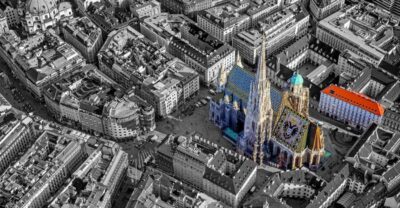
St. Stephen’s Cathedral is not just a photo stop. It is treated like the center of the city’s identity, so your guide can point out details as you stand there, then follow up once you step inside. That matters because Gothic architecture rewards patience, and it is much easier to notice what you are looking at when someone gives you a way to read the building. Your tour guide is certified and Austrian, which also helps because you get a local style of explanation rather than a generic script.
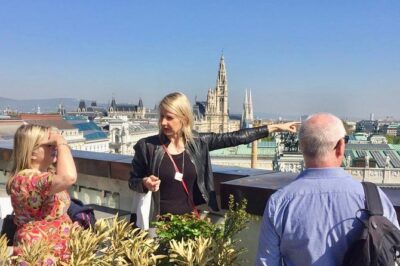
Because the tour is private, it is also easier to manage the rhythm. You are not squeezed into a big crowd flow where you just catch glimpses. You can slow down where you care most, especially around cathedral details and the Hofburg area later on.
Inside the Steffl: Gothic details and the devil legend
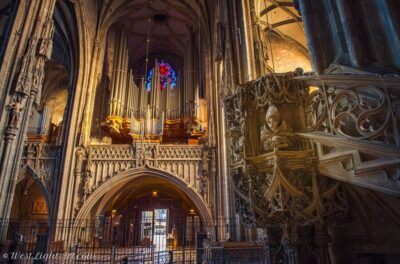
St. Stephen’s Cathedral is often nicknamed the Steffl, and this tour leans into that sense of it being deeply Vienna. You start with a guided look around St. Stephen’s Cathedral, then you step inside to see the space up close. The cathedral’s “mystical architectural history” is a key theme, and the guide ties it to a legend involving the devil’s role in the building’s completion.
You do not need to be superstitious to enjoy this part. What you are really getting is how legends and religious architecture reinforce each other in the public imagination. Even if you treat the story as folklore, it helps you understand why the cathedral inspires strong reactions. The building is designed to guide your eye and your mood, and a good explanation makes it feel less like decoration and more like communication.
One more thing to plan: admission to the cathedral is not included. The listed entry is €6 per person, so budget that on top of the tour price. If you show up without considering the add-on cost, you can end up thinking the tour is more expensive than you expected. If you plan for it, the full value feels more balanced, because you are paying for guided storytelling plus time inside the cathedral.
Also, the dress code matters for indoor religious spaces. No shorts and no sleeveless shirts. If you are traveling in warmer weather, bring a light layer you can wear over your shoulders so you do not have to scramble at the last second.
The old town walk: from medieval vibes to Franz Joseph I

After the cathedral, the tour shifts into a classic Vienna approach: you walk, your guide narrates, and the city starts to make sense as a sequence. The route is not random. It is mapped across major old town zones and landmarks, and the tour description explicitly frames the sweep from the Middle Ages to the reign of Emperor Franz Joseph I.
You will head toward the Graben, one of Vienna’s famous central streets. What makes this part valuable is that it gives you a way to connect the cathedral stop to the rest of what you are seeing. Instead of treating buildings as isolated objects, you learn how they sit inside a city that grew, changed, and remembered itself.
As you walk, you will hear how the old town developed into the kind of place where religious landmarks, imperial power, and civic identity all overlap. That is exactly why a guided route is worth it here. On your own, it is easy to admire facades but miss the reason that specific places matter.
You also keep things efficient with the tour’s overall timing. The experience is 2 hours, so it is not a half-day marathon. It is a good fit if you want a strong foundation early in your stay, or if you are pairing Vienna history with other planned activities later.
Graben and the baroque plague column moment
One stop I would not skip on this route is the walk to the Graben and the sight of the historic baroque plague column. This is the kind of landmark that people sometimes speed past because it does not look like a museum attraction. But a plague column is not just ornament. It is a public monument, created in response to suffering, and it reflects how the city communicated gratitude, fear, and hope in stone.
This is where your guide’s storytelling is especially useful. When you understand why a column was erected and what it symbolized, the street scene becomes more than scenery. It becomes a layer cake of civic memory.
Also, landmarks like this help you understand why Vienna feels so “theatrical” in the best way. Even when the city is quiet, you can sense how the past is built into the urban layout. That is one of the best reasons to do a walking tour on foot, not just by taking photos from a bus.
Kohlmarkt to Michaelerplatz: Hofburg’s imperial face

Next comes the stretch toward Kohlmarkt, and then you reach Michaelerplatz, where you see the imperial façade of the Vienna Hofburg. This shift is important. After Gothic cathedral imagery and baroque street memory, the Hofburg area is a reminder that Vienna is also a seat of power.
Standing at Michaelerplatz, you get that imperial scale and symmetry that makes the Hofburg feel like a political statement rather than just a collection of buildings. Your guide uses this moment to keep connecting what you saw earlier to the bigger story: Vienna as a city where religious life, public events, and imperial authority all coexist.
From here, the tour continues on toward Josefsplatz, which is noted for great views of the imperial library. If you care about photos, this is one of the more rewarding points on the walk. Even if you do not plan to take many pictures, it helps to have a viewpoint where you can visually absorb the complex.
You also see the equestrian statue of Emperor Joseph II in the middle of the square. Statues can feel like background noise on self-guided trips. With a guide, the statue becomes part of the timeline you are already building.
Stallburg to Hofburg courtyards: the calmer, more personal side

The itinerary continues with movement through the Hofburg zone. You start at what is referred to as the stable castle, then continue to Josefsplatz. That small detail matters because it signals you are entering a specific palace complex rather than just wandering past the outer wall.
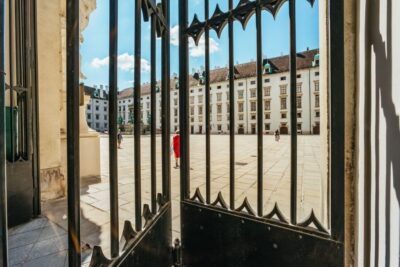
Then comes a more intimate moment: you pass through a gate and reach a small courtyard overlooking the choir of the Vienna Hofburgkapelle. This is a quieter-feeling space compared with the open squares, and it is the kind of stop where the guide’s explanation can change what you notice. The choir area is tied to how imperial life included religious ceremony, not as a separate world but as part of everyday power.
After that, you arrive at the Schweizerhof of the Hofburg. This is where the architecture starts to tell you different cultural chapters, because you are moving through parts of a complex that grew through time and influence.
The Swiss Gate: Renaissance art you can actually appreciate
A standout feature on this walk is the Swiss Gate, described as an important Renaissance work of art. Gates are tricky on tours because you might assume, from the outside, that they are just entrances. In this case, the tour treats the gate like an art object with meaning, not a pass-through.
If you like Renaissance details, you will probably enjoy this stop more than you expect. Renaissance work often shows a particular balance in design, and it becomes easier to notice when someone helps you point out what to look for. Even if you only catch a couple of details, this is one of those moments that can make the whole walk feel more satisfying.
From there, the tour reaches the inner square of the castle. The guide’s narrative framing matters here. You are not just walking into a scenic courtyard, you are closing a loop that started with a cathedral and moved through civic and imperial Vienna.
Ending at the Franz II/I monument: a clean finish point
The tour ends at a major visual anchor: the monument of Emperor Franz II/I. This is a good way to wrap up, because it gives you a focal point at the end of the walk, instead of finishing with a vague “and then you’re done” feeling.
The best part about finishing with an imperial monument is that it reinforces the timeline you heard throughout the route. You started with a medieval to Gothic centerpiece, added baroque civic memory in the Graben, then moved into the Hofburg world of power and ceremony. By the end, the city’s layers click into place.
Also, the activity ends back at the meeting point. That makes planning easier. You do not have to guess how to get back across the center.
Price and value for a private 2 hour Vienna walk

The tour is priced at $205 per group up to 5, for a 2 hour guided experience. That pricing model can be a great value if you are traveling in a small group that is comfortable thinking as one unit, like a family of four or two pairs of friends.
Here is the simple math: if your group is full at five people, the tour portion is about $41 per person before the cathedral entry. Then you add €6 per person for the St. Stephen’s Cathedral admission. If you are only two or three people, the per-person tour cost rises, but you still get the benefits of a private guide and a tightly managed route.
What you are buying is not just “seeing places.” You are buying a structured walk with a certified Austrian guide, plus time inside St. Stephen’s Cathedral. You are also getting a guided sequence that spans medieval through Franz Joseph I era themes, which is hard to replicate with a quick audio guide.
Food and drink are not included, and transfers are not included either. That is normal for a walking tour in central Vienna. Plan to grab a snack after, or bring water if you need it during the walk.
One more value factor: the guide language is German. If your group speaks German well, this experience will feel smooth and animated. If not, you might still enjoy the architecture and the visuals, but you will likely rely more on reading signage and asking fewer questions.
What to wear and how to prep for the cathedral
This is a walking tour with an indoor component, so small prep steps pay off.
- Wear clothes that satisfy the dress code: no shorts, no sleeveless shirts
- Bring layers if the weather is changeable, so you do not end up uncomfortable during the church visit
- Plan for the cathedral entry fee of €6 per person
- Since it is German-language, if your German is limited, decide ahead of time if you will enjoy it more as a guided visual walk than a deep conversation
If you do those things, you will get the most from the inside cathedral portion and the story-driven stops around the Hofburg.
Who this tour fits best in your Vienna plans
This experience is a strong match if you want a compact but meaningful tour of Vienna’s core landmarks. It works especially well for:
- First-time visitors who want St. Stephen’s Cathedral to anchor the rest of the city walk
- People who like architecture stories, including legends and design details
- Small groups that want a private guide rather than a large group shuffle
- Travelers who want a high-impact route in 2 hours, not a long day
If you only want a quick street-level glance and you do not care much about what you are looking at, you might find it slower than expected. But if you like learning what places meant and why they were built, this tour is built for you.
Should you book St. Stephen’s Cathedral and city walk?
Book it if you want St. Stephen’s Cathedral plus an organized walk through old town highlights that connect to the Hofburg. The value is strongest for small groups, and the format is ideal if you want to leave Vienna with a clearer sense of time periods and how the city’s landmarks relate.
Skip it or consider alternatives if German-language guiding is a deal breaker for you, or if you are allergic to indoor cathedral etiquette and extra costs like the cathedral admission. Also, if your group can’t follow the dress code, you will spend energy troubleshooting clothing instead of enjoying the tour.
Overall, this one is worth your planning time. The high rating comes from the simple formula that works: guided cathedral access, a fun and entertaining pace, and a lot of new information packed into a route that stays focused.
FAQ
How long is the Vienna St. Stephen’s Cathedral and city walk?
The tour duration is 2 hours. Starting times vary, so you will want to check availability.
What does it cost, and how big is the group?
It costs $205 per group, for up to 5 people. This is a private group tour.
Is admission to St. Stephen’s Cathedral included?
No. Admission to St. Stephen’s Cathedral is not included. The listed admission price is €6 per person.
Where do we meet the guide, and where does the tour end?
Meet your guide at Jasomirgottstraße 1, 1010 Vienna, Austria. The tour ends back at the meeting point.
What language is the live guide speaking?
The live tour guide speaks German.
Are there any clothing restrictions?
Yes. Shorts and sleeveless shirts are not allowed.
Can I cancel, and is pay later available?
You can cancel up to 24 hours in advance for a full refund. You can also reserve now and pay later, so you do not have to pay immediately.
More Tour Reviews in St Stephen S Cathedral Vienna
- Vienna: Classical Concert at St. Stephen’s Cathedral
★ 4.1 · 4,177 reviews
The Old Town Around St Stephen's
- Vienna: Classical Concert at St. Stephen’s Cathedral
★ 4.1 · 4,177 reviews
Recently Added Around Vienna

St Stephen's Cathedral & Vienna Old Town, compared.
 ★ 4.7Guided Walking Tour of City Center HighlightsFrom $254,989 reviews
 ★ 4.1Classical Concert at St. Stephen’s CathedralFrom $114,177 reviews
 ★ 5.0Vienna Historic Center Small Group Walking TourFrom $721,746 reviews
 ★ 4.5St. Stephen’s Cathedral & Dom Museum Wien TicketsFrom $341,652 reviews
 ★ 4.5Old Town Sightseeing Tour in a Vintage-Style E-CarFrom $281,107 reviews
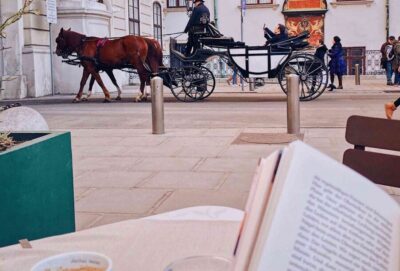 ★ 4.530-Minute Fiaker Ride in the Old TownFrom $1111,092 reviews
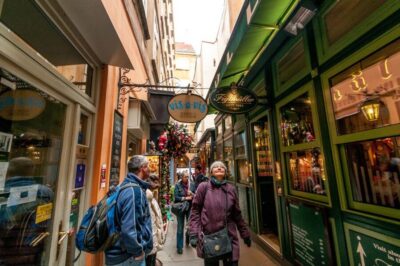 ★ 4.7Romantic Old Town 2-Hour Discovery TourFrom $352816 reviews
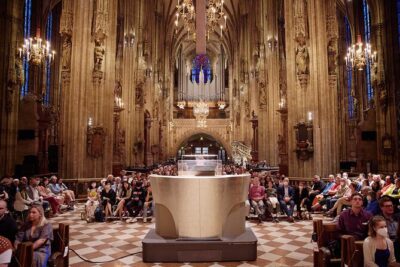 ★ 4.0Concert at Vienna’s St. Stephen’s CathedralFrom $12432 reviews
Browse the lists this tour appears in