
Reviewed · ST STEPHEN'S CATHEDRAL & VIENNA OLD TOWN
Vienna Historic Center Small Group Walking Tour
Vienna is best when you get your bearings fast, and this walk does that in real time. You start at Maria-Theresien-Platz and glide around the Ringstrasse, then work your way through Hofburg power landmarks to St. Stephen’s Cathedral.
Two things I especially like: you’re with a tight group (max 15) and you get audio devices, so the guide’s explanations stay clear even in crowded spots. I also love that the tour is built as a smart orientation loop, with guidance on where to eat and what to look for next, right when you need it most.
One consideration: it is mostly outdoors and you’ll cover a lot of pavement. Comfortable shoes matter, and if walking is hard for you, this one may be stressful since it’s not designed for limited mobility or walking disorders.
Key highlights at a glance
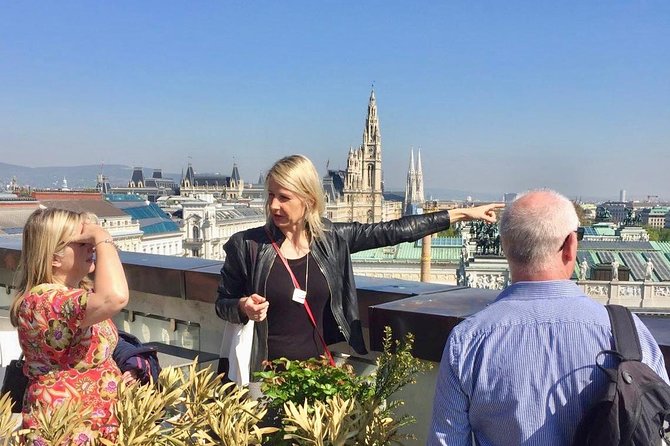
- Small group cap of 15 means more time for questions and less getting lost in a crowd
- Audio devices keep the narration easy to follow, even at busy intersections
- Ringstrasse and UNESCO-listed boulevard context so the buildings make sense, not just look pretty
- Hofburg stops tied to real imperial stories, including how the palace functioned as Austria’s center of power
- A teaching route, not museum time, so you see a lot fast without ticket lines
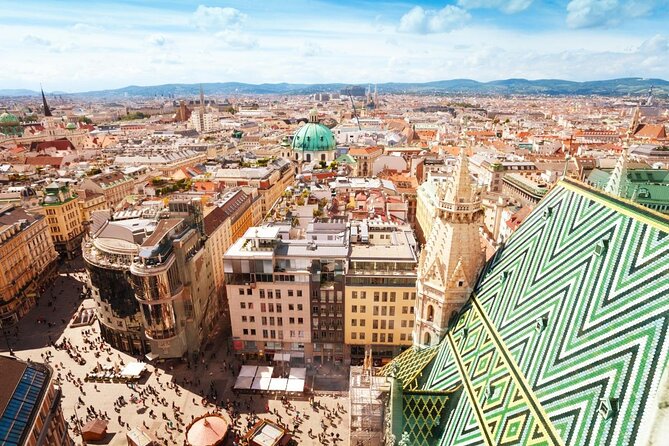
- Finish near Stephansplatz and St. Stephen’s so you can keep exploring right after the tour
Around the Stephansdom and the old lanes
- Vienna: Guided Walking Tour of City Center Highlights★ 4.7 · 4,989 reviews
- Vienna Historic Center Small Group Walking Tour★ 5.0 · 1,746 reviews
- Vienna: St. Stephen’s Cathedral & Dom Museum Wien Tickets★ 4.5 · 1,652 reviews
- Vienna: Old Town Sightseeing Tour in a Vintage-Style E-Car★ 4.5 · 1,107 reviews
Why a 2.5-hour small-group loop is the best first-day move in Vienna
If it’s your first visit to Vienna, the big problem is not knowing where to go next. This tour helps because it strings together the city’s core landmarks into one walkable story. You go from the grand museum quarter area, around Ringstrasse, through Hofburg, and end at the cathedral heart of the city.
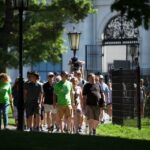
The group size really matters. With a max of 15 people, the guide can pace the group through narrow or busy areas without turning it into a stressful cattle drive. And because the narration is delivered through audio devices, you do not have to crane your neck or constantly ask strangers to repeat themselves.
Finally, the format is efficient. You’re on the move for about 2 hours 30 minutes, and the route is designed to keep you learning as you walk, not waiting around. For a city as spread out as Vienna looks from afar, this is a practical way to cut through the confusion.
Maria-Theresien-Platz: the museum-quarter stage-set and Maria Theresa’s big entrance
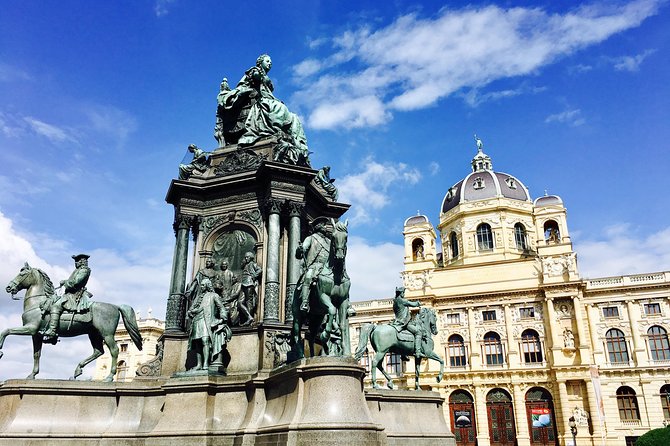
The tour starts at Maria-Theresien-Platz, a large square between Ringstrasse and Museumsquartier. The twin buildings across from each other frame two major institutions: the Natural History Museum and the Art History Museum. You get that classic Vienna feel right away, with wide-open space and grand architecture setting the tone.
Then you move to the Maria Theresa statue. This isn’t just a pretty monument stop. It’s a springboard for understanding why Vienna’s rulers and court culture shaped everything from education to arts to public life. Around the monument, you’ll also see figures connected to major names, including W. A. Mozart, as the guide connects the dots between power and culture.
What’s valuable for you here is the timing. Starting in this area helps you learn how the Ringstrasse era turned old fortifications into a ceremonial boulevard. You’ll carry that mental map for the rest of the walk.
If you’re the kind of traveler who likes context before photos, you’ll appreciate this opening. If you just want highlights without explanations, you might find the early historical framing a bit heavy. But it’s short, and it sets up the rest.
Ringstrasse: the UNESCO boulevard where Vienna’s “big city” look makes sense
Next comes Ringstrasse, the circular grand boulevard that replaced medieval city fortifications in the latter part of the 19th century. From a distance, it can look like a blur of impressive façades. On this walk, it becomes a readable parade of architectural styles and political symbolism.
The guide helps you notice the mix, including elements tied to Classical, Gothic, Renaissance, and Baroque architecture. You also get the UNESCO context, since Ringstrasse is part of Vienna’s World Heritage Site. That matters because these buildings were not randomly thrown into place. They were built to project authority and culture in a new city plan.
You also pass major civic and cultural anchors along the way, and the guide connects each one to the story of Vienna’s institutions. Even if you only remember a few names, you’ll start recognizing them later as you roam independently.
A small detail that can be surprisingly helpful: the tour begins right near the Kunsthistorisches Museum building exterior. You’ll see the Royal art collection exterior and get oriented to how the museum complex fits into the larger Ringstrasse picture.
Burgtor and the Hofburg area: where palaces, power, and heavy moments live side by side
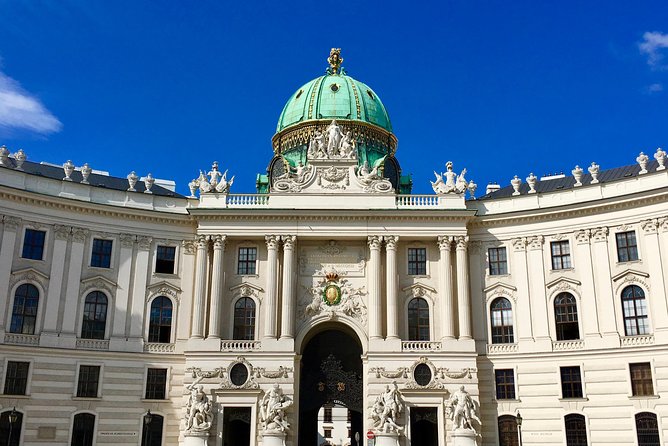
After the Ringstrasse context, you reach Burgtor, a neo-classical main gate built after the Napoleonic wars. It’s a quick stop, but it’s a useful visual marker. You’re entering the Hofburg zone, the part of Vienna that historically served as the seat of power.
Then you get into the Hofburg complex itself. The guide explains how the former imperial palace of the Habsburgs evolved, and you’ll hear stories that connect emperors and empresses to daily court life and major political shifts.
One reason I think this portion is worth your time: Hofburg is not just about pretty buildings. It’s about how regimes made decisions and how those choices shaped modern Austria. The guide also shares the darker historical thread connected to the Neu Castle balcony, where Adolf Hitler proclaimed the Anschluss of Austria into the Third Reich. It’s heavy material, but presented in the historical way the site requires.
You may also hear references to prominent Hofburg-adjacent institutions like the Austrian National Library and to the Baroque Winter Riding School linked to the Lipizzan stallions’ training and performances. Even when you’re only seeing exteriors or court areas, you’re getting the “what is this place and why should I care” answer.
Practical note: this area can get busy, and the group will likely pause in spots where you can’t linger. Wear shoes you can walk in for a while, and keep water handy for these stretches.
Vienna on foot, a couple more routes
Heroes Square, St. Michael’s, and Rathaus: Vienna’s political and cultural geometry
From Hofburg you move to Heldenplatz (Heroes Square), a large open green area connected to the city where the old bastion was demolished during the Napoleonic Wars. The space can feel surprisingly calm compared to the nearby street traffic, and it helps you reset your eyes before more dense architecture.
Then the walk heads toward key civic landmarks. You stop at St. Michael’s Church, which dates back to 1220. Churches in Vienna often feel like they’re there to provide atmosphere as much as worship. Here, it’s a chance to see how the city’s older religious layers sit next to the newer imperial and governmental expansion.
You also pass the seat of Austria’s government area, including the Rathaus (Vienna’s City Hall), known for its neo-gothic style. If you’ve ever wondered why Vienna looks so “official” even when it’s just walking scenery, this part clarifies it. The architecture is part of the message.
And this is a good moment to take the guide’s hints seriously. If you want to plan your later day on your own, paying attention here helps you choose where to go next without second-guessing.
Coffee-house Vienna, Beethoven’s home, and Vienna’s big thinkers
One of the strengths of this tour is that it does not treat Vienna like a single museum street. It keeps switching gears between politics, culture, art, and science.
In Volksgarten, you’ll see the Theseus Temple, described as a small replica of the Hephaisteion in Athens. The guide ties it to Antonio Canova’s sculpture, which gives the structure a stronger story than simply saying it’s a temple-looking building. You’ll also learn about the Cortisches coffee house at Volksgarten, and how Johann Strauss used to play his waltzes there.
Then the route brings you to Beethoven Pasqualatihaus, a former residence of Ludwig van Beethoven on the ramp of former town fortifications. Even if you do not know Beethoven’s timeline, the guide’s framing helps connect Vienna’s composers to the physical city around them.
From there, you’ll stop by the University of Vienna area to hear about groundbreaking minds tied to modern science, including Sigmund Freud and Lise Meitner. This is one of those segments where Vienna feels less like a decorative postcard and more like a city that shaped ideas.
Finally, you move through Freyung, one of the oldest squares in the city center, known for an intimate, picturesque atmosphere. That’s a nice counterweight after the bigger institutional buildings.
The Graben, Kohlmarkt, and the walk’s satisfying ending at St. Stephen’s
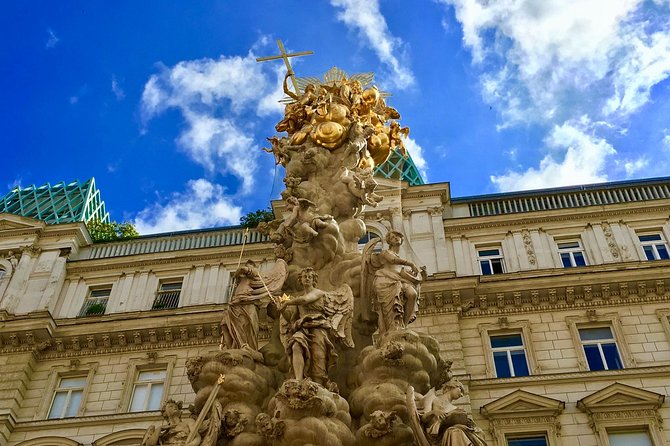
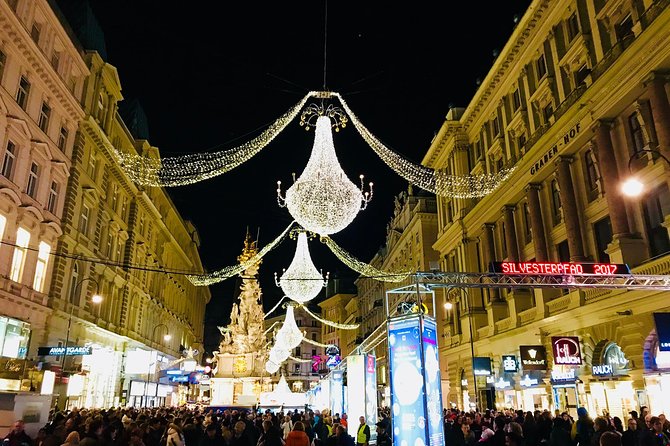
As you head toward the finish, Vienna shifts into pedestrian mode. Graben and Kohlmarkt are described as the city’s most elegant pedestrian streets, and this is where the tour’s pacing feels good. You’ve already “learned the bones” of the city, so the shopping streets make more sense as the living, everyday core.
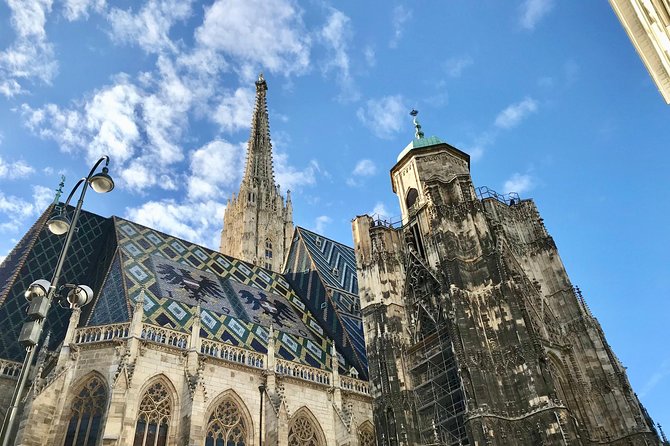
Then you reach Stephansplatz, the heart and soul of Vienna and the city’s central square. It’s the kind of place where you can instantly see why the cathedral matters. From here, you end at St. Stephen’s Cathedral, described as the cathedral and symbol of Vienna.
This ending is practical. After the tour, you can keep walking, go inside on your own if you want, or choose a café nearby. And because you’ve just learned how Vienna’s layers fit together, you’ll spot details you might otherwise miss.
Also, remember this is not a museum-entry tour. You’re seeing key places as they exist in the city now, with explanations from a professional guide. That format helps you move efficiently through a lot of ground.
Guide approach, audio devices, and how much is indoors
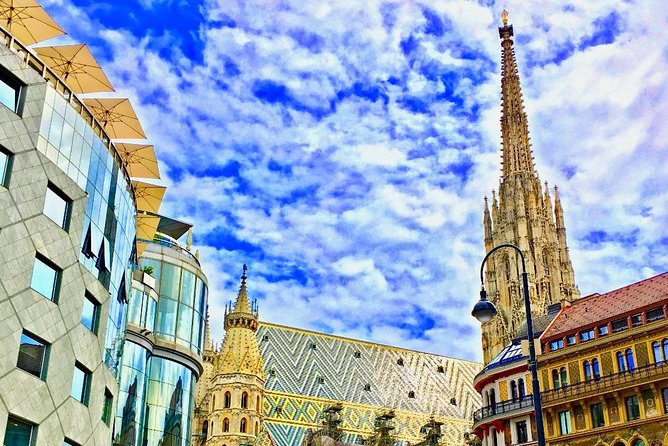
The tour includes a local certified guide and uses audio devices so everyone can hear. That choice is a big deal. Vienna can be crowded at street corners and near landmarks, and the sound quality can make or break a walking tour. With the audio, you can stay focused on the guide instead of fighting the environment.
The guide also gives insider tips on Vienna culture, food, and traditions. You should expect personal recommendations for restaurants and cafés, not just sightseeing facts. In practice, that means you can decide where to eat based on what you learned in the walk, rather than picking a random spot.
As for indoor time, the tour does not visit inside of any museums. You may visit some churches, and depending on the weekday, there can be other indoor locations such as palaces, university areas, or a café. That keeps it flexible, but it also means you should not plan on heavy indoor museum time as part of the experience.
If you love a guided, lesson-style walk, this works well. If you crave hands-on experiences, you might find it more like “see, listen, and learn” than “participate.”
Price value: getting a full orientation loop for $72.56
At $72.56 per person for about 2 hours 30 minutes, the price can feel steep until you look at what’s included. You’re paying for a certified guide, audio devices, and a route that’s designed to cover Vienna’s major historic center efficiently without museum entry lines.
The group cap at 15 also adds value. In a larger group, you often lose time waiting and you stop asking questions because you cannot get the guide’s attention. Here, the smaller cap makes the tour feel less rushed and more conversational.
Is it worth it if you’re a strong self-guided traveler? If you already know Vienna’s major landmarks and you love reading maps, you could build a similar loop on your own. But the advantage of this tour is that you walk past the same places, while the guide hands you the connections that take time to research.
Finally, the tour has been getting booked in advance at a fairly steady rate. If you’re flexible, you can often find a convenient start time. If your schedule is tight, book early so you can match the walk to your first day.
Should you book this Vienna Historic Center Small Group Walking Tour?
Book it if you want a fast, high-signal introduction to central Vienna. It’s a solid choice for first-time visitors, busy schedules, and anyone who likes learning while walking. You’ll get a clear route through Ringstrasse landmarks, Hofburg, and the cathedral area, plus practical food and culture recommendations to help you plan the rest of your trip.
Skip it (or at least consider another option) if walking long distances is hard for you. It’s not recommended for travelers with walking disorders, and it’s mostly outdoors. Also, if your priority is museum interiors, know that this tour does not visit inside museums.
If you’re trying to decide between “see everything” and “understand what you’re seeing,” this hits a nice middle. You get the big sights, but you also leave with a mental map that makes Vienna feel easier to explore on your own.
FAQ
What is the duration of the Vienna Historic Center small group walking tour?
It lasts about 2 hours 30 minutes. The walk is designed to cover many key historic areas efficiently within that time.
How big is the group, and is it a small group experience?
The tour is capped at a maximum of 15 travelers. That small size helps keep the experience more personal and easier to hear and manage while walking.
What language is the tour offered in?
The tour is offered in English, and you receive audio devices so you can hear the guide clearly.
Where does the tour start and where does it end?
The tour starts at Maria-Theresien-Platz in Vienna and ends at Stephansplatz, near St. Stephen’s Cathedral.
Does this tour include entry into museums?
No. The tour does not visit the inside of any museums. It is mostly an outdoor walking experience, with some churches and, depending on the weekday, possible indoor stops like palaces, university areas, or a café.
Is St. Stephen’s Cathedral included on the route?
Yes. The tour ends at St. Stephen’s Cathedral, and you are then free to explore further on your own.
What should I bring or plan for since it is mostly outdoors?
Plan for a lot of walking and expect a mostly outdoor route. Comfortable shoes and weather-appropriate clothing are a good idea.
What if weather is bad or the tour is canceled?
The experience requires good weather. If it’s canceled due to poor weather, you’ll be offered a different date or a full refund. The tour also requires a minimum number of travelers, so it could be rescheduled or refunded if that minimum is not met.
More Tour Reviews in Vienna
- Vienna: Vivaldi’s Four Seasons Concert in Karlskirche
★ 4.7 · 14,951 reviews - Vienna: Schönbrunn Palace & Gardens Skip-the-Line Tour
★ 4.7 · 7,739 reviews - Vienna: Light of Creation Votive Church Immersive Light Show
★ 4.8 · 6,779 reviews - Vienna Spanish Riding School Guided Tour
★ 4.7 · 6,765 reviews - Vienna: Classical Concert in the World-Famous Musikverein
★ 4.6 · 6,673 reviews
Vienna on Foot, Continued
- Vienna: Guided Walking Tour of City Center Highlights
★ 4.7 · 4,989 reviews - Vienna: Vienna Central Cemetery Guided Walking Tour
★ 4.8 · 3,307 reviews - Vienna: Guided Walking Tour of City Highlights & Hidden Gems
★ 4.9 · 2,180 reviews - Vienna: Viennese Underworld Guided Walking Tour
★ 4.7 · 1,865 reviews - Vienna: World War II Historical Walking Tour
★ 4.8 · 1,772 reviews
The Old Town Around St Stephen's
- Vienna: Guided Walking Tour of City Center Highlights
★ 4.7 · 4,989 reviews - Vienna: St. Stephen’s Cathedral & Dom Museum Wien Tickets
★ 4.5 · 1,652 reviews - Vienna: Old Town Sightseeing Tour in a Vintage-Style E-Car
★ 4.5 · 1,107 reviews - Vienna: 30-Minute Fiaker Ride in the Old Town
★ 4.5 · 1,092 reviews - Vienna: Romantic Old Town 2-Hour Discovery Tour
★ 4.7 · 816 reviews
Recently Added Around Vienna


St Stephen's Cathedral & Vienna Old Town, compared.
 ★ 4.7Guided Walking Tour of City Center HighlightsFrom $254,989 reviews
 ★ 4.1Classical Concert at St. Stephen’s CathedralFrom $114,177 reviews
 ★ 4.5St. Stephen’s Cathedral & Dom Museum Wien TicketsFrom $341,652 reviews
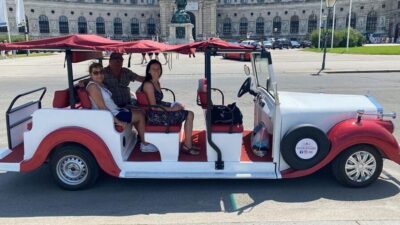 ★ 4.5Old Town Sightseeing Tour in a Vintage-Style E-CarFrom $281,107 reviews
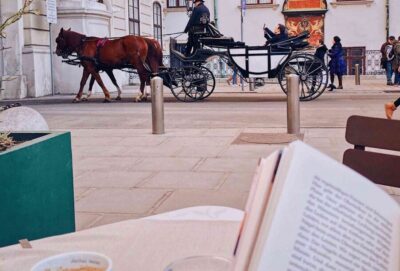 ★ 4.530-Minute Fiaker Ride in the Old TownFrom $1111,092 reviews
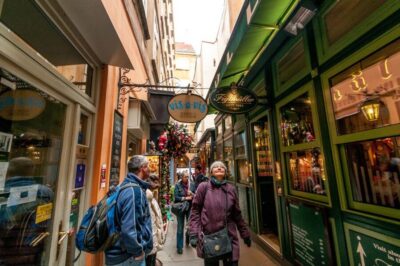 ★ 4.7Romantic Old Town 2-Hour Discovery TourFrom $352816 reviews
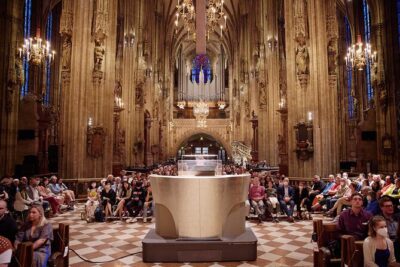 ★ 4.0Concert at Vienna’s St. Stephen’s CathedralFrom $12432 reviews
 ★ 5.0Exclusive Vienna Old Town Highlights Walking Tour (max. 6 persons)From $151252 reviews
Browse the lists this tour appears in