
Reviewed · ST STEPHEN'S CATHEDRAL & VIENNA OLD TOWN
Vienna: Old Town Sightseeing Tour in a Vintage-Style E-Car
Hook: Vienna’s best intro tour has wheels.
This 1-hour vintage-style e-car ride is a fun way to get your bearings fast, with live commentary as you glide past major Old Town landmarks like Stephansdom and the Hofburg. I also like that it mixes photo stops you can actually enjoy from the car with a street-level route that covers 40+ attractions without the hassle of walking between distant points. One consideration: it is a drive-by format, so you may not get many true stop-and-stare moments, and the roof can limit views of taller facades depending on where you sit.
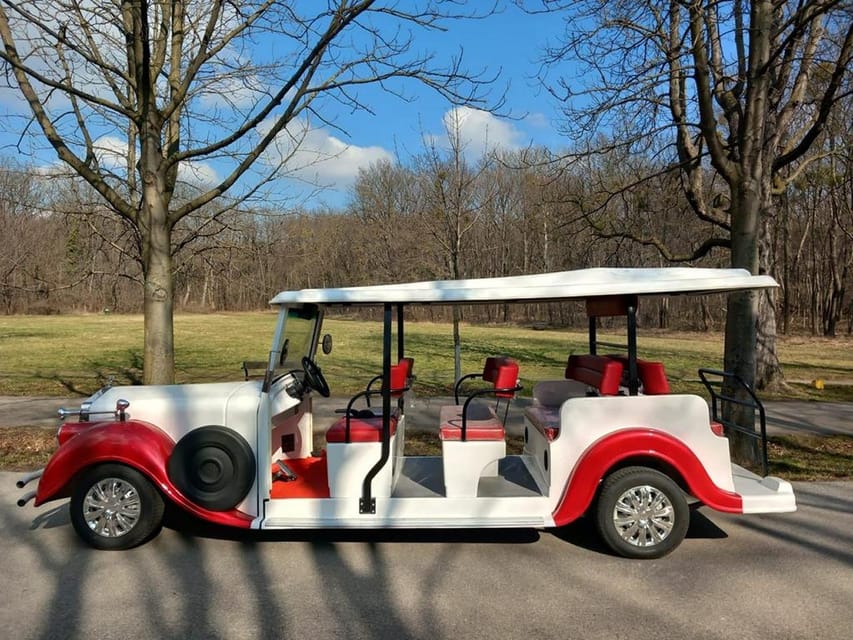
I really like the vibe here. The 1920s look, the quiet electric ride, and the open sides make it feel like you are touring Vienna with a camera in hand, not stuck on a loud coach. Guides such as Kurt, Angelo, and Karl are repeatedly singled out for friendly, fast-paced explanations, plus helpful photo guidance. Still, since the tour is short and the route is packed, expect a lot of seeing and listening, not museum time.
Key points at a glance
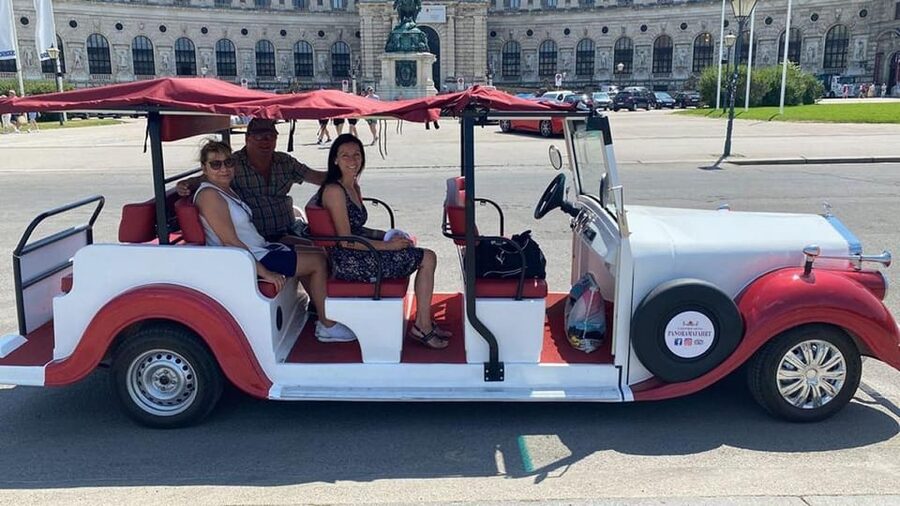
- Vintage 1920s-style electric car for a calmer, more photogenic Old Town sweep
- Over 40 attractions in 1 hour, including Hofburg, Stephansplatz, and Albertina
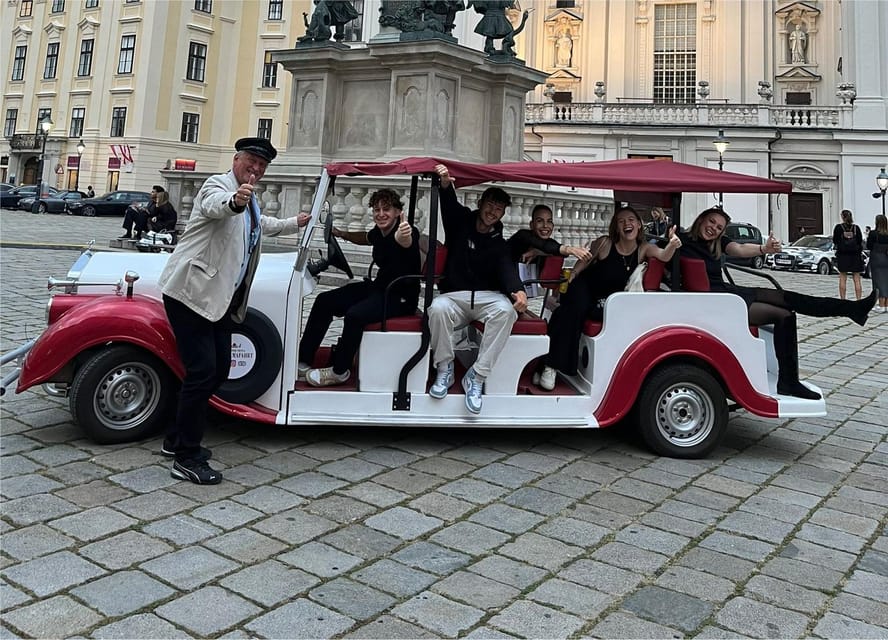
- Photo-friendly open sides, with some help from blankets when weather turns cold
- Small group up to 10, so the guide can handle questions in English or German
- Architecture sampler, from Gothic and Baroque to Jugendstil
- Great first-day orientation if you plan to walk the same sights later
Around the Stephansdom and the old lanes
- Vienna: Guided Walking Tour of City Center Highlights★ 4.7 · 4,989 reviews
- Vienna Historic Center Small Group Walking Tour★ 5.0 · 1,746 reviews
- Vienna: St. Stephen’s Cathedral & Dom Museum Wien Tickets★ 4.5 · 1,652 reviews
- Vienna: Old Town Sightseeing Tour in a Vintage-Style E-Car★ 4.5 · 1,107 reviews
Meeting point at Radisson Blu Style, then lights out
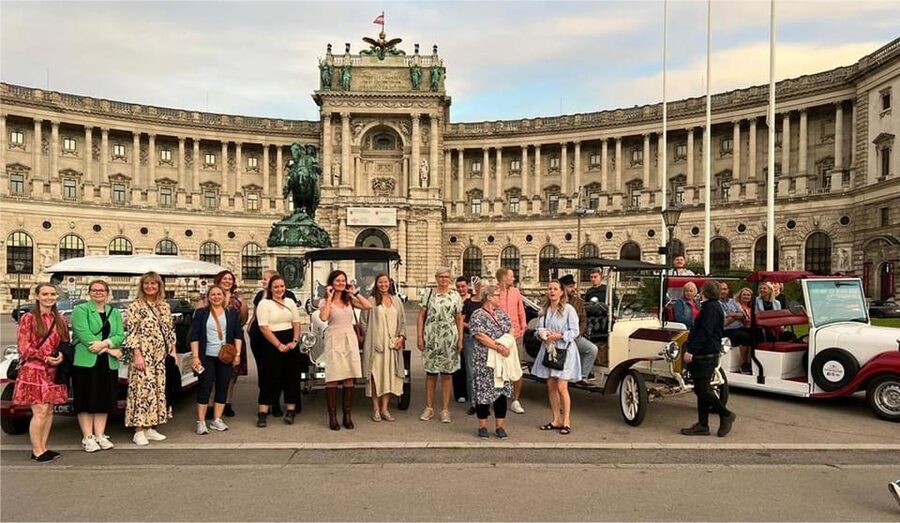
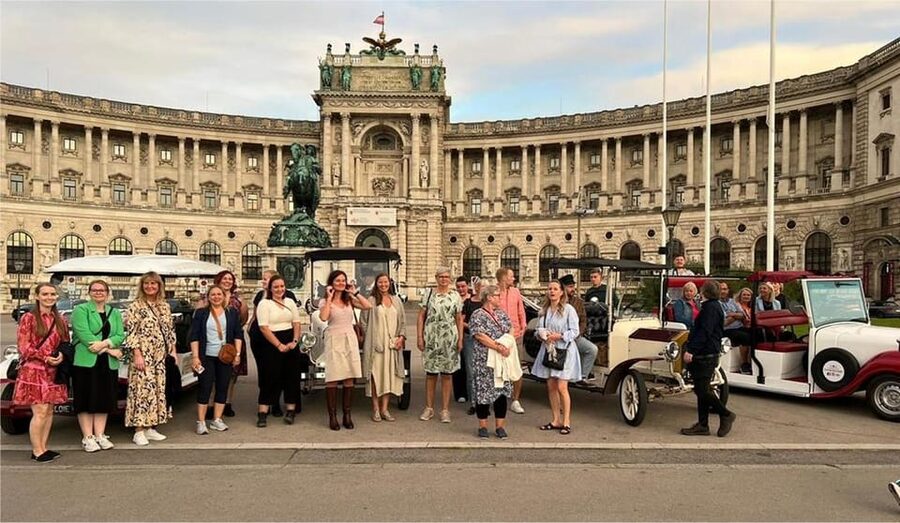
You start outside the Radisson Blu Style Hotel at Herrengasse 12 in Vienna, 1010. The operator has you look for the vintage-style electric car right at the Radisson Blu location, then you head off toward Freyung.
This matters more than you might think. A lot of Vienna tours start miles apart from where you actually want to be on foot. Here, you can easily tie it into a first-day arrival plan, especially if you are staying nearby. Also, getting started on time is easier when your meeting point is a big, obvious hotel with clear street access.
Why this one-hour Old Town route works so well
The tour is built like a quick orientation drive through the center. In a single loop you pass a long list of high-impact sights, from big monuments to architectural details you would normally need several walking sessions to reach.
Think of it as a “map in motion” experience. When you return on foot later, you already know which streets to follow and what each plaza is connected to. That also helps if you have limited time, because Vienna can swallow your day if you pick the wrong order. The 1-hour format is short enough to fit between meals and long enough to feel like more than a drive around the block.
And yes, the car helps. The vintage style is not just for looks. It keeps the experience closer to street level, and the electric ride keeps things calmer than traditional traffic noise. In several trips, guides also add small practical tips for where to eat and what to see next, so the hour turns into a mini game plan for the rest of your visit.
The car experience: cozy blanket vibes, photo angles, and sound control
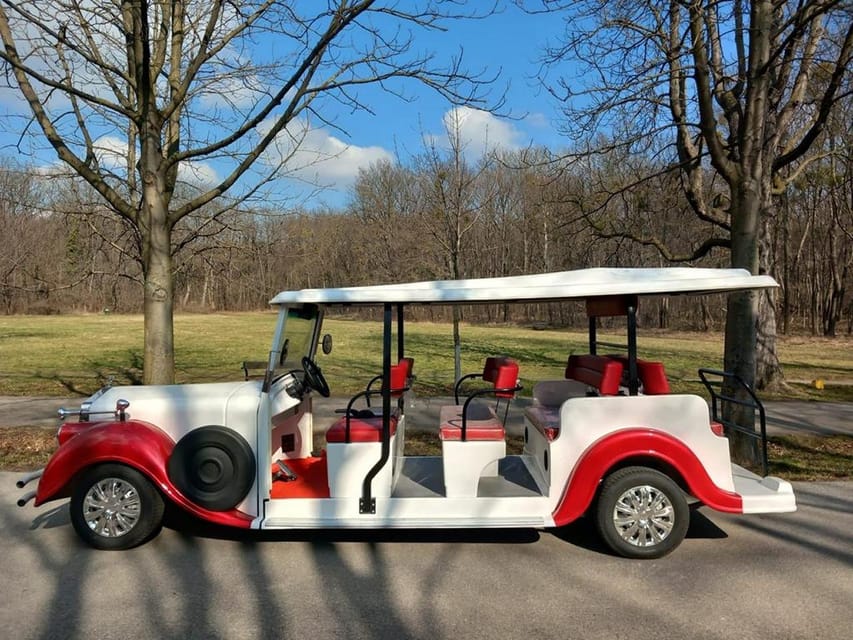
You will be in a quiet, eco-friendly electric vehicle styled like an older car. The sides are open for viewing and photos, which is a huge win in a city where so many of the best sights are right along the street.
There are two practical realities to know:
- If it is cold, expect your comfort to depend on the weather and your seat. Some guides have blankets ready, and a number of rides mention blankets and warmer seat coverings for chilly conditions.
- The roof and seating angle can affect what you can frame. One thing that comes up is that the roof can make it harder to see tall buildings from certain spots, while a rear-facing seat can offer a better view of the facades as you roll past.
So if you care about photos, lean toward seats that give the best skyline line of sight. If your group has flexibility, it is worth asking where the best viewing spot is once you are aboard.
Stop-by-stop highlights, what you are really looking for
This is a drive-by tour, so I will describe what to notice as you pass each area. Use your time to look for the street details, not just the postcard headline.


Freyung, Am Hof, and Maria am Gestade
You begin by heading to Freyung, a public square known for its triangular shape. From there, the route moves through the grandeur of Am Hof Square and then toward Maria am Gestade, a Catholic church with Gothic architecture.
This section is useful because it sets the tone: Vienna’s center is not just one style. You are seeing how older religious buildings anchor the streets, and how plazas connect the city’s layers.
Hoher Markt and the Anchor Clock
Next up, you pass Hoher Markt, described as the city’s oldest square. Then you ride by the Anchor Clock, known for its moving figures and copper accents.
This is one of those sights that is easier to appreciate when you are not hunting for it on foot. The clock is eye-catching, and it is the kind of detail that makes you feel like you are watching Vienna’s personality, not just its major attractions.
Stephansplatz and Stephansdom
Then comes Stephansplatz, and the towering Stephansdom Cathedral. This is the big one people point their phones at first, but from the car you can also appreciate the relationship between the square and the surrounding streets.
Quick tip: when you reach this part of the route, pause your listening for a moment and look at how the streets funnel toward the cathedral. It helps later when you walk here on your own, because you know where the crowd flow goes.
Wollzeile, Stadtpark, and Hochstrahlbrunnen fountain
You pass along Wollzeile street, then roll by Stadtpark and the Hochstrahlbrunnen fountain.
Why you should care: this is where Vienna shifts from “buildings as landmarks” to “public spaces as daily life.” Even if you never enter a museum, seeing parks and fountains from the street gives you a feel for how locals pace their day.
Soviet Army soldiers monument
You also see a monument honoring soldiers of the Soviet Army. It is a reminder that Vienna’s center reflects many different chapters, not just imperial glamour.
If you are the type who likes context, this is a good moment to listen closely. Even a quick mention can change how you read the city when you later spot similar memorials.
Baroque Belvedere Palace and Musikverein
The route includes the Baroque Belvedere Palace as well as the Musikverein, home of the Vienna Philharmonic orchestra.
From a visitor standpoint, this is smart programming. Vienna is famous for music, and these names are the ones people always connect to recordings. Seeing them from the street, then hearing why they matter, gives you a reason to plan a concert or at least a self-guided look later.
St. Charles’s Church, an arthouse stop, and Karlsplatz Metro Station
You pass by the waterside St. Charles’s Church, plus the arthouse museum area, and then the Jugendstil-style Karlsplatz Metro Station.
This is your architecture rainbow section. Gothic and Baroque show up earlier, and Jugendstil adds a different design language, more decorative and character-driven. It helps you notice Vienna is not one uniform look, it is a series of design movements living in the same streets.
Secession, Kärtnerstrasse, and the Sacher hotel
The tour goes by the Secession art house, down Kärtnerstrasse, and past the Sacher hotel.
Kärtnerstrasse is one of those “walk or drive through it” corridors. From the car it feels efficient, but it still gives you a sense of shopping streets and classic Vienna façades.
Neuer Markt, Michaelerplatz, Spanish Riding School, Donnerbrunnen Goethedenkmal
You cruise through the charm of Neuer Markt, then the star-shaped Michaelerplatz. The route also highlights the Spanish Riding School and the Donnerbrunnen Goethedenkmal fountain.
This is where the Old Town becomes very “Vienna.” It is not just history, it is symbols. Even if you never buy a ticket to the riding school, passing it frames the city’s identity.
Friedrich Schiller monument, Art History Museum, Albertina, Outer Castle Gate
You also pass the Friedrich Schiller monument, the Art History Museum, the Albertina museum, and the Outer Castle Gate.
If you want a quick museum strategy, this helps. You will likely remember these names later when you decide what to buy tickets for. The car route gives you the spatial context, which is half the battle in a city full of world-class options.
Hofburg and Heldenplatz
You roll past The Hofburg palace in Heldenplatz.
This is the place where Vienna feels like a capital again, not just a pretty town. You get the scale, you feel the importance, and then you can later choose whether it is worth going inside.
Prinz Eugen Hotel, National Library, and Minorittenkirche
The tour continues past the Prinz Eugen Hotel, the National Library, and the French Gothic Minorittenkirche.
These stops are valuable if you like buildings more than crowds. They let you see how Vienna used different eras to shape the same city center.
Kaiser Karl monument, People’s Garden, Eppstein Palace, Parliament
You then see the Kaiser Karl monument, the People’s Garden, the Eppstein Palace, and Parliament.
This part is a good reminder that Vienna is both ceremonial and political. If your previous image of Austria is mostly music and palaces, this keeps the story balanced.
Burgtheater, City Hall, University, Votivkirche
Finally, you pass major institutions like Burgtheater, City Hall, the University, and the neo-Gothic Votivkirche before heading back to the meeting point.
This closing stretch is great for anyone trying to understand Vienna’s layout. By the time you are done, you can picture how culture, government, and education sit side-by-side in the center.
What you get for $28: value in speed and context
At $28 per person for about 1 hour, the value comes from the sheer compression of sightseeing. You are passing over 40 attractions, including major headline sights that would normally take a full walking day to connect.
I also like the “planning return.” This is not just seeing. It helps you decide what deserves a deeper visit later. A one-hour loop can save you from wasting time on repeat trips, because you will know where to go next.
A small group matters here too. Limited to 10 participants, you get a better chance for interaction, and the guide can keep the flow while still responding to questions. That turns the ride from passive bus viewing into an active orientation.
Guides and atmosphere: Kurt, Angelo, Karl, and the photo help factor
The experience leans heavily on the guide, and the pattern in the feedback is clear: the best rides feel lively, with guides who mix facts and practical advice.
Names that come up often include Kurt, Angelo, and Karl, plus other guides like Anthony and Amin. On the best tours, the guide also helps with questions and even assists with photos, which can be the difference between getting a blurry souvenir and capturing a clean shot of Stephansdom from the street.
If you are trying to take photos while the car moves, it helps to listen for when the driver slows slightly for the next highlight. The open sides are photo-friendly, but timing still matters.
Who should book this vintage e-car tour?
This tour is a strong fit if you:
- Want an easy first-day orientation in Vienna’s center
- Prefer street-level seeing over museum queues
- Like architecture variety, from Gothic and Baroque to Jugendstil
- Want a short outing that does not eat your whole day
It might be less ideal if you:
- Want frequent stops to walk into sites, or deep museum time
- Get frustrated by a roof limiting views from certain seating spots
- Are expecting a fully guided walking route rather than a drive-by loop
Should you book this vintage e-car Old Town tour?
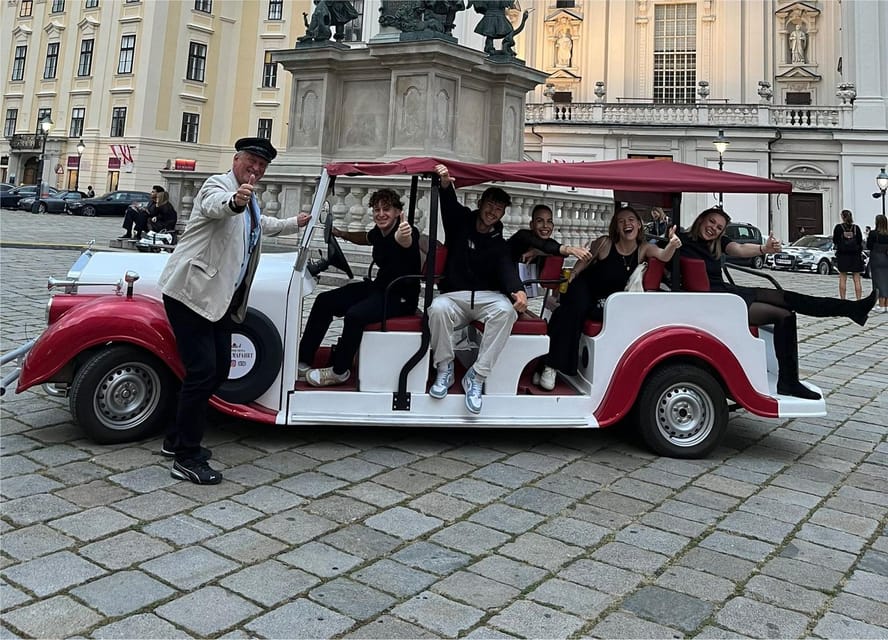
Yes, if you want a fast, fun, low-stress way to understand Vienna’s center before you start walking. The small group, the vintage electric car feel, and the sheer number of major sights passed in just 1 hour make it a smart use of limited time. If you book with photo priorities, choose your seat carefully and come ready for a lot of “pass and notice,” not long stops.
If you already have a perfect walking route planned and you love spending hours in one district, you might not need this. But for most visitors, this is the kind of tour that helps you enjoy the rest of Vienna more because you actually understand what you are looking at.
FAQ
Where does the tour start?
You meet outside the Radisson Blu Style Hotel at Herrengasse 12, 1010 Vienna. Look for the vintage-style electric car there.
How long is the tour?
The duration is 1 hour.
How large is the group?
The group is small, limited to 10 participants.
What languages are available for the live guide and audio guide?
The live guide and audio guide are available in German and English.
What is included in the tour price?
The tour includes a guide and the city sightseeing tour in the vintage-style electric car.
What will we see during the drive?
You will pass many Old Town landmarks and viewpoints, including The Hofburg, Stephansplatz, Albertina, plus attractions across different architecture styles such as Gothic, Baroque, and Jugendstil.
More Tours in Vienna
- Vienna: Schönbrunn Palace & Gardens Skip-the-Line Tour
★ 4.7 · 7,739 reviews - Vienna Spanish Riding School Guided Tour
★ 4.7 · 6,765 reviews - Vienna: Skip-the-Line Sisi Museum, Hofburg and Gardens Tour
★ 4.8 · 5,918 reviews - Vienna: Skip-the-Line Schönbrunn Palace & Gardens Tour
★ 4.8 · 5,411 reviews - Vienna: Guided Walking Tour of City Center Highlights
★ 4.7 · 4,989 reviews
More Tour Reviews in Vienna
- Vienna: Vivaldi’s Four Seasons Concert in Karlskirche
★ 4.7 · 14,951 reviews - Vienna: Schönbrunn Palace & Gardens Skip-the-Line Tour
★ 4.7 · 7,739 reviews - Vienna: Light of Creation Votive Church Immersive Light Show
★ 4.8 · 6,779 reviews - Vienna Spanish Riding School Guided Tour
★ 4.7 · 6,765 reviews - Vienna: Classical Concert in the World-Famous Musikverein
★ 4.6 · 6,673 reviews
The Old Town Around St Stephen's
- Vienna: Guided Walking Tour of City Center Highlights
★ 4.7 · 4,989 reviews - Vienna Historic Center Small Group Walking Tour
★ 5.0 · 1,746 reviews - Vienna: St. Stephen’s Cathedral & Dom Museum Wien Tickets
★ 4.5 · 1,652 reviews - Vienna: 30-Minute Fiaker Ride in the Old Town
★ 4.5 · 1,092 reviews - Vienna: Romantic Old Town 2-Hour Discovery Tour
★ 4.7 · 816 reviews
Recently Added Around Vienna


St Stephen's Cathedral & Vienna Old Town, compared.
 ★ 4.7Guided Walking Tour of City Center HighlightsFrom $254,989 reviews
 ★ 4.1Classical Concert at St. Stephen’s CathedralFrom $114,177 reviews
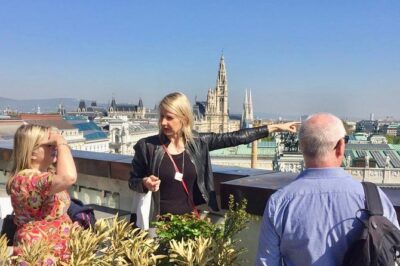 ★ 5.0Vienna Historic Center Small Group Walking TourFrom $721,746 reviews
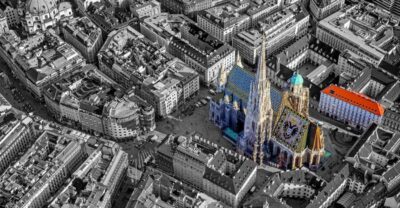 ★ 4.5St. Stephen’s Cathedral & Dom Museum Wien TicketsFrom $341,652 reviews
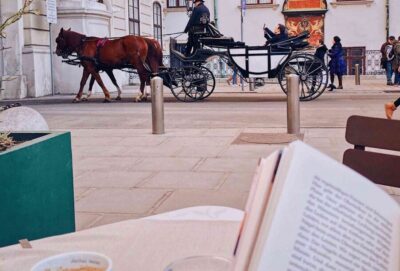 ★ 4.530-Minute Fiaker Ride in the Old TownFrom $1111,092 reviews
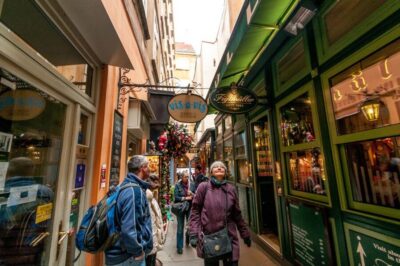 ★ 4.7Romantic Old Town 2-Hour Discovery TourFrom $352816 reviews
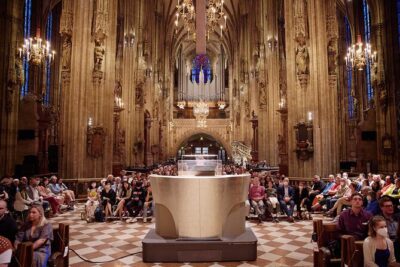 ★ 4.0Concert at Vienna’s St. Stephen’s CathedralFrom $12432 reviews
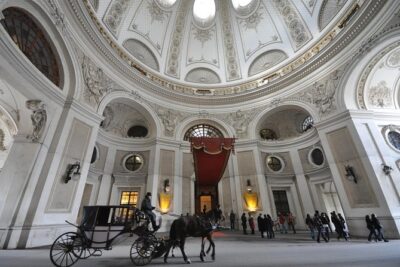 ★ 5.0Exclusive Vienna Old Town Highlights Walking Tour (max. 6 persons)From $151252 reviews
Browse the lists this tour appears in