

Reviewed · ST STEPHEN'S CATHEDRAL & VIENNA OLD TOWN
World War II History Vienna Old Town Private Walking Tour
A street-level look at Nazi power feels real fast. This World War II history Vienna Old Town private walking tour connects major WWI and WWII turning points with the monuments and buildings you can still see today. I especially like the start at Morzinplatz, because it ties the story to a specific place tied to Gestapo operations in 1939. I also like how the guide builds a clear timeline, from Franz Ferdinand through Hitler’s rise, the occupation period, and Vienna’s bombing and liberation.
If you care about asking questions, you’ll appreciate the guide focus and pace. In past groups, guides like Peter have answered everything in detail, even with a small child along, and guides like Sanda and Alexander have kept the explanations professional and easy to follow. One possible drawback: the subject matter is heavy, and the tour is mostly walking with limited room to linger silently at every stop.
Key Things to Know Before You Go

- Morzinplatz kickoff: you begin at the Memorial to the Victims of Nazi Terror near the former Hotel Metropol Gestapo headquarters site.
- A guided WWI to WWII storyline: you get causes, timeline, and consequences explained in plain language, not just dates.
- German-occupied Vienna on foot: you’ll hear how propaganda and daily life worked under occupation.
- Holocaust remembrance stops: the route includes a Holocaust Memorial and several Remembrance Stones.
- Hofburg and Heldenplatz exterior viewing: imperial spaces meet war commemoration, including the Memorial Crypt.
- End at a WWII-bombing reminder near the State Opera: the final stop connects war policy to physical damage in 1945.
Around the Stephansdom and the old lanes
- Vienna: Guided Walking Tour of City Center Highlights★ 4.7 · 4,989 reviews
- Vienna Historic Center Small Group Walking Tour★ 5.0 · 1,746 reviews
- Vienna: St. Stephen’s Cathedral & Dom Museum Wien Tickets★ 4.5 · 1,652 reviews
- Vienna: Old Town Sightseeing Tour in a Vintage-Style E-Car★ 4.5 · 1,107 reviews
Starting at Morzinplatz, Hotel Metropol, and the Gestapo Footprint

The tour begins in front of Denkmal der Opfer des Faschismus (Memorial to the Victims of Nazi Terror), at Morzinpl. 4 (1010 Wien). That location matters. It is not a generic history talk in a classroom. You stand where victims are remembered, and the guide anchors the story to the former Hotel Metropol, which in 1939 was used as the Gestapo headquarters in Vienna.
That setup changes how you read the city. Vienna’s architecture can look calm, even elegant, but the guide’s framing helps you notice the human machinery of terror that operated here. If you want your history to feel concrete, this is a strong start.
Practical tip: arrive a few minutes early. This is the moment where the guide sets tone and vocabulary. If you’re late, you might miss the clearest thread the whole route follows.
A Clear Timeline From Franz Ferdinand to WWII’s End
One of the smartest parts of this tour is the way it treats WWI and WWII as linked events, not two separate textbook units. You’ll hear about the major events leading up to and after World War I and World War II, with the story built around “why it happened” and “what it caused,” not just who won.
In particular, the tour is designed to move through key turning points you’ll recognize:
- The assassination of Franz Ferdinand and how it set off the chain reaction that escalated into WWI
- How the situation in Austria and the region shifted over time toward WWII
- Adolf Hitler and what annexation and political control meant for people in his homeland and beyond
- The role of Austrian Nazis, including Ernst Kaltenbrunner, in the machinery of the regime
- The occupation period in Austria, including propaganda and how daily life was shaped
- Vienna’s wartime experience, including bombing and the path toward liberation
If you’ve ever felt that WWII in Europe is too big to process, you’ll probably like this approach. Two hours is not enough to cover everything, but it is enough time for a guide to connect dots so you can make sense of the places you see afterward.
Also, this is a private walking format, so the guide can tailor emphasis to your interests. If you want more on political causes, you can ask for that. If you want more about how people lived day to day, you can steer the conversation.
Inner Stad on Foot: Propaganda, Occupation, and Holocaust Remembrance

After the opening, you move through Inner Stad (Old Town). This is where the tour becomes more than landmarks. The guide focuses on how people experienced the war in everyday ways, including political propaganda in German-occupied Austria.
You’ll also encounter remembrance along the route:
- A Holocaust Memorial
- Remembrance Stones that mark tragic fates and historical reality
Here’s why this matters for you: you’re not just learning dates. You’re learning how public space carries memory. The city becomes a living document, and the guide helps you read it carefully.
If you’re visiting with teens or curious history adults, this part is often the most memorable. It forces the story to connect to human lives, not only strategy and leaders.
One note on expectations: because this is a private walking tour, it tends to run at the pace of your group. If you pause for questions, the guide can adjust. If you prefer brisk movement, the guide can also keep things flowing.
Hofburg and Heldenplatz: Imperial Vienna Meets War Memorials

You’ll see the imperial palace complex of Hofburg from the outside. The guide doesn’t just point at walls and gates. He or she uses the exterior viewpoint to frame what “Vienna as power” looked like, then contrasts it with the war commemorations that now occupy parts of the area.
The highlight here is the Memorial Crypt dedicated to WWI and WWII victims in Heldenplatz. This stop ties the old imperial center to the human cost of two world wars. It is a strong reminder that the same cityscape can hold very different meanings across time.
And while you’re in this area, you’ll also hear context that helps you understand why memorials are placed where they are. In Vienna, symbolism is not decoration. It is part of how people talk to the present about the past.
Vienna on foot, a couple more routes
Burggarten and the Franz Joseph I Monument: A Moment of Quiet
In the Burggarten, you’ll see the monument to Emperor Franz Joseph I. This is a useful pivot point in the tour. After the heavy content around occupation and Holocaust remembrance, the imperial-era marker adds contrast.
You might think, why include a statue of an emperor during a WWII-focused walk? The answer is that the guide uses it to show how the prewar world and the postwar world overlap visually. Vienna did not destroy its old symbols and rebuild from scratch. Many of the old landmarks stayed, even as the meaning of the city changed.
It’s also a good pause opportunity. Your legs will notice the walk, and this kind of stop gives your brain a breather without dropping the overall thread.
Ending at the Monument Against War and Fascism Near the State Opera
The tour ends at the Monument Against War and Fascism near the Vienna State Opera. The key detail is that the Opera area was heavily damaged by the 1945 bombing. The guide uses the ending point to bring the story full circle: from ideology and occupation, to violence, to liberation, and finally to public reminders that the city experienced war directly.
This final stretch can feel like closure even though history never really wraps up neatly. You end with an outward-looking message, not only an inward memorial.
Practical tip: if you’re heading to a meal afterward, this is a convenient finishing zone. You’ll be near a major central landmark, which makes it easier to continue your day without guessing directions.
Private Guide Quality, Languages, and Keeping the Pace Human
This is a private walking tour with a licensed guide fluent in your chosen language. Languages listed include English, German, Italian, French, Spanish, Russian, Polish, Chinese, Japanese, Croatian, Portuguese, Arabic.
The guide role matters a lot on a historical route like this. You want someone who can:
- explain a timeline in a way you can remember later
- answer questions without rushing past your curiosity
- point out architectural and historical “time witnesses” that you might miss on your own
From prior groups, guides have been praised for detailed explanations and for adjusting to real-life situations. One highlight: Peter showed patience when a family member needed a stop, including a small child. Another highlight: Frau Heuberger managed a strong balance between tour, short talks, and shaded breaks during extreme heat.
That balance is worth your attention. Vienna streets can be warm in summer, and a 2-hour walk needs pacing. If you’re sensitive to long standing and sun, choose a time that fits your comfort level and wear shoes you can walk in for real.
What You Get for $214 Per Person, and Why It Can Be Worth It

At $214 per person for a 2-hour private tour, the price may look steep if you compare it to group tours. But private history walking has a different value.
Here’s what you’re paying for, based on what the tour offers:
- A 5-star expert, licensed guide focused on WWI, WWII, and the Holocaust
- A route built around specific stops tied to Nazi terror, occupation, and remembrance
- A private format, so the guide can tailor the emphasis to your needs and interests
- A language experience that is not an afterthought, since the guide is fluent in your chosen language
In practice, private tours pay off when you care about accuracy and dialogue. If you want answers to questions, this format gives you the space. If you want a guided explanation at each monument instead of reading plaques alone, the cost can feel more reasonable.
Group size also matters. The tour limits groups to 1 to 25 people per guide, and if you go larger, you’ll get additional guides, which increases price. For most people, that cap is part of what keeps the experience audible and question-friendly.
Who This WWI and WWII Vienna Walk Is Best For
This tour fits best if you:
- want a focused, two-hour route through Vienna that connects WWI to WWII with clear reasoning
- like guided context at memorials, not only dramatic stories
- prefer walking and seeing buildings and monuments as evidence
- want your language supported fully by a fluent guide
It may not be the best match if you:
- want a light, casual sightseeing day
- are hoping for a long, slow museum-style experience (this is still a walking tour)
- need a fully wheelchair accessible route, since the activity is walking and the details about accessibility are not provided here
For families: the tour can work if your child can handle a history walk, but keep in mind it is a heavy topic. The tour has shown patience in real family situations in the past, but you should still expect a respectful, serious tone.
Should You Book This Tour?
I’d book it if your goal is to understand Vienna’s WWII and Holocaust story in a guided, place-based way. The route starts at a meaningful point tied to Nazi terror, moves through Old Town with remembrance stops, and ends with a public antiwar message connected to real damage from 1945. That structure gives you both context and location memory.
I would hesitate only if you’re looking for entertainment, or if walking for two hours and processing very serious history sounds like too much for your trip style.
If you do book, my main advice is simple: wear comfortable shoes, bring water if the weather is warm, and come with at least a couple questions. The best parts of this tour are the guided explanations and the chance to ask why Vienna’s landmarks matter today.
FAQ
Where does the tour meet?
You meet your guide in front of Denkmal der Opfer des Faschismus (Memorial to the Victims of Nazi Terror), Morzinpl. 4, 1010 Wien, Austria.
How long is the World War II history walking tour?
The tour lasts 2 hours.
Is it a private tour?
Yes. It is a private group tour.
What language options are available?
The guide is available in English, German, Italian, French, Spanish, Russian, Polish, Chinese, Japanese, Croatian, Portuguese, and Arabic.
What are some key sites you will see?
You’ll visit World War II and Holocaust-related monuments and areas including the Morzinplatz start area, the Holocaust Memorial and remembrance stones, Hofburg (exterior only), the Memorial Crypt in Heldenplatz, and the Monument Against War and Fascism near the Vienna State Opera.
Is there a limit on group size?
Yes. The tour limits group size to 1 to 25 people per guide to keep the experience clear and question-friendly. Larger groups will be handled with additional guides.
What should I wear?
Because it is a walking tour, wear comfortable shoes and dress appropriately for the weather.
Yours Alone Across Vienna
- Vienna: Private Walking Tour with a Local Guide
★ 4.6 · 1,420 reviews - Vienna: Private Walking Tour with a Guide
★ 4.7 · 962 reviews - Vienna: Wine Tasting Experience in a Private Wine Cellar
★ 4.8 · 413 reviews - Private Day Tour Trip Salzburg Hallstatt and Melk from Vienna
★ 5.0 · 388 reviews - Private Day Tour of Hallstatt and Salzburg from Vienna
★ 5.0 · 263 reviews
Vienna on Foot, Continued
- Vienna: Guided Walking Tour of City Center Highlights
★ 4.7 · 4,989 reviews - Vienna: Vienna Central Cemetery Guided Walking Tour
★ 4.8 · 3,307 reviews - Vienna: Guided Walking Tour of City Highlights & Hidden Gems
★ 4.9 · 2,180 reviews - Vienna: Viennese Underworld Guided Walking Tour
★ 4.7 · 1,865 reviews - Vienna: World War II Historical Walking Tour
★ 4.8 · 1,772 reviews
The Old Town Around St Stephen's
- Vienna: Guided Walking Tour of City Center Highlights
★ 4.7 · 4,989 reviews - Vienna Historic Center Small Group Walking Tour
★ 5.0 · 1,746 reviews - Vienna: St. Stephen’s Cathedral & Dom Museum Wien Tickets
★ 4.5 · 1,652 reviews - Vienna: Old Town Sightseeing Tour in a Vintage-Style E-Car
★ 4.5 · 1,107 reviews - Vienna: 30-Minute Fiaker Ride in the Old Town
★ 4.5 · 1,092 reviews
Recently Added Around Vienna


St Stephen's Cathedral & Vienna Old Town, compared.
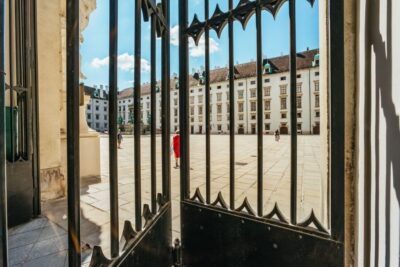 ★ 4.7Guided Walking Tour of City Center HighlightsFrom $254,989 reviews
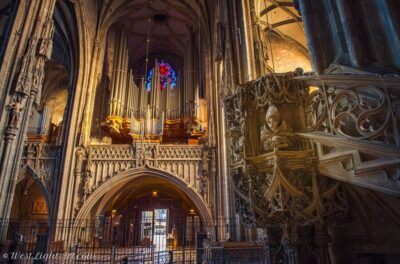 ★ 4.1Classical Concert at St. Stephen’s CathedralFrom $114,177 reviews
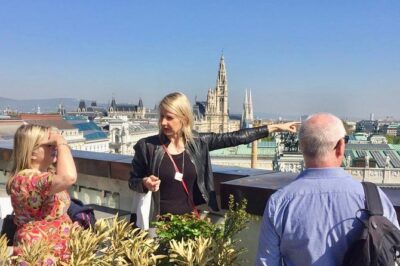 ★ 5.0Vienna Historic Center Small Group Walking TourFrom $721,746 reviews
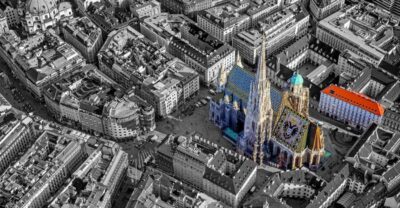 ★ 4.5St. Stephen’s Cathedral & Dom Museum Wien TicketsFrom $341,652 reviews
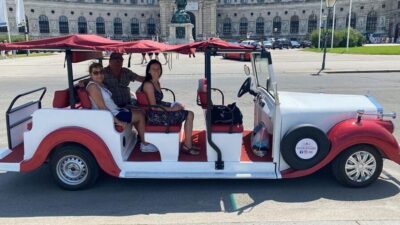 ★ 4.5Old Town Sightseeing Tour in a Vintage-Style E-CarFrom $281,107 reviews
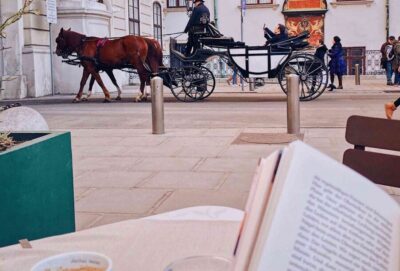 ★ 4.530-Minute Fiaker Ride in the Old TownFrom $1111,092 reviews
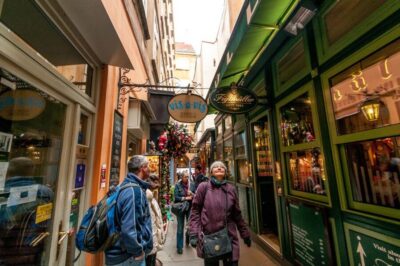 ★ 4.7Romantic Old Town 2-Hour Discovery TourFrom $352816 reviews
 ★ 4.0Concert at Vienna’s St. Stephen’s CathedralFrom $12432 reviews
Browse the lists this tour appears in