

Reviewed · BELVEDERE PALACE & KLIMT TOURS
Private Klimt & Vienna Art Walk — From Baroque to Secession
Vienna has a way of mixing eras. This private Baroque-to-Secession walk hits major landmarks fast, with on-the-ground context for Klimt and the city around 1900. I love the way the route stitches together palaces, churches, and design, so art history feels like something you can walk through. I also like that you get skip-the-line help at key spots, which matters in a museum-heavy city. The one drawback to plan for: museum admission is on you, and the walk is real, so comfy shoes are not optional.
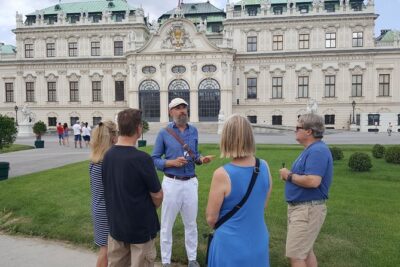
Half-day touring is great because you still have energy left for Vienna. This one runs about four hours and lets you choose a 09:30 morning or 14:00 afternoon start, so it fits sightseeing schedules. I especially appreciate the feel of a private group, up to eight people, guided by Walter in the examples I saw and adjusted to your pace when needed. One consideration: the guide style can include personal takes on history and politics, so if you want purely academic neutrality, decide ahead of time what you prefer.
If you’re trying to see Klimt and understand why Vienna looked and felt the way it did, this walk is built for that. It links Belvedere’s baroque world to the Secession’s Art Nouveau manifesto, plus stops like Karlskirche and the Otto Wagner Karlsplatz station that explain the city’s shift in style. Go in with a simple plan, bring your museum tickets, and you’ll leave with a clearer sense of how Vienna’s artistic revolutions fit the streets you just walked.
What You’ll Remember Most on This Vienna Walk

- Skip-the-line at Belvedere’s Klimt stop: you get on-site flow so you can spend more time looking and less time waiting.
- Two Klimt moments, tied to their stories: the Kiss at Belvedere and the Beethoven Frieze at the Secession.
- Art Nouveau through architecture, not just paintings: the Secession Building is treated like a manifesto.
- A route that moves through Vienna’s big “periods”: baroque, then the late-1800s boom, then around-1900 modern design.
- A practical lunch option at Naschmarkt: you get a flexible food break without derailing the tour.
More time with Klimt's Kiss at the Belvedere
- Entry Ticket Upper Belvedere, Klimt’s Kiss & Permanent Collection★ 4.5 · 831 reviews
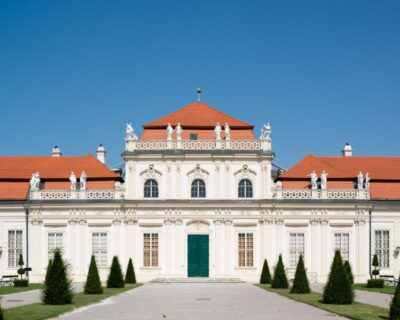
- Vienna: Lower Belvedere Entry Ticket & Temporary Exhibitions★ 4.1 · 275 reviews
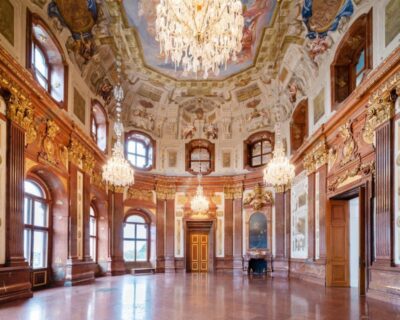
- Vienna: Belvedere Palace Skip-the-Line Tour★ 4.9 · 197 reviews
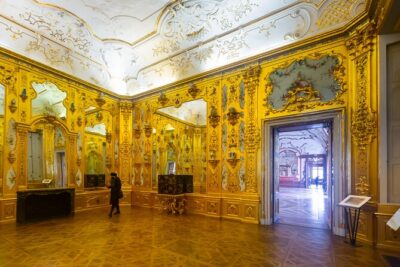
- Skip-the-line Upper Belvedere Tickets and Guided Tour Vienna★ 4.8 · 185 reviews
Why This 4-Hour Private Art Walk Works So Well

This is the kind of tour that helps you see Vienna in one logical arc, not as a pile of separate sights. In a few hours, you connect the baroque power of palaces and churches with the Art Nouveau rebellion of the Secession era. That timing is the secret sauce: you walk from one visual language to the next while the details are still fresh in your head.
Another thing I like is the group size. At up to eight people, you get a more personal pace than most big group tours, and you’re not stuck listening over constant late arrivals. If you’re planning a first visit, this format helps you get your bearings fast.
You also get pickup options, which matter in Vienna. You can meet at hotels and vacation rentals in town, at Reichsbruecke pier, or at major train stations like Vienna Hbf and Vienna West. That takes the stress out of trying to figure out tram lines before you’ve even started sightseeing.
Pickup, Start Times, and How to Plan Your Day
The tour runs about four hours and offers a morning start at 09:30 and an afternoon start at 14:00. If you’re the type who likes museums early, the morning slot usually helps. If you prefer a slow start, the afternoon slot lets you cover other neighborhoods first and then focus on this art-heavy route.
Admission tickets are not included for the Upper Belvedere and the Secession, so you will want to plan for that cost. Skip-the-line is included, but tickets still matter, especially for timed museum entry. If you want the simplest setup, budget for admissions first, then treat the guide’s access help as the time-saver on the day.
Also note the practical side: this is near public transportation, and service animals are allowed. The tour calls for moderate physical fitness, so expect walking and some outdoor time.
Step One at Belvedere: Wrought-Iron Gates and Klimt’s Kiss
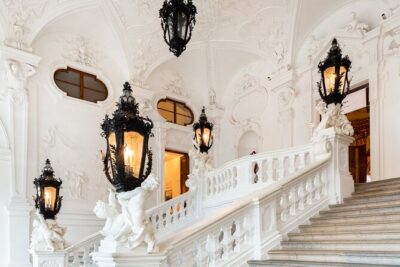
Belvedere is one of those places where the approach sets your mood. You enter through outstanding wrought-iron gates into the Belvedere gardens, and that transition from street to palace grounds is part of the experience. Instead of rushing straight to a painting, you get a chance to understand the setting first.
At this stop, the big reason people book is Klimt’s Kiss, embedded in the Austrian Gallery at the Belvedere. You’re guided through what you’re seeing and why it was placed and celebrated the way it was, so the painting lands with more meaning than a quick photo and a walk-out.
This is also where skip-the-line access pays off. Vienna can be crowded around top museums, and getting on-site help keeps your momentum. If you’ve ever waited in a line just to feel rushed once you get inside, you’ll appreciate how this tour helps prevent that exact problem.
One tip: plan to spend real looking time. The tour structure gives you time on site, but you still need to let the painting register. If you treat it like a checkpoint, you’ll miss what makes Klimt click.
Lower Belvedere Gardens: Decoding the Visual Tricks

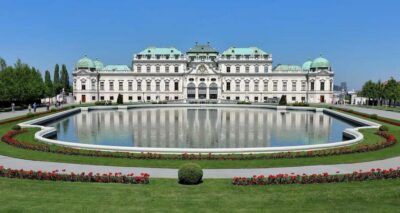
After the main Belvedere entry, you move down through the gardens and start deciphering how the place is designed. The tour focuses on how the gardens play with visual tricks, and that matters because baroque gardens are not just pretty lawns. They’re stagecraft for power and perspective.
You also get the Prince Eugene angle, which is one of those details that makes the whole site click. The route explains how the garden room and the honor court help you understand what Prince Eugene brought to Vienna from Versailles, but on a more miniature scale. That comparison is useful because it helps you place Belvedere within Europe’s broader style language.
If you enjoy architecture and landscape design, this garden segment is where the tour becomes more than “see painting, move on.” You’ll likely look at sightlines and proportions differently afterward.
The one thing to consider: gardens mean outdoor walking. Weather can change your comfort level, so if you visit in shoulder season, bring a layer you can handle on and off.
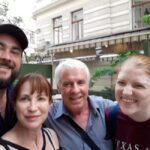
Only your group, at your own tempo


Schwarzenbergplatz and the Mixed City Around 1900

From Belvedere’s baroque grandeur, the route transitions into a different kind of Vienna, where history is layered into everyday streets. Schwarzenbergplatz comes up next, dominated by a Soviet Memorial, and surrounded by buildings that reflect Vienna’s boom period at the end of the 1800s.
This stop is less about one museum object and more about reading the city as a timeline. You learn how Vienna’s story doesn’t move in neat straight lines. Instead, you get contradictions, monuments from different decades, and architecture that reveals changing ambitions.
It’s a smart choice for a half-day walk because it widens the context beyond art. If you only focus on galleries, you can miss how the city’s political and social shifts shape what people build and how they remember.
Karlskirche: Baroque at Full Volume

Then you get to a church that’s meant to impress from far away: Karlskirche. The tour explains how it sets the stage for Austria’s glorious epoch in the 1700s, with baroque design at its best.
Karlskirche works especially well in a walking itinerary like this because it’s a landmark you can see, not just an interior you might rush through. The façade and its dramatic presence help you feel the scale of what baroque architecture was trying to do.
One practical note: churches can mean stairs and uneven surfaces around entrances and plazas. It’s usually manageable, but if you know your comfort limits, wear shoes with grip.
Otto Wagner at Karlsplatz: Art Nouveau in Metro Form

Next comes a very Vienna moment around 1900: the Otto Wagner metro-station at Karlsplatz. It’s a reminder that Art Nouveau is not only about decorative painting and fancy interiors. Design shows up in daily infrastructure too.
This stop adds a bridge between the Secession era and the physical city you’re walking through. You start noticing that the style shift toward modern design was not abstract. It was being built into transit, surfaces, and the feel of moving through space.
If you like when a tour helps you “see differently,” this is the kind of stop that does it. You might start thinking in lines, curves, and function, not just color and ornament.
Vienna Musikverein: The Great Hall and Why Acoustics Matter

You also pass through the Vienna Musikverein, the home of the Vienna Philharmonic orchestra. The highlight here is the Großer Saal, often called the Great or Golden Hall, and for good reason. The tour explains how its acoustics are highly regarded, and it’s considered one of the finest concert halls in the world.
Even if you never plan to book a concert, this stop is still valuable. It’s a way to connect Vienna’s artistic identity beyond visual art. Music is part of why people fall in love with the city’s culture, and the Musikverein is one of the clearest physical symbols of that.
If you’re a music lover, you’ll probably want to add a concert later. If you’re not, you’ll still appreciate how Vienna treats performance spaces like major cultural architecture.
Secession Building: An Art Nouveau Manifesto
Now comes the pivot, from baroque to Art Nouveau, with the Secession Building. This is where the tour’s title makes sense. The Secession is described as an architectural manifesto, built by a group of rebel artists who seceded from a long-established fine art institution.
That word, seceded, matters. It signals a break with official taste, which is basically the emotional engine behind a lot of Art Nouveau. You stop thinking of art as something politely accepted, and you start thinking of it as something argued for, designed, and demanded.
Klimt’s connection is central here. He painted the Beethoven Frieze for an exhibition, and it was meant for that event, not as a permanent collection piece in the usual sense. The frieze was painted on the walls with light materials and culminates in a kiss to the world. That last detail is a big part of why his work keeps echoing across your route.
This stop includes skip-the-line, but again, admissions for the Secession are not included. Plan for that ticket separately so you can focus on the story and visuals inside.
Naschmarkt as Your Flexible Food Break
Between major art stops, the route gives you time near Naschmarkt, in its current transitional stage dating to 1915. It’s a market plus an international food experience, which makes it perfect for an al fresco lunch or a tasty late afternoon snack.
I like this kind of built-in flexibility because it keeps you from eating a sad hotel sandwich at 4:00 pm. You can grab something quick that matches your tastes and still rejoin the group without losing the tour rhythm.
If you’re traveling with someone who gets hangry, this stop is a lifesaver. It turns a time gap into an actual benefit.
Price and Value: Is $372.47 a Good Deal for Four Hours?
At $372.47 per group (up to 8), this is priced like a private walking experience, not a budget group tour. For me, the value comes from two things: real time savings and real interpretive help.
First, you’re not just visiting the places. You’re getting skip-the-line at key points. In a city where top attractions can mean waiting, that can be worth real money in time and patience.
Second, the tour tries to explain why the sights look the way they do, using the city’s design shifts as the connecting thread. That is the difference between watching a guide point and actually understanding what you’re seeing. The best moments here are the ones that connect garden layout to baroque power, or Art Nouveau design to modern life, not just the painting itself.
If you’re traveling solo or as a couple, the math depends on how much you’ll pay to avoid the big group vibe and to get pickup and a tailored pace. If you’re a small group, it becomes easier to justify.
Also, the booking cadence is decent, with an average of being booked about 64 days in advance. If you have fixed dates, lock it in earlier rather than rolling the dice.
Who This Tour Suits Best
This tour is a strong fit if you want Klimt and you want context, too. It’s also ideal if you like architecture, not just masterpieces on walls. The route through Belvedere, Karlskirche, Otto Wagner’s station, and the Secession building is basically a guided course in how Vienna’s style changed across major eras.
It’s also a good choice for couples and small families who want a structured half-day plan. The pacing is designed for a walking format, and the private group size can help you keep things manageable.
If you want zero walking and fully seated museum time, this is probably not your best match. This is a city-walking story, so plan for shoes, weather, and a bit of outdoors time.
A Balanced Take: What to Watch For
Most of what you’ll get here is strong: skip-the-line access, a tight route that covers major sights in one arc, and a guide who tells the story behind what you’re seeing. In the positive accounts, people highlight an excellent pace and clear explanations that make the art and city feel linked.
Still, there are a couple things to consider. First, tickets are not included, so you need to add museum admission costs for the Upper Belvedere and the Secession.
Second, the guide may share personal opinions about history and politics, since private tour guides sometimes weave in their own perspective. If you prefer strictly neutral commentary, you may want to set expectations before you start.
Finally, humor and personal style can land differently for different people. If you know you are picky about that sort of thing, pay attention to how the tour starts and adjust your expectations early.
Should You Book This Vienna Art Walk?
I’d book this tour if you’re prioritizing Klimt, love architecture, and want a route that actually helps you connect eras in Vienna. It’s also a smart value for small groups, because the per-group pricing plus private pacing can be easier to swallow than it looks at first glance.
Skip it if you only care about one painting and you hate walking. Or if you want strict neutrality and only museum-style facts, because this is a private, story-led experience and the guide’s voice will matter.
If you do book, come ready to look slowly at the art and the buildings, not just check off stops. Plan for museum admissions, wear comfortable shoes, and pick the start time that matches your energy. Do that, and you will leave Vienna with a clearer mental map of why the city still feels like a conversation between baroque power and Art Nouveau rebellion.
FAQ
Are tickets included for the Belvedere and Secession?
No. Admission tickets for the Upper Belvedere and the Secession are not included. Skip-the-line help is included, but you still need to cover the museum admission yourself.
How long is the tour, and what time does it start?
The tour lasts about 4 hours. It starts at 09:30 for the morning option or 14:00 for the afternoon option.
Is pickup available?
Yes. Pickup is offered at hotels and vacation rentals in town, at Reichsbruecke pier, or at train stations including Vienna Hbf and Vienna West. Other meeting points can be arranged.
Is this tour private?
Yes. It is a private tour/activity, and only your group participates.
How many people are in a group?
The tour price is per group for up to 8 people.
Can I cancel for a full refund?
Yes, you can cancel for free. To get a full refund, you must cancel at least 24 hours before the experience’s start time, based on local time.
More Tour Reviews in Vienna
- Vienna: Vivaldi’s Four Seasons Concert in Karlskirche
★ 4.7 · 14,951 reviews - Vienna: Schönbrunn Palace & Gardens Skip-the-Line Tour
★ 4.7 · 7,739 reviews - Vienna: Light of Creation Votive Church Immersive Light Show
★ 4.8 · 6,779 reviews - Vienna Spanish Riding School Guided Tour
★ 4.7 · 6,765 reviews - Vienna: Classical Concert in the World-Famous Musikverein
★ 4.6 · 6,673 reviews
Yours Alone Across Vienna
- Vienna: Private Walking Tour with a Local Guide
★ 4.6 · 1,420 reviews - Vienna: Private Walking Tour with a Guide
★ 4.7 · 962 reviews - Vienna: Wine Tasting Experience in a Private Wine Cellar
★ 4.8 · 413 reviews - Private Day Tour Trip Salzburg Hallstatt and Melk from Vienna
★ 5.0 · 388 reviews - Private Day Tour of Hallstatt and Salzburg from Vienna
★ 5.0 · 263 reviews
The Belvedere and Klimt, Continued
- Entry Ticket Upper Belvedere, Klimt’s Kiss & Permanent Collection
★ 4.5 · 831 reviews - Vienna: Lower Belvedere Entry Ticket & Temporary Exhibitions
★ 4.1 · 275 reviews - Vienna: Belvedere Palace Skip-the-Line Tour
★ 4.9 · 197 reviews - Skip-the-line Upper Belvedere Tickets and Guided Tour Vienna
★ 4.8 · 185 reviews - Vienna: Schönbrunn, Belvedere, Big Bus, Giant Wheel & Cruise
★ 4.1 · 78 reviews
Recently Added Around Vienna


Belvedere Palace & Klimt Tours, compared.
 ★ 4.5Entry Ticket Upper Belvedere, Klimt’s Kiss & Permanent CollectionFrom $23831 reviews
 ★ 4.1Lower Belvedere Entry Ticket & Temporary ExhibitionsFrom $17275 reviews
 ★ 4.9Belvedere Palace Skip-the-Line TourFrom $62197 reviews
 ★ 4.8Skip-the-line Upper Belvedere Tickets and Guided Tour ViennaFrom $60185 reviews
 ★ 4.1Schönbrunn, Belvedere, Big Bus, Giant Wheel & CruiseFrom $9578 reviews
 ★ 5.0Belvedere Palace and Museum TourFrom $18171 reviews
★ 5.0Skip-the-line Upper Belvedere Tickets and Guided Tour ViennaFrom $7868 reviews
★ 5.0Belvedere Palace and Museum TourFrom $18171 reviews
★ 5.0Skip-the-line Upper Belvedere Tickets and Guided Tour ViennaFrom $7868 reviews
 ★ 4.7Klimt Villa (Gustav Klimt Atelier & Museum) TicketFrom $1150 reviews
Browse the lists this tour appears in