

Reviewed · 2-HOUR EXPERIENCES
Vienna’s Highlights in two hours (two options)
Vienna’s myths live right on the sidewalk. This 2-hour walk threads together Greek Quarter legends, medieval science stories, and the kind of architecture you only notice once someone points it out. I like how it blends story with real street-level details, not museum talk.
Two things I particularly love: you get Art Nouveau buildings around Fleischmarkt that many visitors overlook, and you also learn how early printing in Vienna connects to the Habsburg era and local lore. The guide also steers you through small streets where history feels close, not distant.
One possible drawback: it’s mostly a walking tour in the first district area and it is not suitable for wheelchair users. If you want a long, high-footprint tour, this easy, short format might feel too gentle.
Key highlights worth planning for

- Greek Quarter legends tied to plague survival, Augustin, and alchemist-style Middle Ages stories
- Art Nouveau at Fleischmarkt that is often missed, plus links to early printing houses
- Old residential tower in the neighborhood, tied to the myth of the basilisk
- Danube-border history at Griechengasse, where the Greek area’s role becomes clear
- Lugeck’s printing history and early Habsburg context, with legend folded into facts
- Headsets for clear listening plus a private setup, so your questions actually get answered
A useful second option for the same Vienna day:
- Vienna: Romantic Old Town 2-Hour Discovery Tour★ 4.7 · 816 reviews
- Vienna: 2 Hours Sightseeing Walking Tour★ 4.8 · 332 reviews
- Vienna: 2-Hour Historical Crimes Guided Walking Tour★ 4.8 · 130 reviews
- Vienna: Jewish Life in Leopoldstadt 2-Hour Walking Tour★ 4.9 · 109 reviews
Greek Quarter legends you can actually follow on foot

The Greek Quarter in Vienna is famous in the way an old story is famous, not in the way a big-ticket sight is famous. Yet the streets and building façades still hold the clues. You are walking through a patch of the city where hope, sickness, and printing all show up in the same narrative.
The tour leans hard into legends like Augustin and the basilisk. It also pulls in the kind of medieval thinking that sounds strange until you see how people used science, symbols, and texts to survive. If you like Vienna for its layers, this is a neat way to feel the city’s timeline in one short stretch.
Stubentor meeting, private headsets, and a tour that stays easy
You start near the Dr. Karl Lueger monument by the subway station Stubentor. From there, you stay in the historic center area for about two hours. It is designed to be easy going. You do not walk much, so the pace suits people who want history without turning the afternoon into a forced march.
A small detail that makes a big difference: the tour uses silent guidance with headsets. That helps you hear the guide clearly even in normal street noise. And since this is a private tour, you should feel comfortable asking questions when something sparks your curiosity.
Rain or shine, the walk goes on. That means you should pack a light jacket and comfy shoes even if the weather looks fine at booking time. Also, it is not an underground tour, so you can plan for open-air strolling.
Stop by stop: what the two-hour flow feels like

Because the experience is designed as a compact circuit, the order of streets matters more than the length. You move from the broader historic center into a denser pocket of stories and architecture. Along the way, specific street names guide you to specific themes.
Here is the general rhythm: the walk introduces the Greek Quarter’s role in hope and printing, then shifts to architecture around Fleischmarkt. After that, you pass through lanes connected with border history and legends, and you finish with Lugeck, where the story folds into the early Habsburg monarchy and Vienna’s printing press history.
Your booking includes two possible end points listed as Lugeck 6 and Parlament Österreich. At the same time, the activity notes that it ends back at the meeting point. So if you want zero surprises, check which end point applies to your option when you confirm.
Augustin’s legend and why the Greek Quarter feels like a survival story

One of the tour’s core threads is the legend of Augustin, and you feel it in the way the guide ties places to meaning. The story is about hope for the people, hope to survive the plague, and the kind of courage that becomes a local identity over time.
That matters because it changes how you look at the neighborhood. Instead of treating the Greek Quarter as just another scenic old-town area, you see it as a place people leaned on when life was risky and uncertain. If you like historical atmospheres, this is one of the strongest parts of the experience.
You also get other legend-style science and scholarship ideas, including alchemists and medieval scientists. These are not presented as distant trivia. The aim is to show how legends, texts, and early publishing culture shaped the intellectual life that grew around this area.


Fleischmarkt Art Nouveau you can spot, plus why it links to printing
When you reach the area of Fleischmarkt, the tour shifts from legend to architecture. You admire Art Nouveau buildings that are mostly unknown to tourists, which is exactly the kind of Vienna detail I enjoy. Many cities have one or two famous Art Nouveau spots. Vienna has more, but you have to look with guidance.
The connection to printing houses is the twist. You are not only admiring façades for their curves and details. You learn why this neighborhood’s role in early printing mattered for the spread of ideas, and how that connects to the city’s broader development.
This stop is valuable for two reasons. First, it helps you recognize Art Nouveau as a living style rather than a one-time sightseeing checkbox. Second, the printing-house link gives you a reason to care beyond aesthetics. You leave Fleischmarkt with a clearer sense of how knowledge moved through Vienna.
Griechengasse: border history on the Danube (and the why behind the streets)

Griechengasse is where the tour makes the geography matter. The street is presented as part of a border area on the Danube. That helps explain why the Greek Quarter developed the way it did, because borders shape trade, culture, and who feels welcome enough to stay and build networks.
The guide also connects this setting to bigger historic currents, including preparation for Greek independence. You might not expect a Vienna neighborhood walk to touch independence movements, but it makes sense once the story is placed in its local context.
If you like history that explains cause and effect, this part works well. It’s not just names and dates. It’s a sense of how the city’s location and connections shaped who lived here and what they did.
The oldest residential tower and the basilisk saga

Vienna has towers that look simple until someone tells you why they matter. In the Greek Quarter, you find the oldest residential tower in Vienna, and the tour uses its presence as a way to ground the legends in physical space.
The basilisk saga is one of the legend elements tied to the area. It adds that classic Vienna flavor of stories wrapped around buildings and streets. You start to notice how people historically made sense of danger, mystery, and the unknown.
This stop is especially good if you enjoy “how can a legend have a location?” questions. The guide’s approach helps you understand how oral stories and local landmarks reinforce each other over time.
Greek merchants and intellectuals in the 18th century

This tour does not treat the Greek Quarter like a ghost town. It brings in the practical human side: Greek merchants and intellectuals were active in the neighborhood in the 18th century. You hear how patrons supported artists and how money and networks helped shape cultural life.
That context matters because it makes the architecture and legends feel less decorative. You can imagine the day-to-day reality behind the façades, taverns, and early publishing connections.
One of the best parts of a short tour like this is learning enough background to guide your own curiosity after. After this walk, you should feel prepared to look at the area again and spot hints of the cultural ecosystem that once lived there.
Schönlaterngasse to Lugeck: from legends to Vienna’s early printing press

The tour uses street names to hop between story layers. Schönlaterngasse is where legends come forward again, and it helps you connect the mythic part of the experience with the real urban fabric.
Then you reach Lugeck, which is where history and legend meet in a very Vienna way. Here, you learn about the history of Vienna’s printing press, tied to historical facts from the beginning of the Habsburg monarchy, plus exciting local legends. It’s one of those junction points where you realize Vienna’s power came from systems, texts, and patronage as much as from palaces.
If you only have a day or two in Vienna, this section is a smart use of time. It compresses multiple eras into one walk, without requiring you to switch to multiple museums. You end with a clearer map of how early printing culture fit into the rise of Habsburg influence.
What you get in your two hours (and why the guide makes it work)
The experience includes a silent guide setup with headsets. That’s not just a convenience. It keeps you focused, especially in a busy central area where street sound can drown out normal group tours.
It is also described as a private tour, which is a big deal for a story-based itinerary. When the guide is explaining legends like Augustin or the basilisk saga, you are not just passively listening. You can ask follow-up questions right away.
One practical extra: the guide provides a map of the historic center of Vienna with illustrations of the buildings. That matters because it extends the tour beyond the two hours. Instead of only remembering the highlights as a blur, you can use the map to orient yourself and keep exploring nearby streets with purpose.
In a short review of the experience, the guide is noted as friendly and willing to answer concerns. That matches what you should want from a legend-heavy walk, since the fun part is usually in the questions.
Price and value for a short, story-led Vienna stop
The cost is $24 per person for about two hours. For Vienna, that is the kind of price that makes sense if you want structure without spending half a day. You are getting guided context across architecture, legends, and printing history, plus headsets and a private format.
You also get a high value-to-time ratio. Many tours either run long or focus on one theme. Here, the aim is to connect the Greek Quarter’s identity across centuries, from plague-era hope to Art Nouveau façades and early printing culture tied to the Habsburg monarchy.
Would it be cheaper to walk on your own? Sure, if you only want general sightseeing. But this is the type of tour where the names, legends, and street connections genuinely change what you see. At $24, you are buying interpretation, not just movement.
Who this tour suits best, and who might want a different style
I’d book this if you enjoy old neighborhoods, legends with a sense of place, and architecture explained in plain terms. You will like it if you are the type who pauses to look at façades and wants to know why a building exists, not only what it looks like.
It’s also a good fit if you have limited time. Two hours is enough to get oriented and start noticing details you would miss on a self-guided stroll.
One limitation is obvious. It is not suitable for wheelchair users. Also, it is not an underground tour, so if you were hoping for metro-like tunnels or subterranean spaces, this isn’t that.
Should you book Vienna’s Highlights in two hours?
If your Vienna plan needs a compact, high-signal walk, this is a strong choice. You get the Greek Quarter’s legends, a guided look at Art Nouveau near Fleischmarkt, and the history thread that connects printing in Vienna to the Habsburg era. The headsets and private format keep it comfortable and interactive.
I’d recommend booking if you want an experience that makes you look twice at the city. You’ll leave with names like Augustin, basilisk, and Lugeck on your mental map, plus that illustrated city center map to keep exploring after the walk.
FAQ
How much does Vienna’s Highlights in two hours cost?
The price is $24 per person.
How long is the guided tour?
The duration is 2 hours.
Where do we meet, and where does the tour end?
You meet around the Dr. Karl Lueger monument near the subway station Stubentor. The activity ends back at the meeting point, and the itinerary also lists drop-off locations at Lugeck 6 and Parlament Österreich depending on the selected option.
Is this tour underground?
No. It is not an underground tour.
Is the tour walking-heavy?
No, it is described as an easy tour. You don’t walk much, so it is not strenuous.
Is pickup available?
Pickup is optional. The provider uses public transport and can meet you in the lobby of your hotel or at a public transport station you agree on by email. They do not offer car or bus pickups.
What languages are offered?
The live tour guide is available in Italian, German, and English.
Is the tour wheelchair accessible?
No. It is not suitable for wheelchair users.
Can I record the guide during the tour?
No. Any recording of explanations given by the guide during the tour is strictly prohibited due to copyright protection.
More 2-Hour Experiences in Vienna
- Vienna: Romantic Old Town 2-Hour Discovery Tour
★ 4.7 · 816 reviews - Vienna: 2 Hours Sightseeing Walking Tour
★ 4.8 · 332 reviews - Vienna: 2-Hour Historical Crimes Guided Walking Tour
★ 4.8 · 130 reviews - Vienna: Jewish Life in Leopoldstadt 2-Hour Walking Tour
★ 4.9 · 109 reviews - Vienna: 2-Hour Street Art Tour
★ 4.5 · 76 reviews
More Tour Reviews in Vienna
- Vienna: Vivaldi’s Four Seasons Concert in Karlskirche
★ 4.7 · 14,951 reviews - Vienna: Schönbrunn Palace & Gardens Skip-the-Line Tour
★ 4.7 · 7,739 reviews - Vienna: Light of Creation Votive Church Immersive Light Show
★ 4.8 · 6,779 reviews - Vienna Spanish Riding School Guided Tour
★ 4.7 · 6,765 reviews - Vienna: Classical Concert in the World-Famous Musikverein
★ 4.6 · 6,673 reviews
Recently Added Around Vienna


2-Hour Experiences, compared.
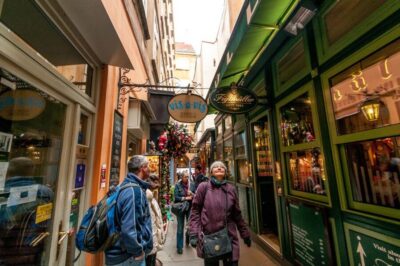 ★ 4.7Romantic Old Town 2-Hour Discovery TourFrom $352816 reviews
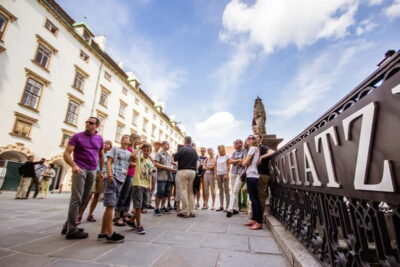 ★ 4.82 Hours Sightseeing Walking TourFrom $33332 reviews
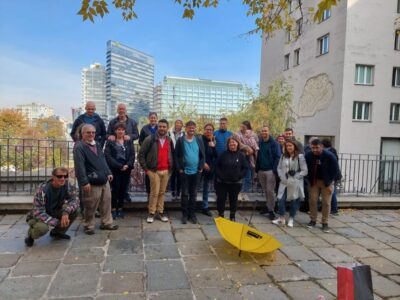 ★ 4.82-Hour Historical Crimes Guided Walking TourFrom $45130 reviews
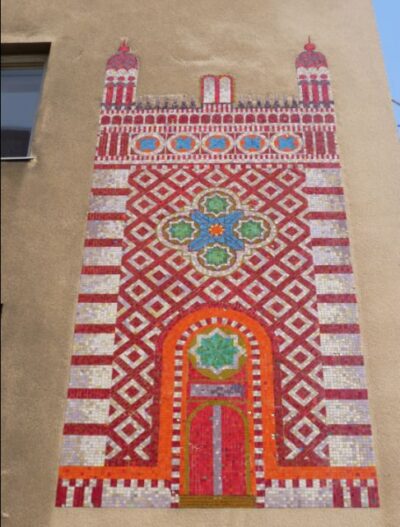 ★ 4.9Jewish Life in Leopoldstadt 2-Hour Walking TourFrom $25109 reviews
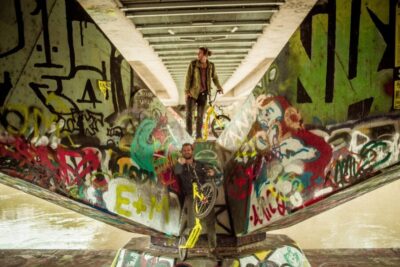 ★ 4.52-Hour Street Art TourFrom $4576 reviews
 ★ 4.5Vienna to Prague – Private Transfer with 2 hours of SightseeingFrom $31325 reviews
 ★ 5.0Transfer from Vienna to Salzburg with 2 hours for sightseeingFrom $34924 reviews
 ★ 5.0Private Transfer from Vienna to Budapest with 2 hours for sightseeingFrom $27012 reviews
Browse the lists this tour appears in