
Vienna can feel like one grand set of statues and palaces. This tour turns that grandeur into something you can actually follow, with expert guide storytelling and a tight 2-hour walk through the center. I especially like how you get context for the big names, like Hofburg and St. Stephen’s, plus the darker, human side of Vienna’s past, like the plague column. One thing to consider: it needs a minimum group size of 5, or the tour can be canceled and refunded.
I also like the guide style here. The best runs balance clear facts with personality, so the walk feels paced for your group, not just recited. Expect mostly outdoor walking, so plan for time on your feet and bring comfortable shoes.
Key things to know before you go
- Top sights, explained in plain language so you understand what you are looking at
- Imperial-era stories that connect places across the city center
- Standout stop at St. Stephen’s and its iconic roof details
- Pestsäule plague history for a side of Vienna most people skip
- Josefsplatz and the Augustinian church for a quieter, atmospheric moment
- English guided walking with a live local perspective
Why This 2-Hour Vienna Walk Works
Think of this tour as your fast way to get oriented without turning Vienna into a checklist. In two hours, you hit several of the city’s biggest landmarks and learn what makes them meaningful, not just impressive.
The value is in the guide’s connections. You are not only seeing architecture, you are learning why it exists and how it shaped the city over time. That is what turns a building into a place you remember. The pace is also realistic for first-time visitors, with just enough time at each stop to look closely before moving on.
The other reason it works is focus. You spend your energy on a compact route around central Vienna, instead of spreading attention across too much transit and too many detours.
Meeting on Albertinaplatz, Right in the Center of Things
You start at Albertinaplatz, in the middle of the square near the monument against war and fascism. That matters more than it sounds, because it frames the city beyond the royal highlights. Vienna is famous for emperors, but it also has modern lessons in it, and this spot nods to that right away.
From there, you get set up for a walk that is easy to follow, and you avoid the typical “where do we start?” confusion. Plus, this meeting point is in a part of Vienna where it is simple to regroup if you are grabbing a snack or adjusting for weather.
Practical tip: arrive a few minutes early. The square is open, but it can still be busy, and you want to find your guide without stress.
Josefsplatz and the Augustinian Church: A Calm Pause With Meaning
One of the listed stops is Josefsplatz and the nearby Augustinian church. This is a smart inclusion because it gives you a breather between the big-ticket sights. You can slow down, look around, and still feel like you are learning something.
This corner of the center is ideal for spotting how Vienna balances grandeur with everyday street life. Even when the story turns historical, the setting stays human scale. That helps the facts stick, because you are not only staring up at monuments, you are experiencing how people actually move through the area.
Listen for how the guide connects the church and square to broader Vienna themes. On a walking tour like this, the small spots do the heavy lifting: they make you notice details, proportions, and the way the city’s religious and civic spaces overlap.
Hofburg Palace Exterior: The Power of the Habsburgs, Up Close
You will see Hofburg Palace, the former residence of the Habsburg dynasty. Even without entering, the exterior presence does a lot. Hofburg is the kind of place that makes you understand why people still describe Vienna as an imperial city, because the scale and layout communicate authority.
What I like about having a guide here is that you do not just get “it was important.” You get the why: how power was displayed, maintained, and normalized through the city. Hofburg is more than a single building. It is a whole statement about governance and status, and the tour helps you read that statement as you walk.
A helpful strategy: during this stop, take a slower look at edges and rooflines, not only the biggest façade. Vienna’s imperial buildings reward attention. You will feel like you understand the structure better when you have a story in your head.
St. Stephen’s Cathedral and Its Roof: Look Higher
St. Stephen’s is the showpiece, and the tour makes sure you look at what most people skip. The big feature called out here is the cathedral’s unique roof, which is a perfect example of “don’t just look, observe.”
When you have a guide talking while you stand there, the roof shifts from decoration to a clue. You start noticing patterns and design choices, and you get the sense that Vienna loves symbolic detail. That changes your experience instantly, because you stop treating the cathedral like a photo backdrop and start treating it like a crafted object.
Practical note: the walk is short, so your time at this kind of stop matters. Wear shoes that handle uneven stone and be ready to pause for viewpoints. If the weather is bad, this is also one of the places where being flexible and quick matters.
Pestsäule: The Black Plague Column With a Dark Human Edge
Next up is Pestsäule, the column erected to commemorate Viennese victims of the black plague. This is the “hold your attention” stop. A palace and a cathedral are easy to admire. A plague monument makes you think.
What makes this worth doing on a tour, instead of passing it on your way to something else, is that the story gives the column weight. You learn that it is not just a historical marker. It is a reminder of how a city suffered, coped, and remembered.
If you are the type who likes history that has emotion, not just dates, you will appreciate this moment. It also balances the imperial tone you get from Hofburg. Vienna was not only built by rulers. It was endured by ordinary people.
The Rest of Vienna’s Top 10 Stops, Tied Together by Story
The title points to a wider set of major sights beyond the three big named ones above, and the main idea is consistent: you move through central Vienna while your guide connects dots. Even when you are not entering buildings, the guide points out what to notice, so you can build your own “map” of Vienna in your head.
Here is what you can expect from the overall flow. You will move location to location with short, focused explanations that fit a walking pace. The tour is designed so each stop does a job: one gives you imperial context, one gives you a landmark view, one gives you a human-scale story, and one helps you recognize the city’s visual language.
One thing I value on walks like this is the group reading element. In strong guided tours, the guide adjusts what they emphasize based on what the group responds to. That is where the experience often feels personalized, even though the route is fixed.
Price and Value: Is $40 Worth It?
At $40 per person for a 2-hour English guided walk, this is a value play for Vienna’s center. You are paying for three things you cannot easily replace with casual roaming: an efficient route through the main sights, a guide who explains what you are seeing, and stories that are not usually in the background noise.
Entrance tickets are not included, so you should treat this as an exterior and storytelling tour. That is not a problem. If you want to go inside attractions later, you can. The key is that this tour helps you choose what to prioritize after you learn what matters.
How to get the most value: go in with comfortable shoes and a willingness to look closely. If you rush and only take quick photos, you will miss the reason the tour feels worth the money.
If you are visiting Vienna for the first time, or you have been before and want sharper context, this price makes sense because it compresses learning into a short time window.
Who This Tour Suits Best (And Who Might Prefer Something Else)
This tour is a great fit if you want Vienna’s top sights without spending your whole day planning. It works well for first-time visitors because you get orientation plus key stories in just 2 hours. It is also a solid choice for repeat visitors who feel like they already saw the postcard versions but want better explanations while walking.
You will also enjoy it if you like a mix of tones. Hofburg covers power and imperial presence. St. Stephen’s gives you visual detail to study. Pestsäule adds a human, darker layer that prevents Vienna from becoming only “pretty.”
Where it may not be ideal is if you prefer long stays at a few locations. This is not a slow wandering “linger and shop” format. It is a guided walk that moves. If you want to sit for a long time, you will probably need to pair the tour with your own free time afterward.
Should You Book This Vienna Secrets Walking Tour?
Yes, if your goal is to understand Vienna’s main sights quickly and leave with a sharper sense of what you saw. I would book it if you want an English live guide and you care about explanations, not just photos. The combination of Hofburg, St. Stephen’s, and Pestsäule gives you both grandeur and consequence, which is how this city feels when you really pay attention.
Skip or reconsider if you are hoping for lots of entrances or a long, slow pace. This is an outdoor walking experience with no entrance tickets included, so you will still need separate plans if you want interior access.
If you are okay with the requirement that at least 5 people are needed to run the tour, it is an efficient, high-impact way to get the “why” behind the “wow” in central Vienna.
FAQ
How long is the Vienna City Top 10 and Their Secrets Walking Tour?
The tour lasts 2 hours.
Where does the tour start?
You meet on Albertinaplatz, at the center of the square near the monument against war and fascism.
Where does the tour end?
The tour ends back at the meeting point.
Is the tour guided in English?
Yes. It includes a live guided walking tour in English.
What sights does the tour cover?
The tour includes major sights such as Hofburg Palace, St. Stephen’s Cathedral (including its roof), the Pestsäule plague column, and it passes by Josefsplatz and the Augustinian church.
Are entrance tickets included?
No. Entrance tickets are not included.
What should I bring?
Wear comfortable shoes, since it is a walking tour.
Is the tour wheelchair accessible, and what if the group is too small?
The tour is wheelchair accessible. It also requires at least 5 people to take place, and if there are not enough participants, it will be canceled with a full refund for those who booked.
Vienna Old Town Walking Tours, compared.
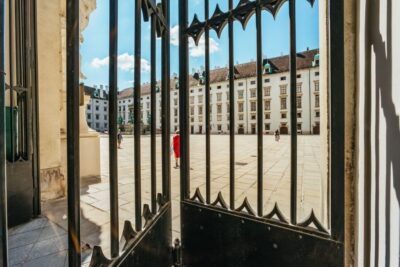 ★ 4.7Guided Walking Tour of City Center HighlightsFrom $254,989 reviews
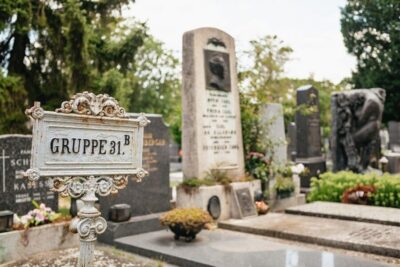 ★ 4.8Vienna Central Cemetery Guided Walking TourFrom $3353,307 reviews
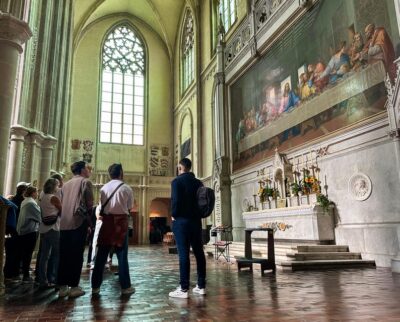 ★ 4.9Guided Walking Tour of City Highlights & Hidden GemsFrom $272,180 reviews
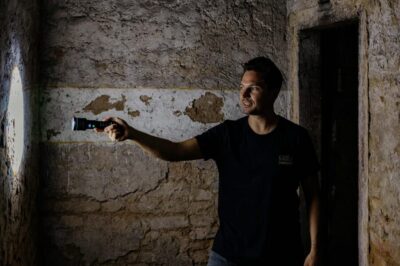 ★ 4.7Viennese Underworld Guided Walking TourFrom $371,865 reviews
 ★ 4.8World War II Historical Walking TourFrom $311,772 reviews
 ★ 5.0Vienna Historic Center Small Group Walking TourFrom $721,746 reviews
 ★ 4.6Private Walking Tour with a Local GuideFrom $551,420 reviews
 ★ 4.91.5-Hour Underground Walking TourFrom $321,146 reviews
Browse the lists this tour appears in