

Reviewed · VIENNA OLD TOWN WALKING TOURS
Vienna: City of Music Private Walking Tour
Vienna sounds different when someone plays it for you. This private walking tour mixes famous sites with headphones, so you do not just read about Vienna music, you hear it while you walk. I love how the guide ties each stop to what composers were doing, from Mozart writing operas to Beethoven’s apartment-hopping chaos.
You also get a real small-group feel, just for your party, with either morning or afternoon timing. One thing to consider: a few of the places on the route are pass-by moments and some music-related venues have extra admission that is not included.
Key Highlights You Should Know

- Headphones listening breaks up the walk and turns streets into a mini concert, timed to the landmarks.
- Annelie’s personal stories make the music feel human, and she uses photos to keep the people behind the composers clear.
- Music sites you can actually see from the street means less museum time and more motion through Vienna.
- Flat per-group price up to 10 can feel fair if you are traveling with friends or family.
- Hotel pickup or a central start at Café Mozart gives you flexibility, especially if you are staying outside the center.
Vienna on foot, a couple more routes
- Vienna: Guided Walking Tour of City Center Highlights★ 4.7 · 4,989 reviews
- Vienna: Vienna Central Cemetery Guided Walking Tour★ 4.8 · 3,307 reviews
- Vienna: Viennese Underworld Guided Walking Tour★ 4.7 · 1,865 reviews
- Vienna: World War II Historical Walking Tour★ 4.8 · 1,772 reviews
Why Vienna Music Walks Feel Different Here

A lot of Vienna tours are either all buildings, or all biographies. This one tries to do both, but in a practical way. You move through the city, then you pause to hear short selections on headphones. That small rhythm shift matters. It helps you connect a name, a place, and a sound without forcing you to memorize a syllabus.
I also like the tour’s balance for first-timers. If classical music is not your thing, you still get the point: where composers worked, why certain spots mattered, and how Vienna’s musical world kept spinning around the court, churches, and major stages. If you already know your Mozart from your Beethoven, you get extra color too, including the push-pull between the artists and Vienna’s power structure.
The private format is the other big win. Your questions can actually land. You are not stuck hoping someone notices your confusion.
Price and Group Size, What $564.72 Really Buys
The headline number is $564.72 per group, up to 10 people. That sounds steep until you think in per-person terms. With a small party, you are paying for a dedicated guide and a custom pace. With a larger group, it starts to look more like a shared activity than a luxury add-on.
So here is how I’d judge value:
- If you have 4 to 10 people, the per-group fee can be solid, especially since you get real private attention.
- If it is just two, you might want to ask yourself if you would rather spend that money on a concert ticket or a smaller guided experience. (The headphone listening and the specific composer focus are the main “must-have” pieces here.)
Duration is about 3 hours, which is a comfortable window. It is long enough to cover major sites, but not so long that you feel like your day is welded to a schedule.
Meeting Points and the Real Logistics of a 3-Hour Walk
This tour offers pickup. When you book, the guide sends their photo, phone number, and bio. They can meet you at your hotel or holiday flat. If you prefer a central meeting point, you can meet at Café Mozart, Albertinaplatz 2.
Two practical points if you are planning your route:
- Public transport tickets are not included, but the guide can help you figure out what to buy if you do not have a pass.
- You are meeting near public transportation, which helps if you want to arrive on your own terms.
Because it is a walking tour, comfort matters. Wear shoes you trust for stone and sidewalks. Vienna can be cool and breezy even when the day looks pleasant, so bring a layer.
If you are choosing morning versus afternoon, think about your energy. Morning is best if you like starting with the big landmarks before the city gets crowded. Afternoon can work if you want a slower start, then a guided “music highlights” session before dinner.
St. Stephen’s Cathedral (Stephansdom), Where Composers Had an Audience

The tour starts at St. Stephen’s Cathedral (Stephansdom). This is not just a pretty church stop. You learn how it served as an important performance venue in earlier centuries for composers like Haydn, Mozart, Salieri, and Vivaldi.
What makes this start click is the framing. You see the cathedral, then you understand it as a music setting, not just architecture. Even if you are not a church person, the idea helps you picture audiences, music-making, and the city’s social energy.
It is also time-efficient. You get around 20 minutes here, and admission is free for the stop. That matters because it keeps the tour moving without turning into a ticket-and-line marathon.
The only “watch-out” is obvious: churches can have dress expectations and rules on interior access. The stop is still the right choice for the tour’s theme, but be ready to dress and behave accordingly.
Only your group, at your own tempo




Mozarthaus Vienna and the Figaro House Area, Mozart at Work

Next comes Mozarthaus Vienna, with a stroll by the Figaro House (or Mozarthaus) area. Mozart lived there from 1784 to 1787, a period when he wrote many of his famous operas and instrumental works.
This stop is more about place and context than a museum-style visit. Admission is not included, and the time is set aside for walking and seeing the surroundings. If you are expecting a full indoor exhibit, you may feel a bit teased, because the tour is focused on you learning while moving.
That said, the value is in the connection. You stand in the orbit where Mozart worked, and the guide can translate the composer’s output into the street-level Vienna you can still recognize. It is one of the best “lightbulb” points in the tour for people who find it hard to imagine what creativity looked like back then.
Beethoven Statue and the 60-Apartment Story

You then pass Beethoven’s monument, and the guide brings you into the messier human side of his life. You explore how restless he was, living in sixty different apartments throughout Vienna.
This is one of those tour moments that prevents music history from becoming a statue itself. The guide’s angle turns “Beethoven” from a name on a program into a real person dealing with change, stress, and constantly reinventing his life.
Admission is free at this point, and you get around 20 minutes. Since it is a pass-by stop, it works well even if you are short on time or your feet need a breather after the first cathedral.
A small consideration: if you hate hearing dramatic biographical detail, this part might feel a little intense. But the stories are tied to why Beethoven’s music took shape the way it did.
Mölker-Bastei, Pasqualati-House, and the University Across the Street

From there, the walk shifts to Mölker-Bastei, and you connect Beethoven’s many addresses to a specific location tied to his life: the Pasqualati-House area. The Pasqualati-House is described as being directly opposite the University of Vienna.
The theme stays consistent. You keep hearing about Beethoven’s apartment-hopping, and how his music reflects the transition from the Classical era toward early Romantic ideas. Even if you cannot picture the University view perfectly, you can feel the logic: Vienna’s neighborhoods were not separate worlds, they were part of one system where artists, learning, and patrons overlapped.
Admission is not included for this stop, and it functions as another guided look-and-learn moment. That is fine, and frankly it is smart. It keeps you out of long ticket lines and keeps the music theme flowing.
Wiener Staatsoper and Hofburg, Power Centers That Shaped Musical Life

The route then brings you to Wiener Staatsoper. You look at the ongoing role of Vienna in opera today, with the guide placing it in the larger map of top music venues. You also hear the reference to the Musikverein concert hall and the Vienna Philharmonic, which helps you see that Vienna’s musical dominance is not just about old composers. It is also about institutions that kept the machine running.
Then the tour finishes this “power and patronage” arc at the Hofburg. Here the focus shifts to relationships. Beethoven’s link to the high aristocracy could be strained, but he had real support. He considered Archduke Rudolph, the youngest son of Emperor Leopold II, one of his best friends.
The details help: Rudolph took piano lessons with Beethoven, and Beethoven dedicated the Missa Solemnis to Archduke Rudolph. The guide frames this as the Habsburg family and Vienna’s top musicians interacting in a very real, career-shaping way.
Again, admission is not included for these late stops, which likely means more time with exteriors and close-by views rather than indoor sightseeing. You get around 20 minutes for each of these segments, and the tour is designed to keep the walking steady.
Inner City Headphones, Making the Streets a Listening Room
The most memorable part for many people is the Inner City segment. You pause for about 45 minutes while exploring major sites, and the guide plays selections through headphones.
This is where the tour earns its theme in a way that brochures cannot. Hearing short pieces while standing in the right place helps your brain stop treating the music as something abstract. It becomes something attached to a street corner, a façade, a vibe.
The reviews for this style are easy to understand. It is an unexpected surprise if you are used to standard sightseeing where you only look at places and read captions. Here, the sound is part of the wayfinding.
One practical consideration: if you dislike wearing headphones in public spaces, you might prefer a more standard guide format. Still, it is worth considering because the headset listening is short segments spread through time, not one long silent doom scroll.
Who This Tour Suits Best
I’d book this if you want Vienna music history in a format that feels alive.
- You want Mozart and Beethoven explained without assuming you already know everything.
- You like guides who answer questions and connect facts to stories.
- You are going with a group, since the per-group price up to 10 can make this easier on your budget.
It can also suit people who do not have formal classical training. The tour’s structure gives you context and keeps the meaning clear as you go.
If you are a die-hard opera house insider looking for lots of time inside major venues, you might feel the time split is a bit more “walk and listen” than “deep ticketed access.” This is not a long museum day. It is a guided music tour that uses the city as the stage.
Should You Book Vienna: City of Music Private Walking Tour?
Yes, if you want a Vienna experience that mixes streets, stories, and actual music. The standout strength is the way the tour turns the day into a listening experience, not just a list of names. Add in the private format and a guide named Annelie, and you have a high chance of coming away feeling like you learned something you will remember.
Before you book, do a quick reality check:
- If you want mostly indoor museum time, you may be happier with a different plan.
- If you are fine with pass-by stops where admission is not included, you will likely enjoy the pace.
- If your group size is closer to 6 to 10, the group pricing usually feels more fair.
If you are trying to choose between “see the sights” and “understand the music behind the sights,” this tour leans hard toward the second option, in a way that stays practical for a half-day window.
FAQ
How long is the Vienna music private walking tour?
It lasts about 3 hours.
What is the group size limit?
The price is per group for up to 10 people, and it is a private tour just for your group.
Is hotel pickup offered?
Yes. The guide can meet you at your hotel or holiday flat.
Where can we meet if we want a central location?
You can meet at Café Mozart, Albertinaplatz 2.
Is the tour offered in English?
Yes, it is offered in English.
Are admission tickets included at each stop?
Admission is free at St. Stephen’s Cathedral and during the Inner City segment. Other stops listed include Mozarthaus Vienna, Wiener Staatsoper, Mölker-Bastei (Pasqualati-House), and the Hofburg, and those specify admission is not included.
Is there a mobile ticket?
Yes, the tour includes a mobile ticket.
Are public transport costs included?
Public transport tickets are not included, but the guide will help you purchase tickets if you do not have a pass.
Can I cancel for a full refund?
Yes. You can cancel up to 24 hours in advance for a full refund.
More Tour Reviews in Vienna
- Vienna: Vivaldi’s Four Seasons Concert in Karlskirche
★ 4.7 · 14,951 reviews - Vienna: Schönbrunn Palace & Gardens Skip-the-Line Tour
★ 4.7 · 7,739 reviews - Vienna: Light of Creation Votive Church Immersive Light Show
★ 4.8 · 6,779 reviews - Vienna Spanish Riding School Guided Tour
★ 4.7 · 6,765 reviews - Vienna: Classical Concert in the World-Famous Musikverein
★ 4.6 · 6,673 reviews
Yours Alone Across Vienna
- Vienna: Private Walking Tour with a Local Guide
★ 4.6 · 1,420 reviews - Vienna: Private Walking Tour with a Guide
★ 4.7 · 962 reviews - Vienna: Wine Tasting Experience in a Private Wine Cellar
★ 4.8 · 413 reviews - Private Day Tour Trip Salzburg Hallstatt and Melk from Vienna
★ 5.0 · 388 reviews - Private Day Tour of Hallstatt and Salzburg from Vienna
★ 5.0 · 263 reviews
Vienna on Foot, Continued
- Vienna: Guided Walking Tour of City Center Highlights
★ 4.7 · 4,989 reviews - Vienna: Vienna Central Cemetery Guided Walking Tour
★ 4.8 · 3,307 reviews - Vienna: Guided Walking Tour of City Highlights & Hidden Gems
★ 4.9 · 2,180 reviews - Vienna: Viennese Underworld Guided Walking Tour
★ 4.7 · 1,865 reviews - Vienna: World War II Historical Walking Tour
★ 4.8 · 1,772 reviews
Recently Added Around Vienna


Vienna Old Town Walking Tours, compared.
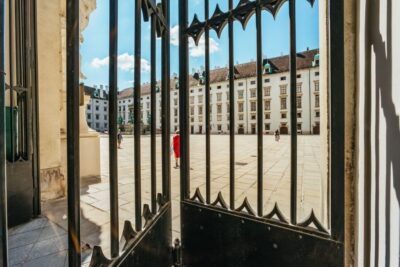 ★ 4.7Guided Walking Tour of City Center HighlightsFrom $254,989 reviews
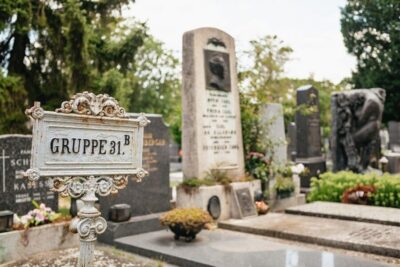 ★ 4.8Vienna Central Cemetery Guided Walking TourFrom $3353,307 reviews
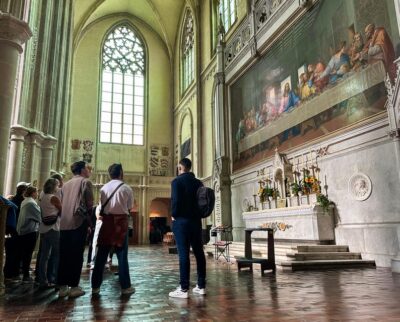 ★ 4.9Guided Walking Tour of City Highlights & Hidden GemsFrom $272,180 reviews
 ★ 4.7Viennese Underworld Guided Walking TourFrom $371,865 reviews
 ★ 4.8World War II Historical Walking TourFrom $311,772 reviews
 ★ 5.0Vienna Historic Center Small Group Walking TourFrom $721,746 reviews
 ★ 4.6Private Walking Tour with a Local GuideFrom $551,420 reviews
 ★ 4.91.5-Hour Underground Walking TourFrom $321,146 reviews
Browse the lists this tour appears in