

Reviewed · VIENNA OLD TOWN WALKING TOURS
The Ringstrasse Project Walking Tour
Vienna’s Ringstrasse makes sense fast. This walking tour connects the big buildings into one clear story of power, art, and daily life, with free ticket stops along the way. I also really liked the small group size, which kept the pace comfortable and made questions feel easy, not rushed. The one tradeoff is that each stop is timed for quick orientation, so this is not the same as a full museum or opera experience on your own.
The guide quality is the secret ingredient here. In the reviews, I saw names like Sussana and Biljana, and their tours get singled out for being friendly, professional, and genuinely enjoyable, with humor included. That matters in Vienna, because the Ring buildings reward attention. You get it, not just the where.
You also get a practical end to the walk: a café finish that lines up with the history you just heard. Food and drinks are not included, so plan on buying something if you want to linger. And if you are sensitive to weather, note that this is still a street walk for about 2.5 hours.
Key points to know before you walk

- Max 8 travelers for real back-and-forth with your guide
- Morning or afternoon departure, so you can fit it around your schedule
- Six Ringstrasse stops in about 2.5 hours, keeping the route efficient
- All the highlighted sights list free admission tickets
- Café Schwarzenberg is the finale, with a focus on 19th-century coffee house culture
Vienna on foot, a couple more routes
- Vienna: Guided Walking Tour of City Center Highlights★ 4.7 · 4,989 reviews
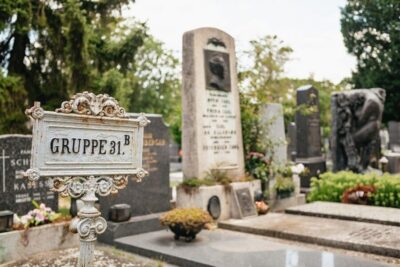
- Vienna: Vienna Central Cemetery Guided Walking Tour★ 4.8 · 3,307 reviews
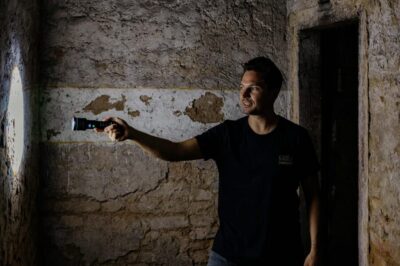
- Vienna: Viennese Underworld Guided Walking Tour★ 4.7 · 1,865 reviews
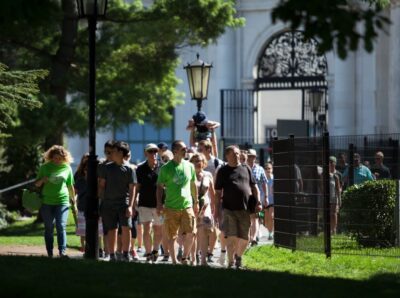
- Vienna: World War II Historical Walking Tour★ 4.8 · 1,772 reviews
Why the Ringstrasse Project walking route works so well
The Ringstrasse in Vienna is not just a pretty boulevard. It is a design plan for a city that wanted to look official, cultured, and modern all at once. This tour works because it treats the buildings like clues, not like postcards.
You start with the civic heart, Rathaus, then move into the cultural engines of the city, like the Vienna State Opera and major art museums. After that, the route shifts to architecture you might not notice on your own, like Postsparkasse and the style Otto Wagner is associated with. The final stop, Café Schwarzenberg, ties it back to how people actually lived, talked, and formed opinions in late-19th-century Vienna.
I like that the tour is short enough to feel doable on a busy day, yet structured enough that you leave with a mental map. You will probably start noticing patterns as you walk, like how the city used style, scale, and public-facing design to signal importance.
Morning or afternoon, and how 2.5 hours feels on the ground

You can choose either a morning or an afternoon departure, and the timing matters more than you might think. The Ringstrasse is wide and open, so if you hit it at a poor weather moment, you will feel it. Picking your best part of the day is one of the easiest ways to make this tour better.
The group is capped at 8 travelers, so you are not stuck shuffling behind a big herd. That small size also helps when you want clarification on details like why a building style matters or what a particular facade is signaling. The tour runs about 2 hours 30 minutes and includes a mobile ticket, which usually makes it smooth when you check in.
You will also be on and off the street repeatedly as you rotate between stops. Each location gets roughly 15 to 25 minutes, which is enough to take photos and understand the main idea, but not enough to wander for hours. If you love slow, deep museum time, plan this as a foundation walk, then come back later on your own.
Stop 1 at Rathausplatz: Vienna City Hall and the Neo-Gothic statement
Rathaus is where the story gets official. You meet Vienna City Hall at Rathausplatz on the Ringstrasse, a building constructed from 1872 to 1883 in a Neo-Gothic style. That time period and style choice are not random. They were part of a larger way of signaling legitimacy and authority.
During your 15-minute stop, you will focus on what the building does, not only how it looks. Vienna City Hall is the seat of local government, housing the Mayor of Vienna’s office, chambers of the city council, and the Vienna Landtag diet. Seeing those roles in one place helps you understand why the Ringstrasse was more than decoration. It was designed to hold institutions that represented the city’s power.
A practical note: with a stop this short, you will get the key points and a few “look-for-this” cues rather than a long architectural lecture. The upside is momentum. The downside is that if you were hoping for a long sit-down at City Hall, you will not get it here. Think of this as your orientation anchor.
Stop 2: Wiener Staatsoper and why opera sat at the city’s front door

Next comes the Vienna State Opera, the Wiener Staatsoper, and it is hard not to feel the cultural weight of the place. The opera has 1,709 seats, and it was the first major building on the Vienna Ring Road, which tells you a lot about what Vienna valued when the Ring was taking shape.
Construction dates from 1861 to 1869, so it is early in the Ring era. Your 20-minute stop is designed for understanding that opera and music were treated as central public life, not a niche hobby. Even without watching a performance, you can grasp why a city would dedicate such a prominent space to music.
One thing to keep in mind: the tour is focused on seeing and context. If you want to see inside in a big way, you might need separate planning, since this stop is time-limited. Still, this is a smart move for first-timers. It gives you a real sense of why the Ringstrasse feels so “Viennese,” not just “European.”
Vienna at walking pace, more routes


Stop 3: Kunsthistorisches Museum Vienna in a short, useful frame

From opera you move into the art world with Kunsthistorisches Museum Vienna. This is one of the major reasons the Ringstrasse feels like a grand cultural corridor. The museum building is tied to the institution itself, and it is described as the largest art museum in the country and one of the most important museums worldwide.
You will spend about 20 minutes here. That sounds brief, but it is enough for a guided primer: why this museum matters in the national context, and what kind of museum presence Vienna wanted to project. It also helps you connect the arts to the same civic confidence you saw at Rathaus.
The main limitation is obvious. In 20 minutes, you cannot absorb a major museum collection. What you can do is learn how to read the situation. After this stop, you will be better at deciding what to return for later, because you already understand what the museum represents.
If you are a repeat-visitor type, this stop is a good “plan your next visit” moment. If it is your first time in Vienna, it is a quick way to get the Ring’s cultural logic into your head.
Stop 4: Postsparkasse by Otto Wagner and the Vienna Secession feel
Now comes one of the more visually striking architecture stops, the Postsparkasse. This is the Austrian Postal Savings Bank building, designed and built by Otto Wagner. Wagner is a big name in Vienna architecture, and the tour uses Postsparkasse as a concrete example of how style can signal a shift in thinking.
You get about 20 minutes at this stop, and the key idea is the building’s place in Vienna Secession, a branch of Art Nouveau. That connection matters because it shows Vienna pushing beyond older, more traditional visual languages. This is the Ringstrasse still doing grandeur, but with a different attitude.
What you will get in the short time is guidance on what to pay attention to, rather than a long, technical discussion. The tour makes it easier to notice how the facade language fits the era. If you tend to walk past architecture without stopping, this is the stop that helps you change that habit.
Stop 5: Stadtpalais Todesco and Baroness Sophie’s salon world

Stadtpalais Todesco is quieter than some of the mega-famous buildings on the Ring, and that is exactly why it works on this itinerary. You have 15 minutes at this stop, and you are learning about a residence built for the aristocratic Todesco family between 1861 and 1864.
The tour does not leave it as dates and names. It pulls in the human side: Baroness Sophie von Todesco, one of the inhabitants, established a renowned salon for artists and intellectuals. That detail matters because it connects the Ringstrasse’s public buildings to private spaces where culture got shaped.
You start to see the Ring as more than monuments. It is also a map of social networks. Salons like this were places where ideas circulated, careers gained momentum, and artistic directions got influenced. In a short walk, that is a powerful context shift.
The only drawback with this stop is that if you were hoping for a lot of accessible interior space, the tour timing suggests you will mainly focus on what you can see and understand outside. Still, it is memorable, because it brings Vienna’s “how people talked and thought” side into the picture.
Stop 6: Café Schwarzenberg, the Ring finale and the 19th-century café mood
The walk ends at Café Schwarzenberg on the Kärntner Ring. This is not just a convenient place to rest. The tour specifically frames it as an insight into Vienna’s thriving café culture in the latter half of the 19th century.
Café Schwarzenberg is described as traditional, opened in 1861, and with an interior that remained largely unchanged since the 19th century. That is the kind of detail that makes a café stop more than a snack break. It becomes a time machine for atmosphere.
You get about 25 minutes here, and the guide ties it to the idea that the Ringstrasse became a place to see and be seen as soon as it was completed. That is a very Vienna concept: public life happening in social spaces, where conversation is part of the culture.
One practical heads-up: food and drinks are not included. So if you want coffee or cake, budget a little extra. The value is that you are not rushed. You finish the tour with a chance to process what you learned while sitting in a historic setting.
Price and value: what $177.44 gets you (and what it does not)
At $177.44 per person for about 2.5 hours, this is not a budget walking tour. What you are paying for is a guided route with tight planning, a small maximum group size, and a stop list that focuses on major Ringstrasse landmarks.
A big value point is that each of the main stops lists admission ticket free. That reduces friction, especially if you would otherwise be deciding on-the-spot whether to pay for entry. The tour also includes a professional guide and uses a mobile ticket, both of which usually mean less time figuring things out and more time learning.
What it does not promise is a deep dive inside major venues for hours. Each stop is timed, so this is best viewed as a high-quality orientation walk. If you want full museum coverage, you will likely want separate time after the tour.
If you like architecture, city planning, and the way culture and politics overlap, I think the price can feel fair. If you only want the cheapest way to “see the streets,” you may prefer a self-guided route. But for many people, the guided structure is what makes it worth it.
Who this fits best, including the family-friendly option
This tour is built for people who want order and context without getting stuck on a museum map for half a day. The walking format, short stop times, and small group size make it a good match for first-time Vienna visitors and anyone who wants the Ringstrasse explained clearly.
It also works well if you like a social vibe. The café ending is a smart way to wind down, and the focus on café culture is a fun way to learn about daily life, not only big institutions.
You can also book a children’s family tour variant where the guide focuses on symbols on various buildings and everyday life in Vienna around 1900. That is a strong sign the guide style is adaptable, not just lecture-heavy.
If you are traveling solo, you may even be able to get a personalized experience, since one review noted the tour still ran even when no one else booked. That is not something I would bet on, but it suggests the operator can keep things moving.
Practical tips to get the most from the route
Start at Café Landtmann (Universitätsring 4, 1010 Wien) and end at Café Schwarzenberg (Kärntner Ring 17, 1010 Wien). That end location is convenient because it is built into the experience, not a vague suggestion to find coffee later.
Because it is a guided walk with timed stops, I recommend dressing for weather and wearing comfortable shoes. The tour is listed as near public transportation, so if you are running late, you should be able to recover without stress.
Bring your phone for the mobile ticket, and keep your questions ready. With a small group cap of 8, you get a better chance to ask things like why the Ringstrasse buildings reflect the era, or what a specific architectural style was signaling at the time.
Finally, remember the food and drinks gap. Plan to buy something at Café Schwarzenberg if you want to make the finale feel like a true reward.
Should you book the Ringstrasse Project walking tour?
I would book it if you want a clear Vienna “story map” in about 2.5 hours. The small group, professional guides, and tight set of Ringstrasse stops make it a strong value when you want context fast. The café finale at Café Schwarzenberg is a particularly good finish because it links the architecture to how people actually socialized.
Skip it, or at least lower expectations, if you want a long interior museum day or a heavy history lecture with no pauses. This tour is built for seeing, understanding, and moving on.
If you are unsure, pick the departure time that suits your energy, and go into it ready to look closely. This is the kind of walk where the city starts making sense as you go.
FAQ
How long is the Ringstrasse Project Walking Tour?
The tour lasts about 2 hours 30 minutes.
Where do I meet, and where does the tour end?
The meeting point is Café Landtmann, Universitätsring 4, 1010 Wien. The tour ends at Café Schwarzenberg, Kärntner Ring 17, 1010 Wien.
Is the tour offered in English?
Yes, it is offered in English.
What is included in the price?
The price includes a 2.5-hour guided tour of Vienna’s Ringstrasse and a professional guide.
Do I need to pay for admission tickets at the stops?
The stops listed on the itinerary show admission ticket free.
How many people are in the group?
The tour has a maximum of 8 travelers.
Can I get a full refund if I cancel?
Yes. You can cancel up to 24 hours in advance for a full refund. If you cancel less than 24 hours before the start time, the amount paid is not refunded.
More Tours in Vienna
- Vienna: Schönbrunn Palace & Gardens Skip-the-Line Tour
★ 4.7 · 7,739 reviews - Vienna Spanish Riding School Guided Tour
★ 4.7 · 6,765 reviews - Vienna: Skip-the-Line Sisi Museum, Hofburg and Gardens Tour
★ 4.8 · 5,918 reviews - Vienna: Skip-the-Line Schönbrunn Palace & Gardens Tour
★ 4.8 · 5,411 reviews - Vienna: Guided Walking Tour of City Center Highlights
★ 4.7 · 4,989 reviews
More Tour Reviews in Vienna
- Vienna: Vivaldi’s Four Seasons Concert in Karlskirche
★ 4.7 · 14,951 reviews - Vienna: Schönbrunn Palace & Gardens Skip-the-Line Tour
★ 4.7 · 7,739 reviews - Vienna: Light of Creation Votive Church Immersive Light Show
★ 4.8 · 6,779 reviews - Vienna Spanish Riding School Guided Tour
★ 4.7 · 6,765 reviews - Vienna: Classical Concert in the World-Famous Musikverein
★ 4.6 · 6,673 reviews
Vienna on Foot, Continued
- Vienna: Guided Walking Tour of City Center Highlights
★ 4.7 · 4,989 reviews - Vienna: Vienna Central Cemetery Guided Walking Tour
★ 4.8 · 3,307 reviews - Vienna: Guided Walking Tour of City Highlights & Hidden Gems
★ 4.9 · 2,180 reviews - Vienna: Viennese Underworld Guided Walking Tour
★ 4.7 · 1,865 reviews - Vienna: World War II Historical Walking Tour
★ 4.8 · 1,772 reviews
Recently Added Around Vienna


Vienna Old Town Walking Tours, compared.
 ★ 4.7Guided Walking Tour of City Center HighlightsFrom $254,989 reviews
 ★ 4.8Vienna Central Cemetery Guided Walking TourFrom $3353,307 reviews
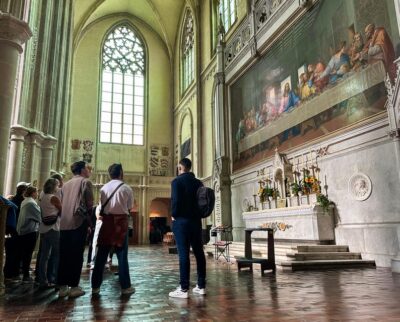 ★ 4.9Guided Walking Tour of City Highlights & Hidden GemsFrom $272,180 reviews
 ★ 4.7Viennese Underworld Guided Walking TourFrom $371,865 reviews
 ★ 4.8World War II Historical Walking TourFrom $311,772 reviews
 ★ 5.0Vienna Historic Center Small Group Walking TourFrom $721,746 reviews
 ★ 4.6Private Walking Tour with a Local GuideFrom $551,420 reviews
 ★ 4.91.5-Hour Underground Walking TourFrom $321,146 reviews
Browse the lists this tour appears in