

Reviewed · VIENNA OLD TOWN WALKING TOURS
Private World War II Walking Tour in Vienna
WWII hangs on every corner in Vienna, and this private walk connects the city’s streets to the rise of the Nazi party. You’ll cover key WWII landmarks and memorials in Vienna’s inner city, with context on Adolf Hitler and how the war era changed what you see today.
I love two things most: the state-certified guide and the way the tour stays flexible to your pace. Guides like Lisa, Hernando, and Nando (all mentioned by name in past tours) show up ready to answer questions without getting stiff, and they keep the tone human, not robotic.
One possible drawback is the subject matter is heavy, so this is not a light sightseeing stroll. It’s also a walking tour, so you’ll want to be comfortable on your feet for about 2 hours 30 minutes.
Key highlights that make this tour worth it

- Certified, private guiding that you can pace and steer toward your interests
- Heldenplatz, Jewish Square, and central landmarks tied to WWII-era Vienna
- English-language service with guides praised for clarity and humor
- Pickup in the inner city for easier start and less fuss
- Small-group setup where your questions do not get pushed aside
Vienna on foot, a couple more routes
- Vienna: Guided Walking Tour of City Center Highlights★ 4.7 · 4,989 reviews
- Vienna: Vienna Central Cemetery Guided Walking Tour★ 4.8 · 3,307 reviews
- Vienna: Viennese Underworld Guided Walking Tour★ 4.7 · 1,865 reviews
- Vienna: World War II Historical Walking Tour★ 4.8 · 1,772 reviews
A private WWII walk that feels like Vienna has a pulse

This tour is built around one idea: Vienna did not just watch history happen, it shaped and absorbed it. You walk through the inner city while a certified guide connects the visible city to the WWII timeline, including the life of Adolf Hitler and the rise of the Nazi party. The emphasis is on seeing the city as a living archive, not just as a postcard.
It’s also private, which matters more than people expect. With only your group involved, you can ask follow-ups when something sparks a question. That freedom is especially useful with a topic like this, where context changes everything.
The tour runs about 2.5 hours, and it stays focused. You are not trying to “do Vienna” in one afternoon. Instead, you get a tight route through WWII-relevant stops in the old town core, with room to slow down when something feels important.
English is offered, and a mobile ticket is provided, which makes it easier to get moving without hunting for paperwork. If you’re the kind of traveler who likes to understand what you’re looking at, this setup fits you well.
Meeting in Vienna: Helmut-Zilk-Platz to an end at St. Stephen’s
You start at Helmut-Zilk-Platz, Albertinapl. 2-3, 1010 Wien. The end point is St. Stephen’s Cathedral, Stephansplatz 3, 1010 Wien, which is a great place to finish because it puts you back in the thick of the old town.
Pickup is available if your hotel is in the inner city. That’s a real convenience benefit here. You’re starting a walking tour with a historical theme, and the faster you’re on the street with your guide, the better the day flows.
The area is also close to public transportation, so even if you don’t get pickup, you should be able to reach the meeting point without drama. The tour is set up so that you are not stuck waiting around for a big group, since this is only your group on the schedule.
One small practical point: bring the mindset that you’re going to be outside and walking. Even if the pace is adjusted, you’ll still be covering multiple stops through the inner city.
Heldenplatz: reading the city’s public face through WWII-era context
The tour gets serious right away with a stop at Heldenplatz. This is where your guide helps you understand the city not as an art museum, but as a stage for political history. Expect the explanation to connect the setting you see today to what the era meant for Vienna at the time.
Why this stop works on a walking tour is simple: a big square tells you more than a single building ever can. Space matters in public life. And for WWII-related history, the city’s public spaces are part of the story, because that’s where ideas show up in visible form.
Guides on this tour are described as lively and highly responsive, with strong English skills. If you tend to ask lots of questions, this is a good match. Past guides like Hernando have been praised for handling questions while still keeping the tour moving, and that’s a sign they know how to balance detail with momentum.
Potential drawback to keep in mind: because the site is central and public-facing, it can feel intense. If you prefer to keep your sightseeing upbeat, this portion may hit harder than the typical “old town highlights” tour. But if you want real context while you’re standing in the right place, Heldenplatz is one of the key stops.
Jewish Square: a stop that shifts from buildings to people

Next comes Jewish Square, where the tour turns toward the Jewish story in wartime Vienna. Even if you don’t know the background before you arrive, the guide’s job is to connect what the name and setting suggest to what happened in WWII-era Vienna.
This stop is valuable because it prevents the tour from becoming only about generals and politics. When the route includes a Jewish-related site, it naturally broadens the conversation. That matters, because WWII history is not only about decisions made at the top. It’s also about how entire communities lived under pressure and how cities remember that history.
In practical terms, this is where your guide’s tone and pacing really matter. The past feedback on this tour repeatedly highlights “grace and humility” in the way the history is handled. That kind of approach helps you absorb hard material without feeling talked down to.
One thing to watch for: emotional weight builds as the tour progresses. You don’t need to force yourself to “keep up” with every detail. If you want, you can ask for a slower explanation, or you can ask a more focused question, like how Vienna’s physical landmarks relate to the broader WWII timeline.
Only your group, at your own tempo



A Gothic cathedral stop: seeing faith, power, and time in one view

The itinerary also includes a Gothic cathedral in the heart of the inner city. The exact cathedral is not described by name in the details here, but the inclusion of a Gothic central church gives you a useful perspective: history is layered. A city’s religious and civic architecture often outlasts regimes, then gets re-read by later generations.
This stop works because it gives you contrast. After the WWII-oriented sites, the cathedral portion gives your eyes and brain a different kind of landmark to interpret. Instead of focusing only on political history, you’re encouraged to consider how Vienna’s long-standing institutions sit alongside the memory of war.
If your brain loves structure, you might appreciate the way this kind of stop helps you reset. You see familiar beauty, then your guide ties it back to how the city’s story continues after the war. It’s a reminder that the tour is about before, during, and after, not just one grim chapter.
Karl Lueger Monument: when politics becomes visible in stone
The route also includes the Karl Lueger Monument. Monuments like this are perfect for a guided walking tour because they’re simple at first glance, but complicated once you start asking why a city chose to honor a person, and what that says about political culture.
This is where your guide’s explanations can make the stop feel less like an object and more like an argument you can read in public. You’ll likely connect how the tour frames the rise of the Nazi party and WWII’s impact with the way public messaging and politics play out in Vienna’s streets.
Why this matters for your trip: it helps you avoid the classic problem of history tours. You don’t just collect facts, you learn how to interpret the city’s choices. A monument is not neutral. It is a signal, and your guide helps you understand that signal in WWII-era terms.
The one consideration is that monuments can bring debate to the surface. If you want a tour that stays purely on dates and names, you might find yourself thinking harder than expected here. If you prefer that level of reflection, this stop will land well.
How the guide turns questions into a calmer, clearer history

One of the strongest themes tied to this tour is how guides handle questions. People repeatedly praise guides like Lisa for an energetic, fun delivery, like Nando for deep command of history and clear answers, and like Marco and Reinhard for fascinating, sometimes unusual facts.
What that translates into for you: you’re less likely to feel lost, even if you come in with only a casual knowledge of WWII. The guide can pivot when your interests shift, and with a private format, you can ask the exact question that’s been bothering you since you booked.
This is also where “private” is more than a price perk. When the history gets intense, you need the explanation to match your comfort level. A guide who can explain with grace and humility, rather than just reciting facts, makes the difference between learning and feeling overwhelmed.
If you’re a history enthusiast, this is a real upside. Several guides listed by name in past tours show up as people who genuinely enjoy the conversation. If you’re traveling as a couple, a small family, or a group of friends, you’ll probably leave feeling like you got answers, not just a route.
What 2.5 hours really means for walking and attention
2 hours 30 minutes is long enough to build context, but short enough to stay focused. You’re not going to be stuck listening for half a day. Instead, you’re moving through the inner city while the guide paints the WWII framework stop by stop.
Because the tour is private and can be customized, the pacing can work for different comfort levels. Some people want the factual timeline. Others want more about how Vienna as a city changed over time. Your guide can adjust toward your interests, since the structure is flexible.
A practical note: the tour experience can continue even if weather isn’t perfect. One past booking specifically mentions not canceling because of rain, using jackets and umbrellas and pushing through comfortably. So if you’re visiting in a season where rain is plausible, bring a small umbrella and dress for cool, damp city walking.
Comfort also matters around memorial-style stops. You may pause more than you expect, especially when a guide is explaining how places function as reminders. Wear shoes you’re happy to stand and walk in.
Price and value: $451.79 per group can be a bargain or a splurge
The tour costs $451.79 per group, up to 15 people. That price is easiest to evaluate using simple math: divide by your group size.
- For a group of 2, it can come out expensive per person.
- For a group of 6 to 10, it often becomes far more reasonable.
- For a full group up to 15, it can be a strong value, especially given it’s private and tailored.
So I’d treat this as a “best with friends or family” booking. If you’re solo or as a couple, it might still be worth it if WWII history is a top priority for you and you want the focused attention of a private guide.
Also consider what you’re buying: not just a list of stops, but guidance on how to interpret them. With WWII, context is the whole point. A private guide is often worth the extra cost because you can ask, clarify, and keep the tone appropriate.
If you like structured learning and you don’t want to figure out the story on your own at each site, the price starts to make sense fast.
Who should book this Vienna WWII walking tour
This tour fits best if you want to understand Vienna through its WWII role, not just admire the buildings. If you’re the type who likes to ask follow-up questions and wants clear English explanations, you’ll probably feel right at home.
It’s also a good fit for travelers who appreciate a custom itinerary. The tour is private, so you can steer toward what matters most to you, whether that’s the rise of the Nazi party framework, Adolf Hitler context, or how the city remembers the war afterward.
Most travelers can participate, which suggests the walking is manageable for a broad range of visitors. Still, it’s not a “sit and listen in a van” format. You’ll be on foot through the inner city, which is part of the charm and part of the commitment.
If you want a kinder, lighter day in Vienna, you might pick a different themed tour. But if you want the real story, told clearly and thoughtfully, this one has the right shape.
Should you book it?
Book this tour if WWII history in Vienna is a priority and you prefer a guide who answers questions in plain language. I’d especially recommend it when you’re traveling with more than one person, because the group price becomes easier to justify.
Skip it or rethink if you’re hoping for a mostly upbeat city walk, or if you struggle with heavy historical topics. You’ll still see Vienna’s beauty, but the tour’s center of gravity is the war and its legacy.
If you do book, come with at least a basic curiosity about how Hitler and the Nazi rise relates to Vienna’s public places. Then let your guide handle the connections. That’s where the tour pays off.
FAQ
How long is the private WWII walking tour in Vienna?
It lasts about 2 hours 30 minutes.
What is the price, and is it per person?
It’s $451.79 per group, with a group size of up to 15.
Does the tour offer pickup in Vienna?
Yes. Pickup is offered if your hotel is located in the inner city. Otherwise, you’ll be contacted with the exact meeting location before the tour.
Where does the tour start and end?
It starts at Helmut-Zilk-Platz, Albertinapl. 2-3, 1010 Wien, Austria, and ends at St. Stephen’s Cathedral, Stephansplatz 3, 1010 Wien, Austria.
Is the tour private or shared?
It’s private. Only your group participates.
What language is the tour offered in?
The tour is offered in English.
Is a mobile ticket provided?
Yes, there is a mobile ticket.
What is the cancellation policy?
Free cancellation is available. You can cancel up to 24 hours in advance for a full refund, based on the local start time of the experience. Service animals are allowed, and the tour is near public transportation. Confirmation is received at the time of booking.
More Tour Reviews in Vienna
- Vienna: Vivaldi’s Four Seasons Concert in Karlskirche
★ 4.7 · 14,951 reviews - Vienna: Schönbrunn Palace & Gardens Skip-the-Line Tour
★ 4.7 · 7,739 reviews - Vienna: Light of Creation Votive Church Immersive Light Show
★ 4.8 · 6,779 reviews - Vienna Spanish Riding School Guided Tour
★ 4.7 · 6,765 reviews - Vienna: Classical Concert in the World-Famous Musikverein
★ 4.6 · 6,673 reviews
Yours Alone Across Vienna
- Vienna: Private Walking Tour with a Local Guide
★ 4.6 · 1,420 reviews - Vienna: Private Walking Tour with a Guide
★ 4.7 · 962 reviews - Vienna: Wine Tasting Experience in a Private Wine Cellar
★ 4.8 · 413 reviews - Private Day Tour Trip Salzburg Hallstatt and Melk from Vienna
★ 5.0 · 388 reviews - Private Day Tour of Hallstatt and Salzburg from Vienna
★ 5.0 · 263 reviews
Vienna on Foot, Continued
- Vienna: Guided Walking Tour of City Center Highlights
★ 4.7 · 4,989 reviews - Vienna: Vienna Central Cemetery Guided Walking Tour
★ 4.8 · 3,307 reviews - Vienna: Guided Walking Tour of City Highlights & Hidden Gems
★ 4.9 · 2,180 reviews - Vienna: Viennese Underworld Guided Walking Tour
★ 4.7 · 1,865 reviews - Vienna: World War II Historical Walking Tour
★ 4.8 · 1,772 reviews
Recently Added Around Vienna


Vienna Old Town Walking Tours, compared.
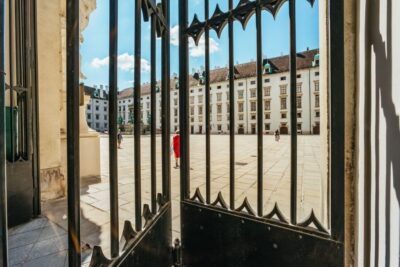 ★ 4.7Guided Walking Tour of City Center HighlightsFrom $254,989 reviews
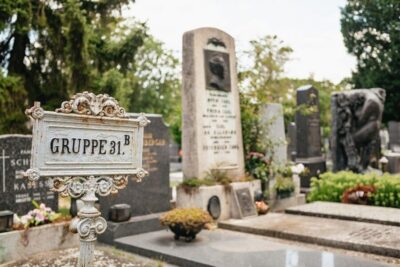 ★ 4.8Vienna Central Cemetery Guided Walking TourFrom $3353,307 reviews
 ★ 4.9Guided Walking Tour of City Highlights & Hidden GemsFrom $272,180 reviews
 ★ 4.7Viennese Underworld Guided Walking TourFrom $371,865 reviews
 ★ 4.8World War II Historical Walking TourFrom $311,772 reviews
 ★ 5.0Vienna Historic Center Small Group Walking TourFrom $721,746 reviews
 ★ 4.6Private Walking Tour with a Local GuideFrom $551,420 reviews
 ★ 4.91.5-Hour Underground Walking TourFrom $321,146 reviews
Browse the lists this tour appears in