

Reviewed · PRIVATE VIENNA CITY TOURS
Private tour of historical Vienna with Jan
Vienna has a way of sneaking up on you. A private walk with Jan turns the city center into a story you can actually follow, with Habsburg-era sights and real street-level context. I like that this is small-group by design, so you are not stuck in a loud herd. I also like that Jan mixes big-picture history with practical stops, including a classic coffee house break at Conditorei SLUKA.
You get a clear orientation around the historic core, plus a route that connects major landmarks in a logical way. That matters on a first trip, because Vienna can feel huge and easy to overthink. One thing to consider: this is a walking-heavy experience, and the stops are spread across the old center plus the Ringstrasse-adjacent park area, so wear comfortable shoes and pace yourself.
Key points before you book
- Private pacing with Jan so questions are welcome and the walk stays friendly
- Hofburg courtyards give you the Habsburg story without needing to hunt through every wing
- St. Stephen’s Cathedral and the Jesuits Church pack major meaning into short stops
- A real Viennese coffee break at Conditorei SLUKA, with Art Nouveau interior vibes
- End at Naschmarkt so you can keep the day going with an easy food-market option
Only your group, at your own tempo
- Vienna: Private Walking Tour with a Local Guide★ 4.6 · 1,420 reviews
- Vienna: Private Walking Tour with a Guide★ 4.7 · 962 reviews
- Vienna: Wine Tasting Experience in a Private Wine Cellar★ 4.8 · 413 reviews
- Private Day Tour Trip Salzburg Hallstatt and Melk from Vienna★ 5.0 · 388 reviews
Why this private Historical Vienna walk feels different

This tour is built around the idea that Vienna is best understood on foot, with a guide who can point out what you are actually looking at. Jan’s approach, based on what people consistently highlight, is story-first but still practical. You do not just get dates and names, you get why certain buildings exist and why power and culture shaped the streets around them.
The second big win is the time format. For about 2 to 3 hours, you cover a concentrated loop that hits major districts without trying to cram in everything. For a first day, that is gold. You leave with mental landmarks, so the rest of your trip stops feeling like guesswork.
Finally, it is private, up to 10 people per group, which changes the experience. You get flexibility if your interests tilt more religious, political, architectural, or food and cafés. If you are traveling with family or friends, it also keeps the tour from turning into a one-size-fits-all lecture.
Getting oriented: Stephansplatz to the Historic Center
The tour starts at Stephansplatz in central Vienna, putting you right at the spiritual and geographic heart of the city. From there, you move into the historic downtown area and get a fast way to understand how Vienna’s old core is organized.
In this first stretch, you get more than monuments. You also get context for daily life, like where people naturally shop and eat in the center, and how the city’s layout reflects its culture. If you are the type who wants to know where to walk next without constantly checking your phone, this part helps.
The pace is designed for learning without turning you into a museum drone. The stop length is long enough to absorb key stories, but short enough that you do not burn out before the best architecture hits.
Practical tip: Vienna streets can be busy and the sidewalks can get narrow near big sights. Keep your camera ready but slow down when you need to read details. Jan typically gives you a reason to look at specific parts of buildings, not just the overall facade.
Hofburg courtyards: seeing the Habsburg power machine from the outside

Next up is the Hofburg, the former grand palace complex of Austria’s rulers. One of the smartest choices here is that the tour focuses on the outer courtyards and tells the Habsburg story through the spaces you can reach quickly.
The Hofburg is not one single building. It is a patchwork of wings and palace areas from different periods, connected by the long political life of the dynasty. By walking the courtyards, you get a sense of how power expanded over time without needing to commit to a full palace-ticket day.
This part is great if you want to understand the Austrian heritage that keeps repeating in street names, museums, ceremonies, and architecture. You also get a clearer picture of why Hofburg matters even if you never see every room.
Potential drawback: if you expect a deep interior museum experience, this is not that. It is a “see and understand the complex” style stop. You will likely want to add a separate visit if you want palace interiors.
Heldenplatz and Maria Theresien Square: big monuments, clear stories
From Hofburg you move toward the grand ceremonial side of central Vienna.
At Heldenplatz, you are in the mood for architecture. This is one of those places where buildings look like they are posing, and it is easier to appreciate the scale when someone gives you stories of the Austrian Empire’s heroes and what the surrounding monuments are meant to communicate. You also get a close-up mental image of the National Library palace and how imposing it is.
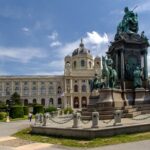
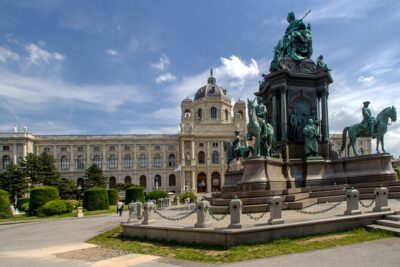
Then you shift to Maria Theresien Square, anchored by a memorial to Maria Theresia. This is the kind of stop that helps you connect history to how modern state systems formed. You get the arc of enlightened modernization under her rule, including how it fed the centralized state and strengthened the role of bureaucrats as a middle class. In other words, it is not only about royal portraits and uniforms. It is also about how administration changed society.
You will also notice the two major museum buildings flanking the square. Even if you do not enter them, the way they frame the memorial helps you understand why this area is considered a key cultural node.
More private days, your group only

Conditorei SLUKA: the best kind of break, planned into the route

A walking tour should not just keep going until you collapse. This one adds a food-and-coffee moment at Conditorei SLUKA, a traditional Viennese coffee house with an Art Nouveau interior.
I like that this break is not random. It is scheduled after you have taken in several heavy history points, so you get a reset. And it is not a tourist trap setup. The whole point is to experience a slice of Austrian café culture while you are still in the historic core.
In real terms, this stop helps you do two things at once:
- recharge for the next leg of architecture and churches
- practice the Vienna ritual of slowing down with cake and coffee instead of treating coffee as a caffeine dash
If you want to make the most of the break, take one minute before ordering to look around. The Art Nouveau details are part of the experience, and Jan typically encourages you to notice things that most people walk past.
St. Stephen’s Cathedral: short stop, major meaning

Then you hit St. Stephen’s Cathedral, the spiritual and geographic center of Vienna. Even when you only spend around 10 minutes here, the cathedral can feel like it deserves more time. Jan helps you focus on what you are seeing and what it meant over time.
You learn that construction took decades and included different architectural styles. That alone makes the building a kind of timeline in stone. You also hear the story around post-war reconstruction, which connects the cathedral to the broader idea of cooperation after damage, and the will to rebuild.
This stop is also where people in the group tend to start looking up more. The best guides guide your eyes. Jan’s style, as reflected in repeat customer comments, is to turn quick time into real comprehension.
If you are in a hurry, you still get value. But if you have extra hours in Vienna, you might want a longer cathedral visit later, since this tour gives the overview, not the full deep inspection.
Church of the Jesuits: Baroque drama without the big crowds

From the cathedral area you move to the Church of the Jesuits, often described as among the finest Baroque churches in Vienna that many people skip. That is exactly the kind of contrast I enjoy on a city day: you get the loud-famous landmark first, then you step into a church that can feel more surprising.
Here the emphasis is on Austrian Baroque detail. The church is flamboyant in style, and in a short visit you do not need to know every term to appreciate how the design pushes emotion. Jan helps you see the big visual ideas so you do not get lost in the ornament.
One drawback to consider: if Baroque churches are your least favorite style, this stop may feel like a lot of visuals packed into a limited time window. But if you like drama in architecture, this is a highlight.
Stadtpark and the Ringstrasse edge: a breath between eras

After the religious and imperial landmarks, you get an outdoor reset in Stadtpark. This park sits along the southern part of Vienna’s Ringstrasse boulevard, and it is dedicated to painters, musicians, and politicians of Vienna’s golden age.
This portion matters because Vienna’s old town streets can get narrow and intense. A park stop breaks the pattern. You get a calmer pace, a chance to stand still, and an easy mental reset.
Even though this is not a long stop, you start to understand the city as more than just palaces and churches. Vienna also celebrates arts and public life, and the park is where you feel that emphasis without needing a ticket.
Graben and Kohlmarkt: high-end shopping, plus one very specific story

The tour ends with a walk through Graben and Kohlmarkt, two of the classic high-end shopping streets. This is where you see luxury brands and cafés, but the point is not shopping. It is what those streets represent and how their details reflect Vienna’s past.
Jan points you to the Baroque plague column on Graben, which commemorates survival after a devastating plague in the late 17th century. That kind of detail is why a good history guide beats a self-guided stroll. You would likely walk right past a column like that without the context.
So, while the streets look modern and polished, you learn how they carry memory. That makes the city feel layered instead of shiny.
Ending at Naschmarkt: what to do after the tour
The tour finishes at Naschmarkt, Vienna’s famous open-air food market. Since you are already close to transit and central neighborhoods, it is a smart landing zone. You can keep things low effort: snack, browse, and decide where to head next.
This ending is also good psychologically. Walking tours can end abruptly, like being dropped in an empty corner. Naschmarkt gives you an immediate next step that feels natural, not planned.
A practical tip: give yourself 30 to 60 minutes at the market before you make dinner plans. It lets you decide based on what looks good that day, instead of forcing dinner the moment the tour ends.
Price value: $432.53 per group, up to 10 people
At $432.53 per group (up to 10), this tour is priced like a private experience, not a per-person budget walk. The value depends on your group size.
If you have a full group near 10, the cost per person becomes much more reasonable. If you are only two or three people, you are paying a premium for privacy and flexibility. That is still not automatically bad. For a first day, a good private guide can save you time and help you plan the rest of your trip, especially in a city with lots of historic areas that can feel confusing at first.
Also consider what you are actually buying:
- a focused route through major highlights without ticket-ticket-ticket stress
- a licensed guide
- a planned café stop, which helps break up the walking
From the repeated 5 out of 5 feedback, the big value is Jan’s ability to answer questions and keep the tour paced, not just listing sights. That is where private tours earn their keep.
Who this tour suits best (and who should think twice)
This experience is a strong fit for:
- first-time visitors who want orientation and a clear route through the center
- history and architecture lovers who like stories tied to specific streets and buildings
- families, small groups, and friends who want privacy and a break built in
- travelers who appreciate English guidance with the ability to ask questions
It is less ideal if:
- you hate walking and want a mostly seated day
- you only want ticketed museum interiors and long indoor stays
- you are already fully comfortable with Vienna’s central layout and need no orientation
The good news is that Jan can tailor within the tour’s general flow. People also mention practical help like sorting transit plans and finding food when someone gets hungry, which is exactly the kind of real-world assistance that makes a city feel easier.
Should you book Historical Vienna with Jan?
If this is your first visit or your first few hours in Vienna, I would strongly consider booking. You get a smart, story-driven loop through major imperial and religious sites, plus a genuine Viennese café stop. The private format matters, because it keeps the experience flexible and question-friendly, and that is where this tour seems to earn its consistent 5 out of 5 praise.
I would book it especially if you want to understand why Vienna feels the way it does, not just where the biggest buildings are. If you do want more interior deep time, plan to add separate visits later, but use this tour to get your bearings and your historical threads connected.
FAQ
How long is the private Historical Vienna tour?
It runs about 2 to 3 hours.
Where do we meet, and where does the tour end?
You meet at Stephansplatz, 1010 Wien, and the tour ends at Naschmarkt, 1060 Wien.
Is this tour private?
Yes. It is private, so only your group participates.
Is the tour guided in English?
Yes, the tour is offered in English.
Is pickup available?
Pickup is offered.
What is included in the price?
A qualified, state licensed guide is included. Admission tickets are listed as free for the sights on the route. Gratuity is not included.
Can I cancel for free, and when do I get confirmation?
You can cancel for free up to 24 hours in advance for a full refund. Confirmation is received within 48 hours of booking, subject to availability.
More Tours in Vienna
- Vienna: Schönbrunn Palace & Gardens Skip-the-Line Tour
★ 4.7 · 7,739 reviews - Vienna Spanish Riding School Guided Tour
★ 4.7 · 6,765 reviews - Vienna: Skip-the-Line Sisi Museum, Hofburg and Gardens Tour
★ 4.8 · 5,918 reviews - Vienna: Skip-the-Line Schönbrunn Palace & Gardens Tour
★ 4.8 · 5,411 reviews - Vienna: Guided Walking Tour of City Center Highlights
★ 4.7 · 4,989 reviews
More Tour Reviews in Vienna
- Vienna: Vivaldi’s Four Seasons Concert in Karlskirche
★ 4.7 · 14,951 reviews - Vienna: Schönbrunn Palace & Gardens Skip-the-Line Tour
★ 4.7 · 7,739 reviews - Vienna: Light of Creation Votive Church Immersive Light Show
★ 4.8 · 6,779 reviews - Vienna Spanish Riding School Guided Tour
★ 4.7 · 6,765 reviews - Vienna: Classical Concert in the World-Famous Musikverein
★ 4.6 · 6,673 reviews
Yours Alone Across Vienna
- Vienna: Private Walking Tour with a Local Guide
★ 4.6 · 1,420 reviews - Vienna: Private Walking Tour with a Guide
★ 4.7 · 962 reviews - Vienna: Wine Tasting Experience in a Private Wine Cellar
★ 4.8 · 413 reviews - Private Day Tour Trip Salzburg Hallstatt and Melk from Vienna
★ 5.0 · 388 reviews - Private Day Tour of Hallstatt and Salzburg from Vienna
★ 5.0 · 263 reviews
Recently Added Around Vienna


Private Vienna City Tours, compared.
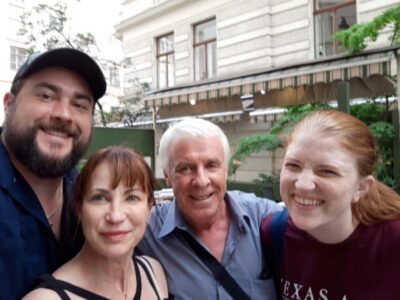 ★ 4.6Private Walking Tour with a Local GuideFrom $551,420 reviews
 ★ 4.7Private Walking Tour with a GuideFrom $55962 reviews
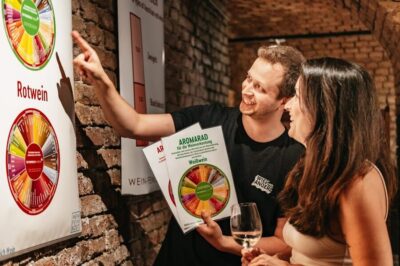 ★ 4.8Wine Tasting Experience in a Private Wine CellarFrom $22413 reviews
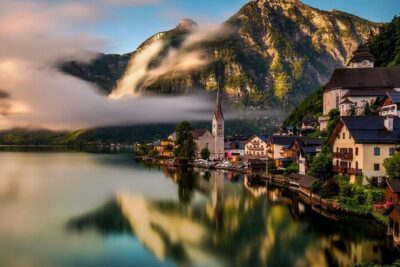 ★ 5.0Private Day Tour Trip Salzburg Hallstatt and Melk from ViennaFrom $930388 reviews
 ★ 5.0Private Day Tour of Hallstatt and Salzburg from ViennaFrom $919263 reviews
 ★ 5.0Private Hidden Vienna Walk — Stories Behind Quiet CornersFrom $344137 reviews
 ★ 4.5Vienna Private Walking Tour with a LocalFrom $58131 reviews
 ★ 5.0Vienna at First Glance a Private Walking Tour for First TimersFrom $344131 reviews
Browse the lists this tour appears in