
Reviewed · PRIVATE VIENNA CITY TOURS
Private Hidden Vienna Walk — Stories Behind Quiet Corners
Vienna feels different when you leave the main lanes. This private 3-hour walk threads through landmark Vienna and quiet corners, with a story-forward route that ends in big views from a secret rooftop. You also get time for iconic stops like St. Stephen’s Cathedral and Judenplatz, plus smaller clues that make the city feel lived-in.
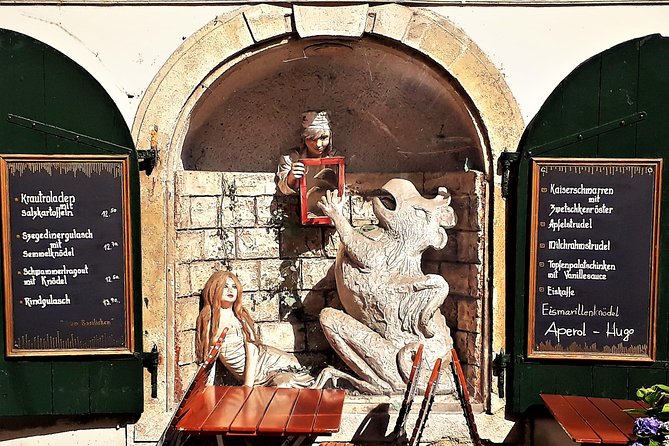
I especially like two things. First, I love how the route starts at Stubentor U, so you see Vienna’s walls scale early instead of treating them like trivia. Second, I like the mix of major sights with the smaller details, like the basilisk legend mural on Schönlaterngasse and the long-running schnitzel tradition tied to that street.
One consideration: plan for a steady walking pace and some stair moments. This is a walking tour, and it can add up to around 8,000 steps for the day, so it may be tiring if mobility or fatigue is a big issue.
Key Things You’ll Notice on This Vienna Walk
- Stubentor U to the old walls first, so the city reads differently from minute one
- Jesuit Church architecture as a story, not just a pretty building stop
- Schönlaterngasse details like the basilisk legend mural and the schnitzel clue dating back to 1905
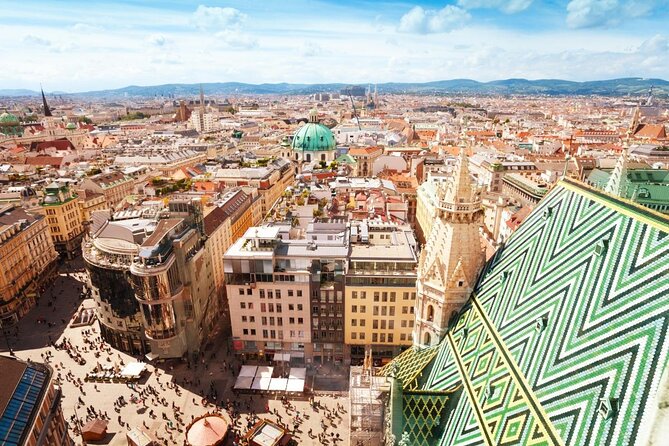
- St. Stephen’s Cathedral time both outside and inside, short but focused
- Judenplatz and the Holocaust Memorial in one of the city’s most atmospheric squares
- A secret rooftop viewpoint for a break from street-level looking
Only your group, at your own tempo
- Vienna: Private Walking Tour with a Local Guide★ 4.6 · 1,420 reviews
- Vienna: Private Walking Tour with a Guide★ 4.7 · 962 reviews
- Vienna: Wine Tasting Experience in a Private Wine Cellar★ 4.8 · 413 reviews
- Private Day Tour Trip Salzburg Hallstatt and Melk from Vienna★ 5.0 · 388 reviews
A Private Vienna Walk Built Around Quiet Corners
This tour is built for people who want the city to make sense, not just to be checked off. In about three hours, you get a route that balances famous names with lesser-known angles, and it keeps shifting your perspective so Vienna feels layered.
Because it’s private, you’re not stuck with the “follow the group” rhythm. You can ask questions, steer the conversation, and generally shape the pace around your interests, within the overall time frame. That matters in Vienna, where the small stuff often carries the best stories.
I also like that the tour is designed to work whether you’re starting from town or from a cruise pier. Pickup is offered, and you can usually arrange to meet at a restaurant or another location inside Vienna. If you’re navigating with real-world constraints, that flexibility is worth real money.
How the 3-Hour Route Flows, From City Walls to Rooftop Views
The walk is timed for about three hours, with short stops that usually give you enough time to look, listen, and reset. It’s not a museum-style pace where everything is slow and deep. Instead, it’s a “see it, understand it, move on” format, with frequent turns that reduce boredom and help you avoid backtracking.
You can choose a morning or afternoon departure, which is handy when you’re also doing other Vienna planning like museums or dinner plans. The pacing is deliberate, so if you want long sitting time in churches, you should know that the flow is still a walking tour.
You’ll also be moving through neighborhoods that work well on foot. The tour stays near public transportation, so it’s easier to recover if you need a pause or reroute. Just don’t assume there will be long detours or lots of spare time. This is a tight, story-driven route.
Starting at Stubentor U: Vienna’s Walls You Can Actually See
You begin at Stubentor U, one of the eastern gates. This is a smart move because it frames Vienna as a fortified city, not just a postcard capital. Even if you’ve read about old defenses, seeing the idea at the start makes later architecture feel more meaningful.
This initial stop is brief, around 10 minutes, but it sets the theme for the walk. Your guide connects scale, location, and the city’s growth patterns, so the rest of the route becomes less random. It’s one of those “small start, big payoff” moments.
If you like walking tours that help you orient, this opening does that fast. You learn to look at the city as a system, not a series of isolated landmarks.
The Church of the Jesuits: When Architecture Becomes a Clue

Next up is the Church of the Jesuits, where you spend about 10 minutes. The point isn’t to sprint through a church interior. It’s to learn how spiritual ideas show up in architectural choices and decoration.
This is one of the tour’s best examples of “slow thinking while still moving.” You’ll be outside looking at details, then you’re guided to notice what those details are doing and why. It turns a famous building into something you can actually read.
There’s also a practical benefit here: churches give you a natural mental break from street noise, and the stop is long enough to absorb the explanation without killing your momentum.
Vienna at walking pace, more routes

Schönlaterngasse Stories: Basilisk Mural and Schnitzel Since 1905
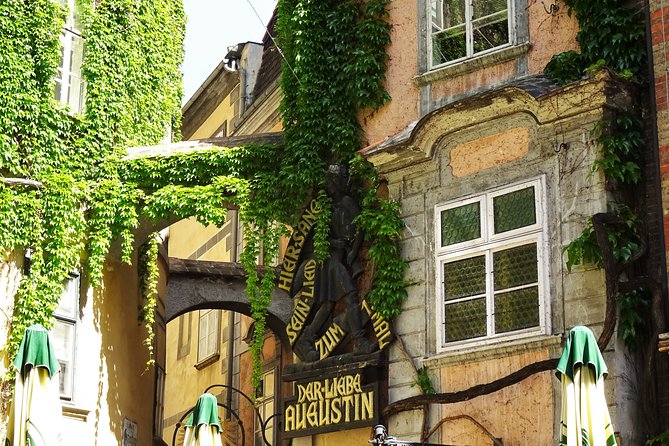
As you move along, the walk leans into Vienna’s storytelling in public spaces. One highlight is the basilisk legend, shown through a mural on Schönlaterngasse. Legends like this are more than decoration. They reveal how cities mythologize themselves, often in the same streets where everyday life continues.
Right near that, the tour points you to the idea that this area ties into a long schnitzel tradition, with the highlight note that one famous schnitzel spot has been serving since 1905. That’s the kind of detail that makes the city feel real. It’s food history paired with street-level culture.
These stops are short, but they’re memorable because they combine art, rumor, and daily life. You’re not just looking at buildings. You’re learning how Vienna tells stories you can walk through.
Sala Terrena in the Deutschordenshaus: A Music-Linked Pause
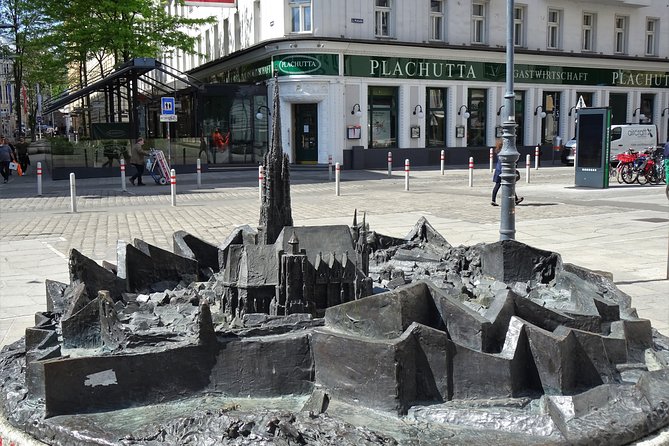
You then reach Sala Terrena im Deutschordenshaus, tied to the Teutonic Order and connected to the year 1781. This part of the tour is about using a specific place to anchor a bigger idea, in this case a Vienna timeframe associated with Mozart.
The stop is brief, about 10 minutes, but it’s designed to make a connection between space and period. Rather than treating musical history like a lecture, you’re shown a location and guided through why that location matters.
If you’re a music fan, this is a strong mid-walk moment. It gives you a mental “thread” to follow through the rest of the tour, especially when Beethoven and Mozart come up again later.
St. Stephen’s Cathedral: Outside Details and a Short Inside Look
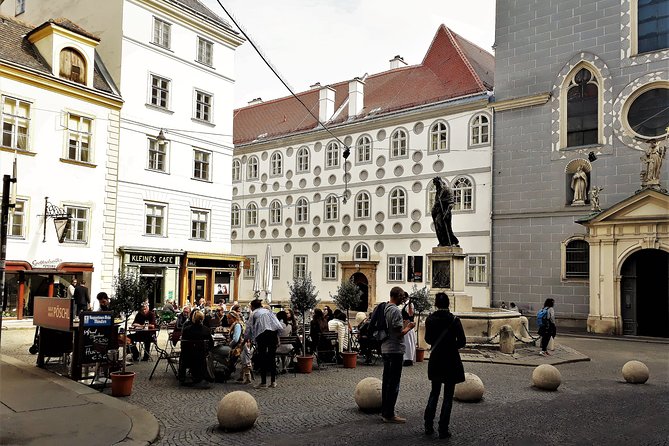
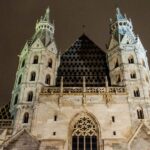
St. Stephen’s Cathedral is the kind of place you can see from a distance and still miss the details if you only do a quick photo stop. Here, you get a structured approach: you’ll look at outside features and then have time to step inside.
You’ll get about 15 minutes at this stop, and the attraction is listed as admission ticket free for what’s included in the tour. That’s a key value point, because it keeps the “cost per moment” efficient.
The best way to use your time at St. Stephen’s is to ask your guide to point out what’s most noticeable from street level and what’s worth noticing once you’re indoors. This is one of those Vienna moments where the explanation changes what you think you’re seeing.
Judenplatz and the Holocaust Memorial: Where Quiet Thinking Fits In
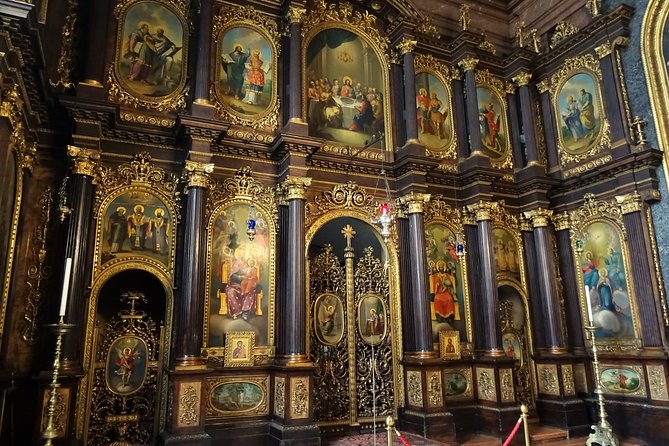
Judenplatz and the Holocaust Memorial are treated carefully in the walk. You spend about 10 minutes here, embedded in one of Vienna’s most atmospheric neighborhood squares.
This isn’t a “check it and move on” stop, even though the time is short. The value is in learning how the square’s story runs deep, covering centuries, and understanding what the memorial is communicating in place.
For me, the best tours are the ones that handle heavy topics without turning them into background noise. This stop is built for that. You’ll have time to look, read, and absorb, then continue without rushing the emotional weight away.
Café Central, Ferstel Passage, and the Politics of Who Meets Where
After Judenplatz, the tour shifts into something lighter on the surface but still smart. You’ll be pointed toward Café Central and the Ferstel Passage, with a specific story connection tied to Trotsky and Stalin, described in a “where they did not become friends” kind of way.
This is a classic Vienna trick: history hides inside everyday routes. A passage you might treat as a shortcut becomes a clue to how political and cultural life mixed, even if the personalities never crossed the way you might expect.
This part is not about learning one date after another. It’s about noticing that Vienna’s social spaces have always mattered, and not just for tourists.
Palais Daun-Kinsky: A Palace Stop With a Clear Vienna Link
You’ll then reach Palais Daun-Kinsky, spending about 10 minutes. The palace is connected to Count Wirich Philipp von Daun, and construction began in 1713 under architect Johann Lucas von Hildebrandt.
The tour also ties this location to a specific birth detail: Prince Józef Poniatowski, a Polish general and Marshal of France, was born there on 7 May 1763. That kind of anchor matters, because it gives the palace a human reference point instead of feeling like an anonymous landmark.
Short palace stops can be hit or miss on walking tours. Here, the explanation is clearly designed to keep it focused. You’re not stuck guessing what you should care about.
Rathausplatz and Café Landtmann: Freud’s Favorite Corner
Near Rathausplatz, the tour points you to Café Landtmann, described as Freud’s favorite. This is one more example of Vienna’s layered identity. You’re not just looking at famous squares and grand buildings. You’re connecting them to the people who shaped intellectual life there.
You’ll spend around 10 minutes at this stop. It’s a compact dose, but it works well for first-timers who want the big-city feel without losing the story thread.
If you love psychology, literature, or simply the idea that cafés are part of history, this is the kind of stop that sticks. It also gives you a place to grab a drink or coffee afterward, depending on timing and your energy.
Mozart and Beethoven in Vienna: Stories That Don’t Feel Like Lectures
One of the tour’s promised themes is learning about Mozart and Beethoven’s lives in Vienna. The way it’s handled, based on how the route is structured, is practical: you get the music-related context at specific places rather than reciting facts in the street.
That’s why the Deutschordenshaus stop in 1781 matters. It gives Mozart a geography. And it also helps you understand how Vienna’s musical life wasn’t separate from the rest of city life. Instead, it lived in neighborhoods, buildings, and social spaces.
Beethoven’s thread is part of the tour narrative as well, but the key idea is that you’ll learn the connection through real locations around the city center. That makes the story easier to remember later.
If you want a tour where music history feels connected to walking through Vienna, this approach is a good fit.
The Secret Rooftop Moment: Why You’ll Be Glad You Walked
The highlights include heading up to a secret rooftop for great views. This is more than a fun photo stop. It gives your brain a reset after walking through details and explanations at street level.
Views matter in a city like Vienna because the streets are compact, and the buildings are dense. A higher perspective helps you feel how the city fits together, and it makes all the earlier orientation cues click.
Don’t plan to treat this as optional. If your energy is okay, this is the moment where your effort pays off visually.
Price and Value for a Private Group Up to 10
At $344.80 per group for up to 10 people, the value depends on how you travel. If you’re two people, it can still feel like a splurge, but the private format matters in Vienna where timing and pacing are everything. If you’re a family or a small group, the per-person cost drops fast.
The best value angle here is that the tour includes a licensed Austria guide and multiple stops listed as admission ticket free for what you do during the walk. That means you’re paying mainly for guided time and interpretation, not stacked entry fees every 10 minutes.
Also, the tour can be booked with either morning or afternoon timing, which helps you avoid reshuffling your whole day. When you’re already planning museums, concerts, and meals, that scheduling flexibility can be worth more than you think.
Who This Walk Fits Best, and Who Might Feel It’s Too Much
This is a strong choice if you like walking tours that explain what you’re seeing and you want Vienna to feel personal rather than generic. It’s also ideal if you want a “second layer” experience, because the route favors less obvious angles.
It suits families too, when the group pace and needs are realistic. Private touring is helpful when kids or adults have questions, and some guides are used to adjusting the walk to keep everyone engaged.
But it may not fit perfectly if you have limited mobility or you need long breaks. The tour description points to moderate physical fitness, and one published experience emphasized that stairs and a fast pace can be hard if you want to linger in churches or move slowly. If your day is likely to be slower than average, look for a shorter option or plan to negotiate the pace early.
Booking Smart: Timing, Group Size, and What to Communicate
On average, this tour is booked about 40 days in advance, so don’t wait until the last minute. Confirmations are received within 48 hours of booking, subject to availability.
When you book, think about how you want the story to land. Are you more into music life, architecture, or everyday street culture like cafés and legends? If you know your priorities, share them at the start.
Also, decide what pickup looks like for you. The tour offers pickup, and the meeting can be arranged within Vienna, including for cruise guests docking at A-Rosa Gäste treffen wir am jeweiligen Pier Handelskai 265, 1020 Wien. That reduces stress, especially if you’re juggling a busy port schedule.
One more practical note: service animals are allowed, but pets are not permitted in certain areas visited. If you’re traveling with an animal, confirm what’s possible for your specific route day.
Should You Book This Vienna Walk?
Book it if you want a private, story-driven orientation to Vienna in about three hours, with major landmarks plus the smaller corners that make the city feel like it’s still lived in. I’d especially recommend it if you care about Mozart and Beethoven connections, and you like getting rooftop views as a payoff for walking.
Skip it or choose a different format if your mobility is limited, if you know you’ll need frequent long sitting breaks, or if you expect a slow museum-style pace. This is a walking tour with a real route plan, so it’s best for people who are comfortable keeping moving.
If you fit the sweet spot, this walk is a very efficient way to see St. Stephen’s, the Jesuit Church, Judenplatz and the Holocaust Memorial, and still feel like you found Vienna in-between the big highlights.
FAQ
Is this a private tour or a group tour?
This is a private tour/activity. Only your group participates.
How long is the Vienna walk?
It runs for about 3 hours.
What language is the tour offered in?
The tour is offered in English.
Does the tour offer pickup?
Yes. Pickup is offered, and other meeting points can be arranged within Vienna. One specific pier meeting point is listed for A-Rosa at Handelskai 265.
What sights are included?
The walk includes the Jesuit Church, St. Stephen’s Cathedral, a basilisk legend mural on Schönlaterngasse, Judenplatz and the Holocaust Memorial, and stops connected to Mozart and Beethoven’s Vienna, plus time near Café Central, Ferstel Passage, Palais Daun-Kinsky, and Café Landtmann by Rathausplatz.
Is the admission fee included for the stops?
The provided stop notes show admission ticket free for the included sights and viewpoints during the tour.
Are pets allowed?
Pets are not permitted in certain areas visited.
What is the cancellation policy?
Free cancellation is offered, and you can cancel up to 24 hours in advance for a full refund. If you cancel less than 24 hours before the start time, the amount paid is not refunded.
More Vienna Walks, Step by Step
- Vienna: Guided Walking Tour of City Center Highlights
★ 4.7 · 4,989 reviews - Vienna: Vienna Central Cemetery Guided Walking Tour
★ 4.8 · 3,307 reviews - Vienna: Guided Walking Tour of City Highlights & Hidden Gems
★ 4.9 · 2,180 reviews - Vienna: Viennese Underworld Guided Walking Tour
★ 4.7 · 1,865 reviews - Vienna: World War II Historical Walking Tour
★ 4.8 · 1,772 reviews
More Tour Reviews in Vienna
- Vienna: Vivaldi’s Four Seasons Concert in Karlskirche
★ 4.7 · 14,951 reviews - Vienna: Schönbrunn Palace & Gardens Skip-the-Line Tour
★ 4.7 · 7,739 reviews - Vienna: Light of Creation Votive Church Immersive Light Show
★ 4.8 · 6,779 reviews - Vienna Spanish Riding School Guided Tour
★ 4.7 · 6,765 reviews - Vienna: Classical Concert in the World-Famous Musikverein
★ 4.6 · 6,673 reviews
Yours Alone Across Vienna
- Vienna: Private Walking Tour with a Local Guide
★ 4.6 · 1,420 reviews - Vienna: Private Walking Tour with a Guide
★ 4.7 · 962 reviews - Vienna: Wine Tasting Experience in a Private Wine Cellar
★ 4.8 · 413 reviews - Private Day Tour Trip Salzburg Hallstatt and Melk from Vienna
★ 5.0 · 388 reviews - Private Day Tour of Hallstatt and Salzburg from Vienna
★ 5.0 · 263 reviews
Recently Added Around Vienna


Private Vienna City Tours, compared.
 ★ 4.6Private Walking Tour with a Local GuideFrom $551,420 reviews
 ★ 4.7Private Walking Tour with a GuideFrom $55962 reviews
 ★ 4.8Wine Tasting Experience in a Private Wine CellarFrom $22413 reviews
 ★ 5.0Private Day Tour Trip Salzburg Hallstatt and Melk from ViennaFrom $930388 reviews
 ★ 5.0Private Day Tour of Hallstatt and Salzburg from ViennaFrom $919263 reviews
 ★ 4.5Vienna Private Walking Tour with a LocalFrom $58131 reviews
 ★ 5.0Vienna at First Glance a Private Walking Tour for First TimersFrom $344131 reviews
 ★ 4.5Vienna City Highlights Private TourFrom $458122 reviews
Browse the lists this tour appears in