

Reviewed · JEWISH HERITAGE TOURS IN VIENNA
Private Jewish Walking Tour Vienna
Jewish Vienna has two faces, sacred and street-smart. This private walking tour pairs classic sights like the University of Vienna and Vienna State Opera with major Jewish landmarks, including Judenplatz and the Holocaust Memorial. You also get the city-history layers that make the story feel real, not like a textbook.
I love the way this tour stays practical while still being meaningful. You walk with a State Certified Austria Guide, and you see the Jewish community story alongside the city’s big landmarks, not in a separate bubble. I also love the route’s balance, from everyday Vienna stops tied to Sigmund Freud to solemn memorial sites that are hard to forget.
One possible drawback is simple: the Seitenstettengasse Synagogue is outside-only. If you want to go inside, you will need to book a separate tour directly with the synagogue.
Key things to know before you go

- Private and group-only: only your party joins the tour.
- English guide: easy to follow, with mobile tickets provided.
- Outside view at Seitenstettengasse: plan on seeing the synagogue from the street.
- Central route, heavy on walking: the itinerary strings together major sights around the historic core.
- Hotel pickup in the inner city: convenient start and less time hunting for your meeting point.
The city's Jewish quarter, walked slowly
- Jewish Vienna: City Synagogue Guided Tour★ 4.6 · 208 reviews
- Vienna: Jewish Museum Vienna and Museum Judenplatz Tickets★ 4.5 · 170 reviews
- Jewish Vienna Walking Tour★ 5.0 · 36 reviews
- Private Jewish Walking Tour Vienna★ 5.0 · 30 reviews
Meeting in Vienna, then walking into the story

You meet at Helmut-Zilk-Platz, Albertinapl 2-3 (1010 Wien). The tour ends near Schwedenplatz, Schwedenpl 1010 Wien, though the exact finish location can shift, with notice sent before you begin. That end spot matters. It is close to major transit, so you can keep your day moving toward museums, dinner, or a relaxed stroll along the canal area.
What makes the start feel easy is the pickup option. If your hotel is in the inner city, your guide can pick you up right there. If it is outside the inner city, you get a message ahead of time to confirm the meeting point. For a 2 hours 30 minutes walk, that kind of planning can save you real time, especially if you arrive to Vienna tired or you are juggling museum tickets later.
Because this is private, you can set your own pace. You can also ask questions as they come up, which matters on a tour like this where the history connects to specific buildings, streets, and public squares. The route is designed to be walked, not photographed from a bus window.
University of Vienna: the lesson starts with place
The tour begins in the Historic Center of Vienna, and one of the early stops is the University of Vienna. This is not just a “pretty building” stop. A university is where ideas gather, where people meet, and where social change gets shaped. In Vienna, that kind of setting helps you understand why Jewish culture and intellectual life could play such an outsized role in the city’s long history.
As you walk past, I like to think of the University as an anchor point. It gives you a sense of how close daily life is to the big institutions that shaped society. Even if your focus is strictly Jewish Vienna, you still benefit from seeing how education, politics, and culture overlapped in the same geographic space.
Café Landtmann and Sigmund Freud: history you can smell
Next comes one of the most fun stops on the route: Sigmund Freud’s favorite coffeehouse, Café Landtmann. The point here is not that every coffeehouse is historically important. It is that Vienna’s Jewish story is also an everyday story, tied to conversation, thinking, and public life.
Coffeehouses in Vienna were social engines. People argued, traded ideas, and stayed connected. When a figure like Freud is tied to a specific place, it gives you a shortcut into that world. You start to picture the city as lived-in, not staged.
Practical tip: even if you do not stop for a drink, take a minute to read the surroundings. Notice how the area feels, how people flow through the street, and how close everything stays in the center. Vienna can feel deceptively compact when you walk it.
Palais Ephrussi: influence lives in architecture
Then the tour heads toward Palais Ephrussi, connected to one of the prominent Viennese Jewish families. This is where the walk starts to feel like an art and architecture lesson, because a palace is never just a home. It is a statement about wealth, status, and the role a family played in public life.
For you, this stop is valuable because it shifts the tone. Jewish Vienna is often reduced to tragedy alone, but this kind of building reminder expands the view. It helps you see Jewish life as it was before the modern catastrophes, including the social and cultural presence that shaped Vienna.
What to look for: stand at a distance first, then step closer and slow down. You are not trying to memorize details. You are training your eyes to notice how people built status into stone, windows, and entrances.
Vienna on foot, a couple more routes

Seitenstettengasse Synagogue: what you see matters, and what you do not
One of the most important landmarks is the Seitenstettengasse Synagogue. But here is the key detail, and you should build your expectations around it: you will only look at the synagogue from the outside. If you want to enter and see it from within, you have to book a tour directly with the synagogue.
Outside viewing can still be meaningful. A synagogue’s exterior context is part of the story, including how it sits in the street fabric and how it relates to nearby squares and buildings. But if interior space is what you care about most, you should plan a separate visit for a deeper experience.
If you are the type who travels with strong intentions, I recommend this mindset: treat the exterior view as a checkpoint in the narrative, then add the interior visit on a different day. That way you do not feel like you paid for something you did not receive.
Judenplatz and the Holocaust Memorial: facing the hard parts in the right order
From there, the tour moves to Judenplatz, a central location for Jewish history in Vienna. Judenplatz works well on foot because it is a public space. It forces you to connect the Jewish story to the city’s shared public life, not only to private or isolated sites.
Then comes the Holocaust Memorial. The best Jewish history tours do two jobs at once. They explain what happened, and they also explain why the location matters, how memory is physically placed in the city. When you reach memorials during a walk, the earlier context becomes part of the emotional logic. You understand what was lost because you have seen hints of what life looked like before.
Practical travel note: memorial areas often require you to lower your pace and give yourself a moment. If you rush through, you miss the meaning. On a 2 hours 30 minutes route, it is still doable to slow down briefly. Your body will thank you later.
Joseph’s Square inside the imperial palace: the story keeps expanding
Another stop is Joseph’s Square inside the imperial palace. That location does not feel like a Jewish museum room. It feels like power, government, and imperial space, which is exactly why it belongs on this kind of tour.
You can read it as a reminder that Jewish history unfolded inside the same political structures as everyone else’s life. The Jewish community was shaped by laws, rulers, and public policy, not only by culture and religion. Placing a Jewish story inside imperial space helps you see the system, not just the suffering.
As you walk here, I suggest you pay attention to your surroundings rather than fixating on dates. Ask yourself what kind of life a palace space implies. Then connect that back to the guide’s explanation of how Jewish communities lived within those boundaries.
Memorial against War and Fascism, then Vienna State Opera
The route includes a Memorial against War and Fascism. This stop expands your understanding beyond a single chapter. It turns the story from one tragedy into a broader warning about how violence and authoritarianism take root in societies. Even if you already know the basics, the memorial placement in central Vienna helps you see how close these ideas are to everyday streets.
Finally, the walk heads toward Vienna State Opera. This is a classic Vienna finale, but on this tour it plays a different role. It signals continuity, the city’s cultural life, and the fact that music and theatre have always been part of Vienna’s identity. When you end near a landmark like the opera, you get an easy transition to the rest of your day.
How long is it, and why timing matters
The tour runs about 2 hours 30 minutes. That is a sweet spot for people who want deep context but still want room later for museums or dinner reservations. Because it is a walking tour in central Vienna, you will feel the distance in your legs even if the pace is friendly.
In my view, the timing is also smart because it gives the guide enough space to connect stops. The story is not just a series of points on a map. It becomes a chain. You see how a synagogue relates to a public square, how memorials relate to earlier civic context, and how the city’s main institutions fit into the bigger narrative.
Private group value: is $450.53 per group worth it?
The price is $450.53 per group, up to 15 people. Since it is private, that price is not tied to a per-person rate in the usual way. Value depends on your group size.
Here is the practical math mindset I use: if you are traveling as a couple or a solo traveler, the cost per person can feel high compared with standard group tours. But if you are a family, a small group of friends, or you are traveling with companions who also want a more tailored route, the value improves fast. With up to 15 people, you can spread the cost and keep the benefit of a dedicated guide.
You also get real “money worth” items:
- A State Certified Austria Guide
- A route centered on Jewish Vienna landmarks like Seitenstettengasse and Judenplatz
- A central meeting point and an ending near transit
- Pickup help if you are staying in the inner city
- Mobile ticket for smoother entry to the experience
One more thing: the tour includes admission ticket free language, but the important exception is that inside the Seitenstettengasse Synagogue is not included. So if interior access is crucial to your trip goals, plan for that separately.
The guide makes the difference: what to expect from leaders like Lisa, Bettina, and Gisella
This tour stands or falls with the guide. The strong pattern here is energetic communication and an ability to answer questions without making you feel rushed. Names that show up across guide experiences include Lisa, Bettina, Elizabeth, Gisella, Humberto, and Reinhard.
What you should look for in a guide for a walking history tour:
- They can explain the story in a logical order
- They can connect architecture and streets to real human life
- They can adjust when you show curiosity, like adding a personal interest stop when possible
- They can accommodate practical needs, including repeating details when you miss something
If you want a calmer day, say so at the start. If you want more architecture talk, ask early. For private tours, your preferences matter more than on a big group.
Who this tour fits best
This works especially well if you:
- Want a Jewish history focus that also includes broader Vienna context
- Prefer walking with a guide rather than reading alone
- Like seeing major landmarks in sequence, from universities and palaces to memorial sites
- Travel in a group where you can spread the private-tour cost
It can also fit solo travelers who want personalized pacing and the freedom to ask questions. The tour is designed for most travelers to participate, with service animals allowed and near public transportation.
If you are traveling with kids, it might be a tough topic and a long walk, but it can still work if you plan breaks and the guide can steer the pace.
Should you book this private Jewish walking tour in Vienna?
I think you should book it if your goal is a guided, city-centered introduction to Jewish Vienna that hits both the famous landmarks and the hard memorial stops. The combination of Judenplatz, Seitenstettengasse (outside view), and Holocaust-related memory, plus classic Vienna stops like Café Landtmann and Vienna State Opera, is a strong way to understand the city’s story as one place.
I would skip it or pair it differently if:
- You specifically want to go inside Seitenstettengasse Synagogue on this tour day
- You are traveling solo or as a couple and the total cost per person feels uncomfortable
- You expect a deeper museum-style experience indoors, since this is a walking route
Bottom line: this is a good booking when you want a guided walk that stays anchored in real places, not just dates. If you want that, it is a smart use of one of your central Vienna afternoons.
FAQ
Where does the tour start and end?
The tour starts at Helmut-Zilk-Platz, Albertinapl 2-3, 1010 Wien, Austria. The tour ends at Schwedenplatz, Schwedenpl., 1010 Wien, Austria. The end location may vary, and you will be notified before the tour.
Is pickup available from hotels?
Yes. If your hotel is in the inner city, your guide can pick you up from your hotel. If your hotel is outside the inner city, the operator will contact you before the tour to confirm the meeting location.
How long is the tour?
The duration is approximately 2 hours 30 minutes.
Is the tour private?
Yes. It is a private tour/activity, and only your group participates.
Is the Seitenstettengasse Synagogue visit included?
You will view the Seitenstettengasse Synagogue from the outside only. Entry inside is not included, and you would need to book directly with the synagogue if you want to go in.
What language is the tour offered in?
The tour is offered in English.
Is free cancellation available?
Yes. You can cancel up to 24 hours in advance for a full refund.
If you want, tell me your group size and your hotel area. I can help you sanity-check the best meeting approach and whether you should plan a separate synagogue interior visit.
Yours Alone Across Vienna
- Vienna: Private Walking Tour with a Local Guide
★ 4.6 · 1,420 reviews - Vienna: Private Walking Tour with a Guide
★ 4.7 · 962 reviews - Vienna: Wine Tasting Experience in a Private Wine Cellar
★ 4.8 · 413 reviews - Private Day Tour Trip Salzburg Hallstatt and Melk from Vienna
★ 5.0 · 388 reviews - Private Day Tour of Hallstatt and Salzburg from Vienna
★ 5.0 · 263 reviews
Vienna on Foot, Continued
- Vienna: Guided Walking Tour of City Center Highlights
★ 4.7 · 4,989 reviews - Vienna: Vienna Central Cemetery Guided Walking Tour
★ 4.8 · 3,307 reviews - Vienna: Guided Walking Tour of City Highlights & Hidden Gems
★ 4.9 · 2,180 reviews - Vienna: Viennese Underworld Guided Walking Tour
★ 4.7 · 1,865 reviews - Vienna: World War II Historical Walking Tour
★ 4.8 · 1,772 reviews
Jewish Vienna, Walked
- Jewish Vienna: City Synagogue Guided Tour
★ 4.6 · 208 reviews - Vienna: Jewish Museum Vienna and Museum Judenplatz Tickets
★ 4.5 · 170 reviews - Vienna: Jewish Life in Leopoldstadt 2-Hour Walking Tour
★ 4.9 · 109 reviews - Jewish Vienna Walking Tour
★ 5.0 · 36 reviews - The Cultural Heritage of Jewish Vienna walking tour
★ 4.0 · 30 reviews
Recently Added Around Vienna


Jewish Heritage Tours in Vienna, compared.
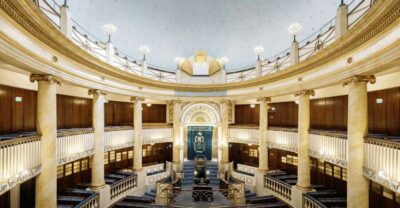 ★ 4.6Jewish Vienna: City Synagogue Guided TourFrom $23208 reviews
 ★ 4.5Jewish Museum Vienna and Museum Judenplatz TicketsFrom $17170 reviews
 ★ 4.9Jewish Life in Leopoldstadt 2-Hour Walking TourFrom $25109 reviews
 ★ 5.0Jewish Vienna Walking TourFrom $17936 reviews
 ★ 4.0The Cultural Heritage of Jewish Vienna walking tourFrom $5230 reviews
 ★ 4.9Private Jewish Walking TourFrom $53012 reviews
 ★ 5.0Jewish in Vienna TourFrom $24010 reviews
 ★ 4.5Private Jewish Vienna Walking TourFrom $5648 reviews
Browse the lists this tour appears in