
Reviewed · VIENNA OLD TOWN WALKING TOURS
Historical Hitler Walking Tour of Vienna
Vienna still has 1938 in its stones. This guided walk connects Hitler’s early life, Vienna’s arts world, and the Jewish architecture and memorials that survived the Holocaust, all in a route that feels very grounded in real places like the State Opera and Heldenplatz. I love how the story stays anchored to Vienna landmarks, especially when guides like Dieter or Wolfgang bring the city details into focus.
What I also like is how practical the tour feels as you move through the center. You get a strong mix of major memorials and lesser-noticed sites, including the Judenplatz Holocaust Memorial and the synagogue hidden behind tenement buildings at Seitenstettengasse 4. And many stops are free to enter, so you are not hit with surprise ticket costs.
One consideration: the title can make you expect a Hitler-only route, but it is really about Vienna’s social and cultural shift around his rise and the consequences. Plan for 2.5 hours of walking in changeable weather, and bring layers, because even when the pace is relaxed, you will feel the cold if you are doing this in winter.
Key things to know before you go
- Small group size (max 25) keeps the walking story from turning into a stampede
- English mobile ticket means you are not hunting for paper vouchers
- A clear route from Albertinaplatz to Schwedenplatz works well for an afternoon plan
- Free entry notes at major stops help your budget
- Stops include both arts landmarks and Jewish memorial sites, not just one type of location
- Guides often add indoor warm-ups when the weather gets harsh
Vienna on foot, a couple more routes
- Vienna: Guided Walking Tour of City Center Highlights★ 4.7 · 4,989 reviews
- Vienna: Vienna Central Cemetery Guided Walking Tour★ 4.8 · 3,307 reviews
- Vienna: Viennese Underworld Guided Walking Tour★ 4.7 · 1,865 reviews
- Vienna: World War II Historical Walking Tour★ 4.8 · 1,772 reviews
Why this walk starts at Albertinaplatz and finishes near Schwedenplatz
You meet at Albertinaplatz, right by the Albertina Museum area, and you end a few minutes walk from Schwedenplatz. I like this setup because it keeps the route inside Vienna’s core, with an easy connection back to the subway if you want it. Schwedenplatz is also a simple place to grab dinner afterward, which matters when you are done with a history-heavy afternoon.
The walk is about 2 hours 30 minutes at an easy-to-moderate pace, and the tour notes call for comfortable shoes and moderate physical fitness. It is not a slow stroller tour, but it is also not a power march. You get time at key sites, and the route is designed so you can hear the explanations without feeling like you are constantly sprinting for the next corner.
Group size is limited to up to 25, which can make a big difference in a busy meeting spot. Still, treat the meeting point like you would for any popular walking tour: arrive a few minutes early so you are not late when the guide starts moving.
Price and time value: what $32.65 really gets you
At $32.65 per person for about 2.5 hours, the value depends on one thing: whether you want guided context. If you are the type who likes to understand why a building matters, this price is reasonable. The tour includes a licensed guide, and the route hits multiple sites tied to the political turn of the 1930s.
Another value boost is that many stops show free admission in the tour details. You are paying for the guide and the connections between places, not for a string of paid museum tickets. For $32.65, you are essentially buying a focused, guided map of Vienna’s 20th-century trauma and transformation.
It is also priced so you can stack it with other sightseeing. The meeting time is 2:30 pm, which is ideal if you want mornings for museums and afternoons for walking. And if you know you will want dinner right after, the Schwedenplatz finish helps you avoid cramming the day into a tight schedule.
Vienna State Opera: how an arts temple changed after Anschluss
The tour begins with a stop at the Vienna State Opera, and it is a clever way to start. Vienna’s opera house is tied to royal celebrations and Mozart, but the guide uses that cultural prestige to explain what happened when politics took over.
You will hear how, after the Anschluss of 1938, Adolf Hitler visited the State Opera on June 19 and October 27, 1938. That detail is not just a headline. It is a starting point for understanding the shift from public cultural life to persecution, including the fact that many artists and employees were pushed out or targeted, and some works faced bans.
What I like about this stop is the contrast. You do not just learn a date. You see an iconic place and then understand how that kind of spotlight can be twisted for propaganda. If you care about how regimes use culture to normalize themselves, this is one of the most meaningful moments on the walk.
One practical note: you will likely be outside for parts of the explanation, so dress for the conditions. In cold weather, hearing can be harder, even when a device is provided. If you already know you struggle with audio in wind, bring your patience and keep an eye on your guide’s instructions.
Memorial Against War and Fascism: Alfred Hrdlicka’s reminder in Albertinaplatz
Next you move to the Memorial Against War & Fascism, created by Austrian sculptor Alfred Hrdlicka. It has been standing since 1988 on Vienna’s Albertinaplatz area, and the tour context connects it to a broader warning about how quickly societies can slide into violence and authoritarian thinking.
This stop is important because it widens the lens. The tour is centered on Hitler and Vienna, but it also keeps the memorial purpose clear: it is dedicated to all victims of war and fascism. That framing matters. It helps you avoid turning the walk into a single-person obsession and instead see how systems harm ordinary people.
The memorial’s placement in the city core also helps you absorb the message without needing a museum setting. You read the space like you would read a street corner. That is one reason walking tours like this hit differently than closed-door exhibitions.
Vienna at walking pace, more routes
Akademie der bildenden Kunste: the art school that rejected Hitler
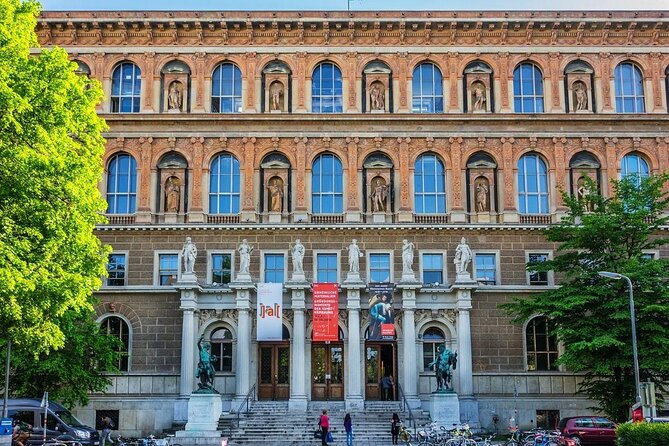
From the Opera area, the route leads you toward Akademie der bildenden Kunste, the Academy of Fine Arts. The tour focuses on the idea that Hitler was rejected as a student. Even if you already know that broad story, the value here is the Vienna context and the “why” behind the personal turning points.
I like the way this stop connects ambition and outcome. It is not presented as a simple plot point. It is used to help you understand how early experiences in Vienna fed into the bigger worldview he later promoted, including how he formed ideas about power and belonging.
This is also the kind of stop where you can learn something even if you consider yourself well read on the subject. Guides like Stephan and Charles have a style that ties facts together with the surrounding street-level details, so you are not just memorizing events. You are building a mental map of how a person intersects with a city.
Heldenplatz: the 1938 balcony speech and the trauma of the place
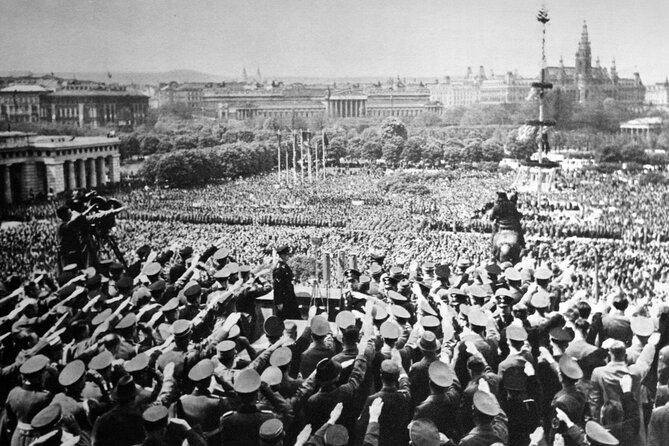
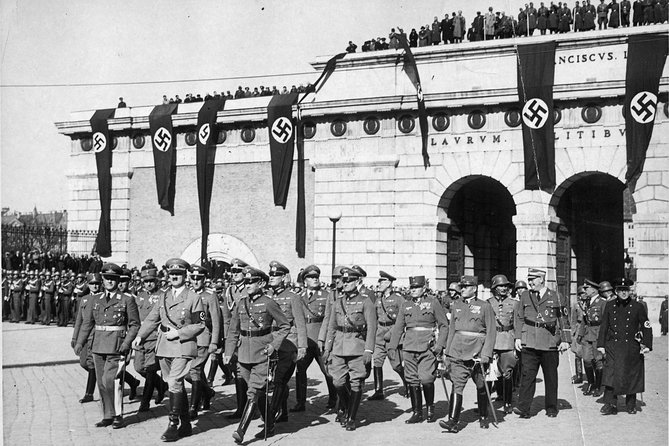
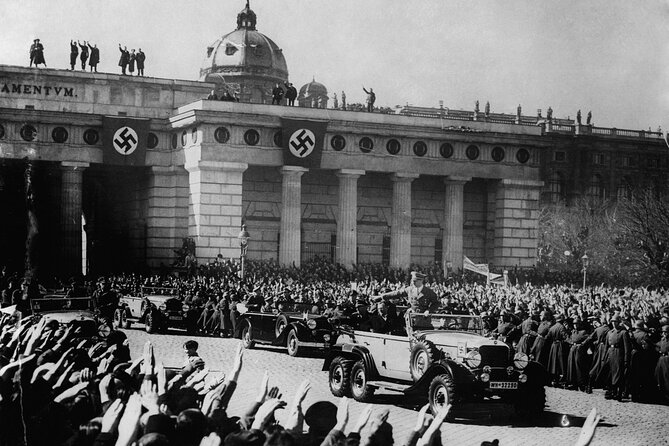
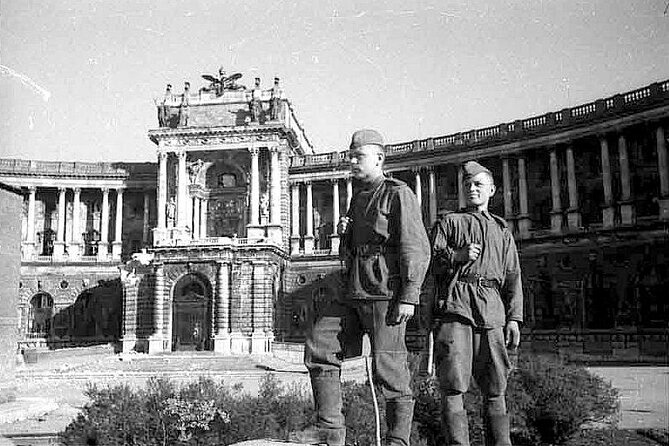
Heldenplatz is one of the emotional peaks of the walk. Here you learn about March 15, 1938, tied to Hitler’s speech from the balcony of the Neue Hofburg. The point is not to sensationalize the moment. The guide frames it as the epitome of National Socialist seizure of power and also as a symbol tied to Austria’s later trauma.
If you enjoy history through physical space, this is where the tour becomes very real. Heldenplatz is grand, and that grandeur adds weight to what happened there. You are not reading history. You are standing where history was performed.
This stop is also a reminder that public approval can be part of the machinery. The tour emphasizes the broad support and the resulting harm, so you understand the speech as more than a moment in time. It becomes a pivot point for what came next for Austrian society.
Judenplatz Holocaust Memorial: paying respect in the center of Vienna
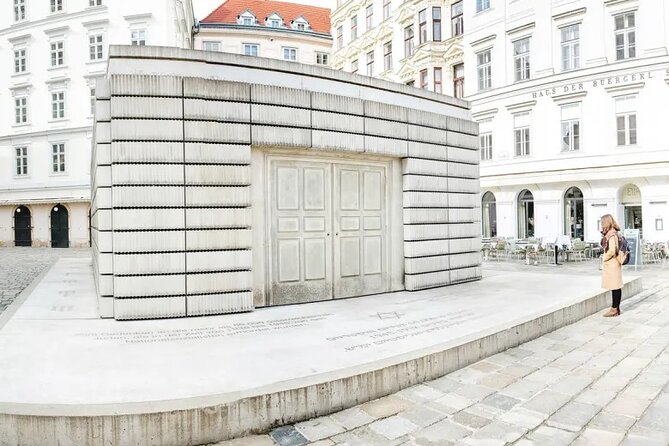
Then you cross toward the Judenplatz Holocaust Memorial, where you learn about the Mahnmal für die österreichischen jüdischen Opfer der Schoah. The tour notes specify that the memorial honors more than 65,000 Austrian Jews murdered by National Socialists between 1938 and 1945.
I appreciate how this is handled as a respectful pause in the route. Even if you already know the numbers, it helps to see them attached to a place in the city center, not trapped in a textbook. The memorial ties the story to Austria directly, not just Germany, which is a key part of understanding how local conditions helped enable what followed.
This is also one of the stops that reinforces the tour’s focus on Jewish architecture that survived the Holocaust. You do not only get death and mourning. You also get the physical endurance of Jewish Vienna, even when the community was shattered.
When you visit this memorial, slow down. If your device audio is tough, it is fine to let the silence do some of the work. This is one spot where the setting carries meaning even without extra commentary.
Morzinplatz: the Metropole Hotel turned into Gestapo headquarters
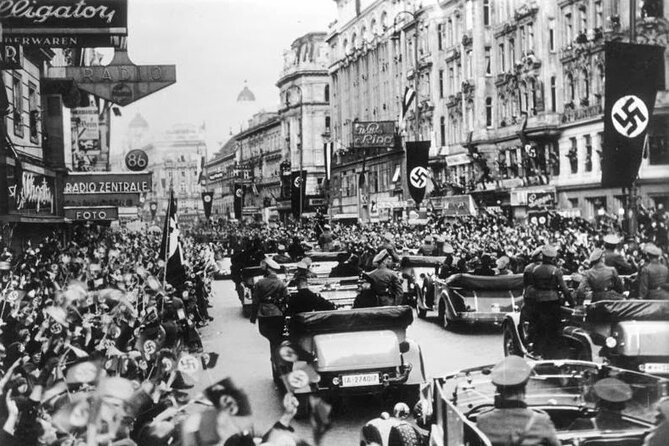
Morzinplatz is another must, and it is handled with a “this is where things got brutal” kind of clarity. The tour explains that the former luxury hotel Metropole became one of the most brutal Gestapo headquarters in the Third Reich.
That contrast, luxury to terror, hits hard because it is so plausible. It shows how institutions of comfort and normal life can be repurposed for cruelty. You are walking through Vienna, but the guide keeps dragging you back to the idea that these were real decisions, real people, and real victims.
This stop also adds texture to what you learned earlier at the arts sites and public squares. When you combine cultural takeover with secret police violence, the whole system makes more sense.
Seitenstettentempel at Infopoint Jewish Vienna: a synagogue hidden from the street
One of my favorite details on the route is the explanation of how the main synagogue, Seitenstettengasse 4, ended up hidden behind a tenement building. The tour connects this to regulations at the time that required non-Catholic places of worship to be concealed from street view.
The result is a striking lesson in visibility and power. You look at what is in front of you, and then the guide explains why it is arranged that way. The inscription above the entrance gate adds a layer of cultural identity and faith, which is another reason this stop feels more than just architectural trivia.
If you like walking tours that teach you to notice what you normally would miss, this is it. You see a city that does not shout its history at you, and you learn how to read what is literally in the frame.
How the guide keeps the story balanced and the walk manageable
The best thing about this tour is the guiding style. Across the guides who have led this walk, there is a pattern: balanced storytelling with a strong sense of pacing. I have found that this kind of topic can turn either preachy or confusing. Here, the guide work is aimed at clarity.
Dieter, Dieter specifically comes up a lot, and Wolfgang, who some groups describe as personable and strong on context. Stephan, Siggy, and Charles are also named in positive accounts for keeping the material organized and answering questions. That matters because the subject can raise a lot of doubts or curiosity, and a good guide gives you a way to ask without feeling rushed.
Cold weather can make communication tricky, and some people note audio or hearing challenges through devices. My practical tip is simple: stand closer to the guide when the group pauses, and do not let your scarf and hood block your ears if you are listening through a device. Also, the tour notes suggest bringing water and weather protection, including raincoat or umbrella and sunblock. That is wise, because Vienna weather can flip fast.
What to do right before and after the tour
Because the tour starts at 2:30 pm, plan a light morning. If you want to see museums, pick one and leave enough time for a coffee break near the meeting zone. Albertinaplatz is a good anchor point, and you do not want to arrive frazzled.
For after, end at Schwedenplatz and you are right by U line 1 and 4. That makes it easy to continue with other sights or head toward dinner. If you are hungry, pick a place near the finish, because the story is heavy and you will want food sooner rather than later.
If you are planning a longer day, consider pairing this tour with something that helps your brain reset, like a cathedral visit or a relaxed stroll along the Ringstrasse area. This walk focuses on trauma and political change, so a calm follow-up helps the day feel complete.
Who this tour suits best, and who might prefer something else
You will probably love this tour if you:
- like Vienna’s culture and want to understand the darker political context behind it
- care about Jewish memorial sites and want them explained in a city setting
- prefer a guided route that links multiple locations into one coherent story
You might think twice if you want a purely Hitler-focused itinerary with zero broader context. Even when the title leads you in that direction, the tour approach is about Vienna’s turn, including the arts world, public squares, and Jewish life. Also, if winter cold or long outdoor explanations are a big issue for you, bring serious layers and expect to be outside for significant stretches.
Should you book this Vienna history walk?
Book it if you want an English guide to connect Vienna’s landmarks to the realities of 1938 and the Holocaust. For $32.65, you get a licensed guide, a tight route with free-entry memorial and landmark stops, and a perspective that keeps linking politics, culture, and community harm in a way that makes the city feel understandable.
Skip it only if your goal is entertainment or quick trivia. This is a reflective, lesson-forward walk. If you are ready for that, you will come away with a sharper sense of how Vienna’s spaces carried meaning before, during, and after the Nazi years.
If you decide to go, show up early at Albertinaplatz, wear good shoes, and pack weather gear. You will get more out of the explanations when you are comfortable enough to listen.
FAQ
How long is the Historical Hitler Walking Tour of Vienna?
It runs for about 2 hours 30 minutes.
What time does the tour start, and where do I meet?
The start time is 2:30 pm. You meet at Albertinaplatz (Albertinapl., 1010 Wien, Austria).
Where does the tour end?
The tour ends a few minutes walk from Schwedenplatz (Schwedenpl., 1010 Wien, Austria).
Is the tour offered in English?
Yes, it is offered in English.
What is included in the price?
The tour includes a licensed guide. A mobile ticket is provided. Food and drinks and hotel pickup and drop-off are not included.
Do you visit places with entrance fees?
The tour notes show free admission for multiple stops, including the State Opera stop and the memorial stops listed.
What should I bring since Vienna weather can change?
Wear comfortable shoes and clothes. Bring water and weather protection, like sunblock and a raincoat or umbrella. The tour notes also say good weather is required.
More Tours in Vienna
- Vienna: Schönbrunn Palace & Gardens Skip-the-Line Tour
★ 4.7 · 7,739 reviews - Vienna Spanish Riding School Guided Tour
★ 4.7 · 6,765 reviews - Vienna: Skip-the-Line Sisi Museum, Hofburg and Gardens Tour
★ 4.8 · 5,918 reviews - Vienna: Skip-the-Line Schönbrunn Palace & Gardens Tour
★ 4.8 · 5,411 reviews - Vienna: Guided Walking Tour of City Center Highlights
★ 4.7 · 4,989 reviews
More Tour Reviews in Vienna
- Vienna: Vivaldi’s Four Seasons Concert in Karlskirche
★ 4.7 · 14,951 reviews - Vienna: Schönbrunn Palace & Gardens Skip-the-Line Tour
★ 4.7 · 7,739 reviews - Vienna: Light of Creation Votive Church Immersive Light Show
★ 4.8 · 6,779 reviews - Vienna Spanish Riding School Guided Tour
★ 4.7 · 6,765 reviews - Vienna: Classical Concert in the World-Famous Musikverein
★ 4.6 · 6,673 reviews
Vienna on Foot, Continued
- Vienna: Guided Walking Tour of City Center Highlights
★ 4.7 · 4,989 reviews - Vienna: Vienna Central Cemetery Guided Walking Tour
★ 4.8 · 3,307 reviews - Vienna: Guided Walking Tour of City Highlights & Hidden Gems
★ 4.9 · 2,180 reviews - Vienna: Viennese Underworld Guided Walking Tour
★ 4.7 · 1,865 reviews - Vienna: World War II Historical Walking Tour
★ 4.8 · 1,772 reviews
Recently Added Around Vienna


Vienna Old Town Walking Tours, compared.
 ★ 4.7Guided Walking Tour of City Center HighlightsFrom $254,989 reviews
 ★ 4.8Vienna Central Cemetery Guided Walking TourFrom $3353,307 reviews
 ★ 4.9Guided Walking Tour of City Highlights & Hidden GemsFrom $272,180 reviews
 ★ 4.7Viennese Underworld Guided Walking TourFrom $371,865 reviews
 ★ 4.8World War II Historical Walking TourFrom $311,772 reviews
 ★ 5.0Vienna Historic Center Small Group Walking TourFrom $721,746 reviews
 ★ 4.6Private Walking Tour with a Local GuideFrom $551,420 reviews
 ★ 4.91.5-Hour Underground Walking TourFrom $321,146 reviews
Browse the lists this tour appears in