

Reviewed · VIENNA OLD TOWN WALKING TOURS
An Introduction to Vienna Walking Tour
Vienna’s streets have a plot twist in every corner. This 2.5-hour small-group walk gives you a guided orientation that connects landmark buildings to Austria’s changing past, from imperial power to modern art. The vibe is part sightseeing, part real-life context, and you finish with a clearer sense of where Vienna fits together.
I especially love how the stops mix big-name icons with the kind of street-level details most first-timers miss. I also like the guide approach, with historians who pace the tour for questions and even add little culture moments like Mozart and Haydn, plus Sisi-style candy tastings. One thing to consider, this is mainly an outdoor walk with no food included unless specified, so if you want long museum time or lots of indoor entrances, you may feel a bit short-changed.
Key highlights at a glance

- Historian guide storytelling that links architecture to major eras of Austrian life
- Small group size (max 8), so you get real conversation time, not quick one-liners
- Top Vienna anchors: Secession building, Stephansdom, the Hofburg, and Ringstraße landmarks
- Food-market atmosphere at Naschmarkt for a lived-in feel of daily Vienna
- Shopping streets with history at Kohlmarkt and the Graben, including a plague column
Vienna on foot, a couple more routes
- Vienna: Guided Walking Tour of City Center Highlights★ 4.7 · 4,989 reviews
- Vienna: Vienna Central Cemetery Guided Walking Tour★ 4.8 · 3,307 reviews
- Vienna: Viennese Underworld Guided Walking Tour★ 4.7 · 1,865 reviews
- Vienna: World War II Historical Walking Tour★ 4.8 · 1,772 reviews
Why this Vienna walk is such a smart first move
If you’re trying to decide what to see in Vienna, start with this kind of tour. It is not just about ticking off pretty buildings. It is about learning the logic of the city: who built what, why they built it, and what changed when politics, war, and culture shifted.
I like the practical focus here. In 2.5 hours, you get a tight circuit through central Vienna, and by the time you’re done you have mental landmarks you can navigate by later. Several guides have a strong habit of sharing not only what you’re looking at, but also what to do next, like where to eat and how to avoid time sinks.
One more reason it works: the group stays small. The maximum is listed as 8 travelers, and some bookings can be even tighter. That tends to mean less waiting, more Q time, and more personal pacing if your legs or attention span need a reset.
Price and what you actually get for $181.02

At $181.02 per person for about 2 hours 30 minutes, this is not the cheapest way to see central Vienna. But it often makes sense if you compare it to the alternatives.
Here’s the value math as I see it:
- You are paying for a historian guide, not a casual photo-walk guide.
- The small group size (max 8) changes the quality of the experience. You are more likely to get answers, back-and-forth discussion, and context tailored to your interests.
- You get an orientation circuit that helps you plan the rest of your trip, which can save time and reduce the risk of wandering into the wrong kind of attraction at the wrong time.
If you are the kind of traveler who loves names, dates, and what went wrong as well as what went right, the price usually feels justified. If you only want broad headlines and you prefer to save cash for museums you can enter on your own, you might decide the value is weaker for you.
Where you meet, and how to make the start easy
You start at Café Hawelka, Dorotheergasse 6, 1010 Wien. That’s a central, easy-to-reach spot, and the tour is listed as near public transportation. There is no hotel pickup or drop-off, so plan to get there under your own steam.
Tip for a smooth start: arrive a bit early, get your water sorted, and take a moment to look around the square and streets nearby. It helps the guide’s first context land faster, especially if you are still shaking off jet lag.
The Hofburg and Michaelerplatz: Vienna’s power center at street level

The tour begins at Michaelerplatz, where the Hofburg dominates the square. This is the seat of power since the 13th century, so the guide can do something really useful here: explain how centuries of authority left physical fingerprints on the city.
What you should pay attention to:
- The scale and placement of buildings around the Hofburg. This area is designed to communicate power before you even read a plaque.
- The way the surrounding streets feel like they funnel you toward official spaces. That urban layout matters.
Why it matters for you later: once you understand the Hofburg’s centrality, it becomes easier to connect Vienna’s story to where you go next, whether that’s museums, palaces, or churches.
Vienna at walking pace, more routes

Ringstraße stroll: the grand boulevard behind the luxury hotels

From the Hofburg you stroll along the Ringstraße, built in the mid-19th century. This boulevard is where Vienna flexed its big-city ambitions, and many luxury hotels sit within walls of older palaces.
This section is one of the tour’s best “orientation” moments. You are not just watching buildings. You’re learning a map made out of architecture. When the guide points out design choices and what they signal, you start to see why some areas feel formal, while others feel more everyday and market-driven.
Quick practical note: this is a walking tour, so bring shoes that handle pavement and light uphill stretches without drama.
Loos House on Ringstraße: when modern design entered the picture

Next you pass the Loos House, designed by Austrian architect Adolf Loos. The tour specifically calls out the green and gray look.
Even if you do not know modern architecture jargon, Loos House is a helpful contrast point in Vienna. It gives you a sense of how the city moved away from purely ornamental styles and toward design that argued for simplicity and clarity.
Think of this stop as a hinge between empires and ideas. You get to feel the transition, not just hear about it.
Maria-Theresien-Platz and museums: cultural density in one place

You continue to Maria-Theresien-Platz, home to the largest concentration of museums. This is less about one building and more about the clustering effect. Standing there helps you understand why Vienna is such a museum city and why it works well for short stays.
How to use this after the tour:
- If you are planning a museum day, this stop helps you choose where to start because the area is concentrated.
- If you want a lighter day later, you can use this as a reference point to mix museums with cafés and parks.
Secession building: turn-of-century art and Vienna’s avant-garde

One of the stops is the Secession building, tied to Vienna’s turn-of-century avant-gardism and figures like Klimt and Mahler.
This is a big deal because it changes the tone of the tour. Earlier you have power, institutions, and “what ruled.” Here you shift toward “what challenged the rules.” The guide stories typically make the art and music feel connected to everyday tensions, not like isolated masterpieces behind glass.
If you like seeing how art grows from conflict, politics, and identity, you’ll enjoy this segment. It’s also a relief from only imperial-heavy sightseeing.
Stephansdom: the cathedral as icon and message
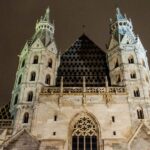
Then you see Stephansdom, Austria’s national architectural icon.
Even if you’ve seen photos before, on foot this kind of landmark hits differently. You notice proportions, skyline placement, and the way it anchors your sense of direction. It also works as a kind of “cultural north star” for Vienna, which matters because the rest of your self-guided wandering will be easier if you have a fixed visual reference.
Naschmarkt: the market where Vienna actually mingles
You pass by the Naschmarkt, described as a colorful traditional food market where the Viennese meet to mingle and shop.
This stop is important because it gives your brain a break from official buildings. Markets show you how city life continues under the history. If you like people-watching and real daily habits, Naschmarkt gives you that without turning the tour into a food crawl.
Food is not included on the tour, unless specified. That’s fine. Think of the Naschmarkt stop as a lead-in. Later, you can choose what you want to try based on your tastes and what looks good that day.
Kohlmarkt and the Graben: fashionable streets with dark memory
You also pass Kohlmarkt and the Graben, two streets that are currently among Vienna’s more fashionable shopping districts. The tour highlights the contrast of luxury storefront energy with a plague column commemorating a 17th-century outbreak of bubonic plague.
That kind of contrast is the heart of why this walk feels more meaningful than a simple checklist. Vienna’s center keeps multiple layers visible. You see commerce and you also see how the city remembers loss.
If you are someone who likes history to include hard parts, you’ll likely appreciate this segment. It is not only pretty. It is also honest.
What the historian guide experience feels like in practice
A big theme across the guide styles here is story-led explanation. Multiple guide names show up in the experience feedback, including Elisabeth, Christina, Annelie, Wolfgang, Katarina, Ilse, Walter, Angelika, and Billie. The pattern is consistent: they connect what you see to wider Austrian and Viennese history, and they handle questions well.
I also like that guides can be flexible. Some experiences note the itinerary adjusting smoothly, and at least a few times the tour ends up feeling close to private because the group can be very small. That’s where a historian guide earns their fee, because you can ask, “Why did this look like this?” and get a real answer instead of a canned speech.
A standout style element you can look for: music and small sensory details. One example mentioned guides playing Mozart and Haydn during the walk, and Sisi-related candy tastings. These touches are optional from guide to guide, but they reflect the overall approach: make history feel human, not like a textbook.
The itinerary flow: what you should expect, stop by stop
Here’s how I’d frame what you’ll cover, in plain terms:
- Start at Michaelerplatz by the Hofburg: power, layout, and a quick map of what shaped the city.
- Ringstraße and its landmark buildings: why the city built a grand boulevard and how old palaces became luxury addresses.
- Loos House: a modern architecture checkpoint that changes the mood.
- Maria-Theresien-Platz: museum concentration and cultural density, good for planning the rest of your trip.
- Secession building: avant-garde Vienna, with Klimt and Mahler as key anchors.
- Stephansdom: a skyline icon and cultural center point.
- Naschmarkt: market energy that grounds the story in daily life.
- Kohlmarkt and the Graben: fashionable streets plus the plague column reminder.
That order may shift slightly day to day, but the set pieces you’ll see are consistent with the tour description.
Who this tour is best for
This is a strong fit if:
- you want a city orientation in the middle of your trip so the rest feels easier
- you like architecture mixed with politics, art, and cultural change
- you want a small-group experience where you can ask questions
- you’re traveling in English and want a guide who can clearly explain what you’re seeing
It might be less ideal if:
- you want lots of indoor time, museum tickets, or guided entry into specific major sites
- you prefer unguided wandering only, with no story structure at all
- you’re trying to keep every activity ultra-budget friendly
Tips to get the most out of your walk
- Wear comfortable shoes. This tour is built for walking, and the charm depends on staying in motion.
- Bring a photo mindset. Stand back before you shoot close-ups, then take one wider shot after the guide gives context. You’ll remember more.
- Come with at least one question, even a simple one like why Vienna’s style changes across streets. The guide format supports back-and-forth.
- If rain shows up, don’t panic. The experience feedback includes guides continuing in tough weather, which usually means they have a plan for staying safe and keeping the pace.
Should you book this Vienna walking tour?
I’d book it if you want a smarter first look at Vienna’s center, with a historian guide and the kind of small-group attention that makes stories stick. The rating is extremely high, with a 4.9 average and strong recommendation scores, and the tour’s structure hits the best blend of empire, art, daily life, and hard historical memory.
Skip it only if you’re mainly after low-cost sightseeing photos or you want deep museum time. For most people, though, this is a strong start that makes the rest of your Vienna days easier to enjoy.
FAQ
How long is the Vienna walking tour?
It lasts about 2 hours 30 minutes.
Where does the tour start?
The meeting point is Café Hawelka, Dorotheergasse 6, 1010 Wien, Austria.
Where does the tour end?
The end location is listed as Vienna, Austria.
What language is the tour offered in?
The tour is offered in English.
What is the group size?
The tour lists a maximum of 8 travelers, and it also notes a maximum of 6 people per booking.
Is food included?
Food and drinks are not included unless specified.
Do I need hotel pickup or drop-off?
Hotel pickup and drop-off are not included.
Is there a mobile ticket?
Yes, the tour uses a mobile ticket.
What is the cancellation policy?
You can cancel for free up to 24 hours in advance for a full refund. If you cancel less than 24 hours before the start time, the amount you paid is not refunded.
More Tours in Vienna
- Vienna: Schönbrunn Palace & Gardens Skip-the-Line Tour
★ 4.7 · 7,739 reviews - Vienna Spanish Riding School Guided Tour
★ 4.7 · 6,765 reviews - Vienna: Skip-the-Line Sisi Museum, Hofburg and Gardens Tour
★ 4.8 · 5,918 reviews - Vienna: Skip-the-Line Schönbrunn Palace & Gardens Tour
★ 4.8 · 5,411 reviews - Vienna: Guided Walking Tour of City Center Highlights
★ 4.7 · 4,989 reviews
More Tour Reviews in Vienna
- Vienna: Vivaldi’s Four Seasons Concert in Karlskirche
★ 4.7 · 14,951 reviews - Vienna: Schönbrunn Palace & Gardens Skip-the-Line Tour
★ 4.7 · 7,739 reviews - Vienna: Light of Creation Votive Church Immersive Light Show
★ 4.8 · 6,779 reviews - Vienna Spanish Riding School Guided Tour
★ 4.7 · 6,765 reviews - Vienna: Classical Concert in the World-Famous Musikverein
★ 4.6 · 6,673 reviews
Vienna on Foot, Continued
- Vienna: Guided Walking Tour of City Center Highlights
★ 4.7 · 4,989 reviews - Vienna: Vienna Central Cemetery Guided Walking Tour
★ 4.8 · 3,307 reviews - Vienna: Guided Walking Tour of City Highlights & Hidden Gems
★ 4.9 · 2,180 reviews - Vienna: Viennese Underworld Guided Walking Tour
★ 4.7 · 1,865 reviews - Vienna: World War II Historical Walking Tour
★ 4.8 · 1,772 reviews
Recently Added Around Vienna


Vienna Old Town Walking Tours, compared.
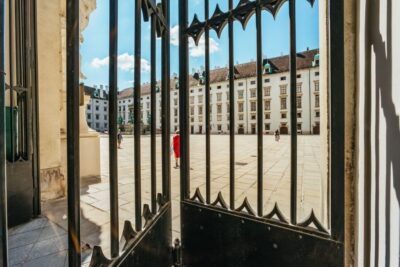 ★ 4.7Guided Walking Tour of City Center HighlightsFrom $254,989 reviews
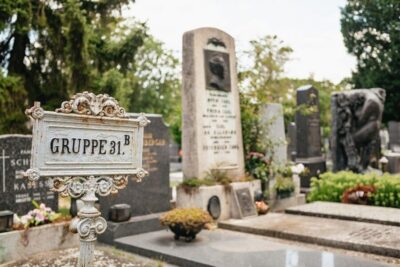 ★ 4.8Vienna Central Cemetery Guided Walking TourFrom $3353,307 reviews
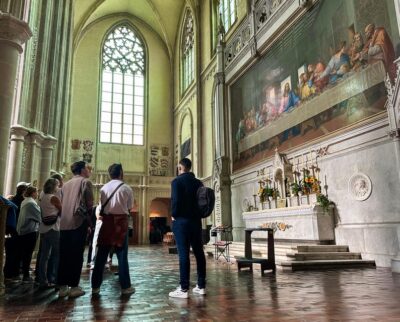 ★ 4.9Guided Walking Tour of City Highlights & Hidden GemsFrom $272,180 reviews
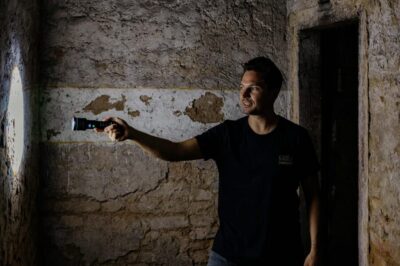 ★ 4.7Viennese Underworld Guided Walking TourFrom $371,865 reviews
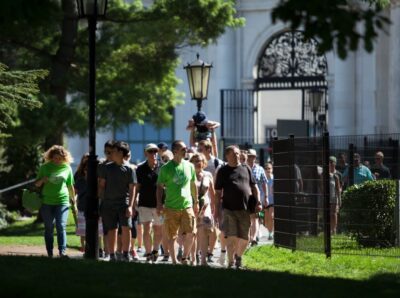 ★ 4.8World War II Historical Walking TourFrom $311,772 reviews
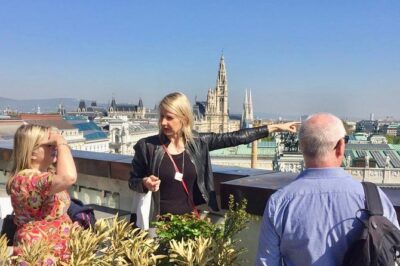 ★ 5.0Vienna Historic Center Small Group Walking TourFrom $721,746 reviews
 ★ 4.6Private Walking Tour with a Local GuideFrom $551,420 reviews
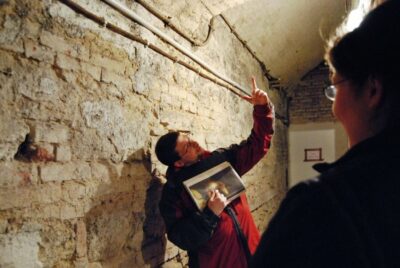 ★ 4.91.5-Hour Underground Walking TourFrom $321,146 reviews
Browse the lists this tour appears in