

Reviewed · MOZART & STRAUSS CONCERTS IN VIENNA
What do Mozart and Henry Ford have in common? – The freemason in Vienna
Vienna has secret-symbols hiding in plain view. This private, 1 hour 45 minute walk connects Mozart and Henry Ford with the Freemason story in the city’s most recognizable churches and landmarks. It is part art-hunt, part history-question, and part lesson in how Vienna keeps layers of meaning on its street corners.
I like the focus on real places you can see, not vague myths. I also like that the tour is run by Sandra Blum, so you get one coherent guide voice and a street-level pace that works well in the center of Vienna.
One thing to consider: this is a narrative walk about a controversial, sometimes misunderstood topic. If you want only documented facts with no interpretation, you may find the framing a bit more speculative than you hoped.
Key points that make this tour worth your time

- Central Vienna, on foot: starts at Judenpl. 5 and ends at Josefsplatz, with stops clustered around the old core.
- Churches as clue-houses: St. Stephen’s Cathedral and St. Michael’s Church are treated as key visual reference points for Masonic symbolism.
- A street stop with weight: Rauhensteingasse is included as an important address for the union.
- Albertina outside view: you get description of the building from the outside, but admission is not included there.
- Private group scale: minimum 5, maximum 25 people, private format means your group stays together.
- Good value for the time: several stops have free admission while the duration stays tight.
More Mozart and Strauss after dark
- Vienna: Mozart Concert at the Golden Hall★ 4.6 · 3,986 reviews
- Vienna: Classical Concert at Mozart’s First House2,423 reviews
- Vienna: Mozart and Strauss Concert at Schönbrunn★ 4.5 · 2,364 reviews
- Vienna: Mythos Mozart Experience★ 4.5 · 895 reviews
Why the Freemason story fits Vienna so well
Vienna is perfect for this kind of walk because the city is full of public symbols. Churches, squares, and historic buildings were made to be seen by everyone, not just scholars. When you learn how to look, you start noticing repeating shapes, shared iconography, and design choices that were meant to communicate ideas.
This tour leans into that. It starts with the big names people associate with Freemasonry, including Mozart and Henry Ford, then builds outward with other famous figures named in the story such as J.W. Goethe, George Washington, Henri Dunant, Giacomo Puccini, G.E. Lessing, and Fritz Muliar. Even if you already know a little, the real payoff is seeing how those names become part of a city-wide interpretive thread.
I also like the balance here. The guide sets up the topic by acknowledging that Freemasonry has often been described as conspiratorial or full of mystic activity, then shifts you toward the physical places where people claim traces remain. You are not asked to join anything. You are asked to look closely at the city.
Meeting Sandra Blum in the historic core

The tour is hosted by Sandra Blum – Safu – exklusiv Wien entdecken. You meet at Judenpl. 5, 1010 Wien, and you finish at Josefsplatz, 1010 Wien. The walk stays within a very doable central area, which matters because you only have about 1 hour 45 minutes total.
It is a private tour/activity, meaning it is just your group. The group size runs from minimum 5 to maximum 25. In practice, that size usually means you can still hear the guide, and you can still pause for questions without getting lost in a crowd.
You also get a mobile ticket, so you do not need to hunt for printed vouchers. Confirmation comes within 48 hours, subject to availability, which is helpful if your Vienna days are still slightly flexible. The tour runs on weekdays within the listed operating window, Monday through Friday, 9:00 AM to 8:00 PM.
If you like city walks with a clear route and a limited time box, this one fits that style well. If you want to spend hours in museums or chase lots of indoor stops, plan to save that for another day.
Stop 1: St. Stephen’s Cathedral and the emblem clue
St. Stephen’s Cathedral is your first big anchor. You will spend about 10 minutes there, with free admission ticket included as part of the experience. This is the kind of stop where timing matters, because the cathedral is a must-see even for people who came for something else.
The tour’s angle is straightforward: it treats the cathedral as a place where an emblem, tied to the Freemason theme, can be spotted under the right perspective. Even if you do not know the specific symbols ahead of time, you will know what to look for by the time you step into the space.
Practical tip: keep your pace slow for the first few minutes. Cathedrals can overwhelm you with scale, color, and details. If you rush, you miss the very thing this stop is designed to point out. I like that the stop is short enough that you still feel fresh for the next locations.
Drawback to be aware of: cathedral interiors vary in crowd level. If it is busy, your 10 minutes can feel like a sprint. The good news is the tour is paced for viewing, not for an all-day cathedral visit.
Stop 2: Rauhensteingasse, where a street becomes a statement
Rauhensteingasse is not a museum. It is a location stop, about 20 minutes, and it is also listed with free entry. This kind of stop is easy to underestimate, but it is often where the story becomes more convincing because addresses are concrete.
The tour frames Rauhensteingasse as an important address for the union. In other words, it is not just symbolism in stone or stained glass. It is about places where people were, gathered, or built networks. You do not need to love conspiratorial stories to appreciate why an address would matter in a city like Vienna.
This is also the stop where you can ask the most questions. Street-level topics invite debate: what does it mean, what is evidence, what is interpretation. Since the tour stays focused and timed, you can get answers without derailing the whole day.
One consideration: because this is an address stop, there may be less to physically see than at a cathedral. If you expect interior monuments here, you might feel slightly underfed. But if you like the city-walk detective work, this is a strong mid-tour pause.

Stop 3: St. Michael’s Church and another symbol check

Next comes St. Michael’s Church, another 10-minute stop with free admission. The tour again ties the location to Freemasonry, suggesting there are additional related elements to spot and interpret.
I like that the route returns to churches instead of spreading out randomly. It gives your eye a consistent task: notice, compare, and think. Two church stops in roughly similar time frames helps you build pattern recognition fast.
The challenge here is attention span. After the cathedral and the street stop, it is easy to slip into sightseeing autopilot. I suggest you treat St. Michael’s as a symbol check, not just a pretty stop. Look for the detail the guide is pointing out and then step back to see the bigger view.
If you enjoy architectural contrasts, you will also appreciate how different churches can feel in mood and layout, even when the theme you are chasing is similar.
Albertina outside the gates: what you get for free versus what you pay for

Albertina is included as an outside viewing stop, with about 10 minutes. Here is the key detail: the Albertina stop is listed with admission not included.
So you should expect description and orientation from the outside, not a museum entry. The value is in linking what you see in the urban setting to the tour’s storytelling. It is a chance to round out the walk with another major Vienna landmark, without turning this into a museum-heavy day.
If you want to go inside, you can make that a separate decision later. The tour itself does not promise museum time there, so you will not feel rushed by a timed entry. You will also avoid the common problem of paying for something you later realize you barely used.
How the tour frames Freemasonry, mystique, and real locations

This experience is designed around a specific question: what do people mean when they say Freemasonry left traces in Vienna? The tour acknowledges the topic’s reputation for mystic activity and conspiratorial talk, then anchors the discussion in visible landmarks and named connections.
That approach can work well for modern visitors because it respects two realities at once. First, symbols are interpretive by nature. Second, cities do keep physical evidence of how people built communities, gathered, and expressed ideas.
A strong point is the way the tour stays within 1 hour 45 minutes. Short tours force focus. You do not get lost in a long lecture. You get a sequence of places, a set of symbols to watch for, and a guided route that stays walkable in the center.
Also, the private format helps. With a smaller group, you can ask for clarification without feeling like you are competing with a dozen other voices.
Price and value: $49.78 for a tight, symbol-focused walk
At $49.78 per person for about 1 hour 45 minutes, the cost sits in the mid-range for private walking experiences. What makes it feel reasonable is the way admissions are handled for key stops.
The experience includes free admission for St. Stephen’s Cathedral and St. Michael’s Church. It also lists free entry for Rauhensteingasse, which makes sense because it is an address stop rather than a paid attraction. Only the Albertina portion is explicitly flagged as admission not included.
You are basically paying for:
- a guided interpretation of Masonic themes,
- a timed route between major central landmarks,
- and a local, narrative approach from Sandra Blum.
If you are already planning to visit St. Stephen’s Cathedral anyway, this tour can feel like you are adding a guided lens rather than stacking extra paid attractions. If you were hoping for lots of museum entrances and long indoor time, you might feel the trade-off, since the route is designed around short exterior and quick interior viewpoints.
Who should book this tour, and who might not love it
This tour is a good fit if you like:
- walking city centers with a theme,
- symbolism and how it shows up in architecture,
- and question-driven guides who point you to details.
It is also a strong choice if you are traveling with family or friends who enjoy mixing big-name cultural references with place-based storytelling. The route is designed so most people can participate, and it stays near public transportation.
Who might skip it:
- If you want only strict academic sourcing with no interpretation, the Freemason framing may feel too story-led.
- If you prefer long museum time, the short stops and outside viewing at Albertina will not scratch that itch.
Also, if you have mobility limits, you should plan around walking in central streets. The tour is a walking experience by design, so it is not a pure sit-and-watch option.
My booking decision checklist: should you take it?
Book this tour if you want a focused theme walk in Vienna’s core, with free admission at major stops and a guide-led method for spotting symbolic details. It is also worth it if you enjoy tours that blend well-known cultural names into a single city narrative and then test it against what you can see.
Consider a different option if your ideal day is museum-heavy or if you are allergic to interpretation in favor of only documented history.
If you do book, I suggest you go into it with a calm mindset. You are not trying to prove a theory in 1 hour 45 minutes. You are learning how to read Vienna like a visual puzzle, one church stop and one address at a time.
FAQ
How long is the Freemason in Vienna tour?
The tour lasts about 1 hour 45 minutes.
What is the price per person?
The price is $49.78 per person.
Is this a private tour?
Yes, it is a private tour/activity, and only your group will participate.
Where do I meet and where does the tour end?
You start at Judenpl. 5, 1010 Wien, Austria, and the tour ends at Josefsplatz, 1010 Wien, Austria.
Do I need to buy tickets for the stops?
St. Stephen’s Cathedral, Rauhensteingasse, and St. Michael’s Church are listed with free admission ticket. Albertina is listed as admission not included, so you should plan to pay separately if you want to enter.
What kind of ticket do I get?
You receive a mobile ticket.
When do I get confirmation after booking?
You receive confirmation within 48 hours of booking, subject to availability.
Can I cancel for a full refund?
Yes. You can cancel for a full refund up to 24 hours before the experience’s start time.
FAQ
When is the tour available?
The listed opening hours are Monday to Friday, 9:00 AM to 8:00 PM, within the date range shown.
How many people can join the group?
The group minimum is 5 and the maximum is 25 people.
Is the tour near public transportation?
Yes, it is listed as near public transportation.
Is the tour suitable for most people?
The tour is listed as suitable for most travelers to participate.
More Tour Reviews in Vienna
- Vienna: Vivaldi’s Four Seasons Concert in Karlskirche
★ 4.7 · 14,951 reviews - Vienna: Schönbrunn Palace & Gardens Skip-the-Line Tour
★ 4.7 · 7,739 reviews - Vienna: Light of Creation Votive Church Immersive Light Show
★ 4.8 · 6,779 reviews - Vienna Spanish Riding School Guided Tour
★ 4.7 · 6,765 reviews - Vienna: Classical Concert in the World-Famous Musikverein
★ 4.6 · 6,673 reviews
More Mozart and Strauss Evenings
- Vienna: Mozart Concert at the Golden Hall
★ 4.6 · 3,986 reviews - Vienna: Classical Concert at Mozart’s First House
2,423 reviews - Vienna: Mozart and Strauss Concert at Schönbrunn
★ 4.5 · 2,364 reviews - Vienna: Mythos Mozart Experience
★ 4.5 · 895 reviews - Vienna Mozart Concert in Historical Costumes at the Musikverein
★ 4.5 · 888 reviews
Recently Added Around Vienna


Mozart & Strauss Concerts in Vienna, compared.
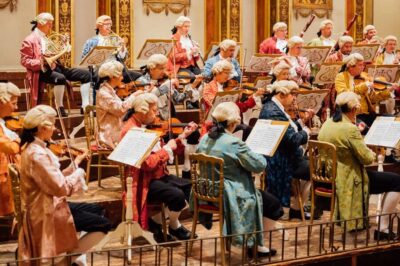 ★ 4.6Mozart Concert at the Golden HallFrom $783,986 reviews
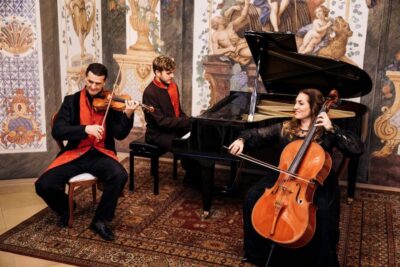 Classical Concert at Mozart’s First House2,423 reviews
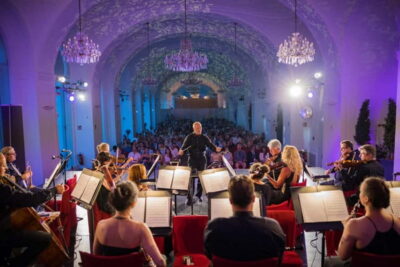 ★ 4.5Mozart and Strauss Concert at SchönbrunnFrom $632,364 reviews
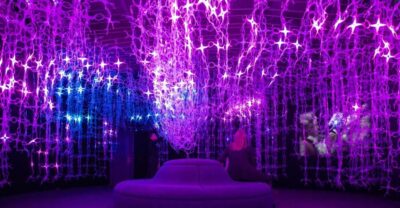 ★ 4.5Mythos Mozart ExperienceFrom $27895 reviews
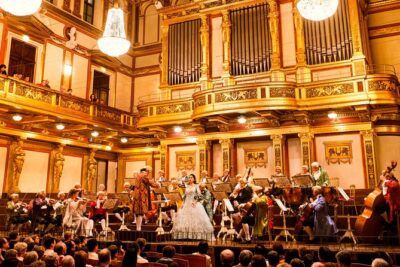 ★ 4.5Vienna Mozart Concert in Historical Costumes at the MusikvereinFrom $83888 reviews
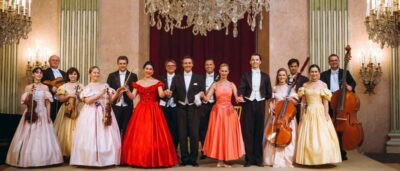 ★ 4.5Mozart & Strauss Classical Concert at Börse PalaceFrom $55810 reviews
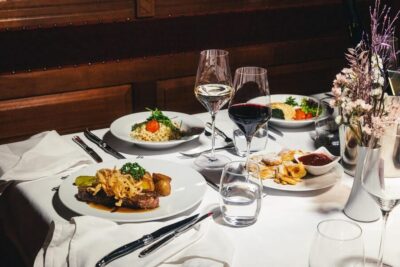 ★ 4.5Johann Strauss Dinner Show at the PraterFrom $93730 reviews
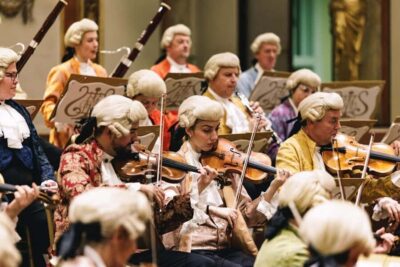 ★ 4.6Mozart Concert at the Vienna State OperaFrom $81461 reviews
Browse the lists this tour appears in