

Reviewed · CLASSICAL CONCERTS & OPERA IN VIENNA
Vienna Private Walking Tour including State Opera
Vienna’s opera grandeur starts the story. This private 3 hour walk links Roman Vindobona to Habsburg rule, then lands you in the Vienna State Opera scene with real context for the music. I especially like the way the guide ties big political shifts to what you can still see on the streets today. One drawback to plan for: the State Opera part may be limited to public areas, and timing can affect how much time you actually spend inside.
What makes this work well is the scope. You cover the Holy Roman Empire and the Austro-Hungarian era, then move into the World Wars and the birth of the Second Republic, all while pointing out key buildings around Stephansplatz and the Hofburg area. You also get a clear classical-music thread, from Mozart and Haydn to Beethoven, Schubert, the Strauss family, Brahms, and Mahler, plus the operas that shaped the house’s reputation.
A final consideration: the tour is not suitable for people with mobility impairments, and you’ll want comfortable shoes for a steady walking pace. If you’re hoping for a full seated-style opera visit, set expectations for a focused guided stop rather than a performance.
Key Highlights and What They Mean for You

- State Opera history in plain language, from Vienna Court Opera origins to the 1920 name change under the Habsburgs
- A walk through Vienna’s power map, starting near Stephansplatz and fanning out toward the Hofburg complex
- Big history handled on the sidewalk, from Roman Vindobona to the World Wars and the Second Republic
- Composer trail moments, so Vienna’s music heritage connects to specific places, not just dates
- Practical city orientation fast, because you’re shown how to read streets like Graben and squares with Roman remains
Another night under the chandeliers
- Vienna: Classical Concert in the World-Famous Musikverein★ 4.6 · 6,673 reviews
- Vienna: Mozart Concert at the Golden Hall★ 4.6 · 3,986 reviews
- Vienna: Classical Concert in St. Anne’s Church (Annakirche)★ 4.6 · 3,414 reviews
- Vienna: Classical Concert at Mozart’s First House2,423 reviews
A 3 Hour Private Walk That Connects Empires to Music

For a lot of Vienna tours, you choose either history or art, then hope you can connect the dots yourself. This one does the connecting for you, and it fits into a manageable 3 hour timeframe.
I like that it’s private, up to 15 people. That size matters in a city where you can lose the thread if the group is too large. With a smaller group, you tend to get more back-and-forth, and it’s easier to keep moving without feeling rushed.
The structure is also built for practical sightseeing. You start at Stephansplatz 8A, then you build a loop around major landmarks: cathedral territory, the court zone near the Hofburg, and the opera scene. By the time you’re done, you understand where the old center was, why the Habsburgs chose these locations, and how the music world became part of political identity.
State Opera Stop: From Vienna Court Opera to Today’s Grand Stage
The State Opera stop is the anchor of the tour. You begin at the building and you get the timeline behind it: it dates back to the 1860s, when it was originally called the Vienna Court Opera, and later the name shifted in 1920 as the early Austrian Republic formed.
This is also where the music comes out of the textbooks. The tour highlights major repertoire tied to the house, including Verdi’s Don Carlo, plus La Traviata and La Clemenza di Tito. It also connects the building to major artistic figures, naming directors associated with the opera world such as Gustav Mahler, Herbert von Karajan, and Claudio Abbado.
Now, the practical part. The tour includes a visit to the State Opera, but entrance fees are not included. That usually means you should think of this as a guided building visit rather than a guaranteed deep-ticket interior program. One way to set yourself up well: before you go, confirm what areas your specific slot allows, whether it is the full interior route or more of a public-area look.
If opera is a priority for you, this is still a good choice because you’re going in with history and context. Even if your time inside is limited, knowing the building’s name changes, dates, and artistic lineage makes the experience feel more real.
Stephansplatz to Stephansdom, Peterskirche, and Graben Street

Your walk gets you oriented fast, and it starts in the cathedral zone. From Stephansplatz, you reach Stephansdom, Vienna’s cathedral, described as a majestic Roman-Gothic masterpiece. It’s also one of the tallest churches in the world, which helps you understand why it became a visual centerpiece for the city’s identity.
From there, you pass Peterskirche, or St. Peter’s Church, which has been there since the 4th century. This is one of those stops that helps you feel the layering effect in Vienna, because you’re seeing a site that existed before many of the later empires made their mark.
Next comes the street moment that makes the city click: Graben Street, Der Graben. You get the Roman connection, because it dates back to the Roman Empire, and you also hear the story linking it to Richard Lionheart’s entry into the city. This is the kind of detail that turns a street you might otherwise walk past into a route with meaning.
If you like photos, this loop is friendly. You’ll be moving between “big view” points around the cathedral area and more street-level faces of history, so you can shoot wide shots and then tighten in for architectural textures.
Hofburg Area Sights, Michaelerkirche, and the Mozart Moment
After the cathedral and church area, the tour shifts toward the imperial heart. You see the facades connected to the Hofburg and the Art History Museum nearby. The idea here is simple: you’re standing in the zone that represented the Habsburg world, where power wasn’t only political, it was cultural.
You also get the Mozart Monument stop, which is more than a photo opportunity. It helps you connect Vienna’s musical heritage to the real geography of court life and public spectacle. When a city treats composers as part of its public image, visitors feel that even when they are just walking.
Then you pass the Michaelertor gate, and you reach the Michaelerkirche, also called St. Michael’s Church. The tour notes it as the official church of the emperors for years. That matters, because it shows how religious spaces and state identity were tied together, not separated.
This segment is a good place to slow your pace and ask questions. Since you are moving through a concentration of monumental buildings, the guide’s job is to keep it from feeling like a list. When it works, you start to see the logic of the empire’s map.
Vienna on foot, a couple more routes
Roman and Medieval Vienna, Including Burg Theatre Remnants
One of the strongest things about this walking style is that it includes older Vienna, not only the obvious Habsburg era. In the central squares you encounter ancient Roman ruins, along with old medieval walls. The tour also points out remnants connected to the old Burg Theatre.
These details help you understand how Vienna evolved. Roman Vindobona is mentioned as part of the story, and you can sense that the city center kept getting reused and reshaped instead of being wiped clean and rebuilt from scratch.
If you enjoy urban archaeology, you’ll appreciate this segment. You’re not staring at one museum label; you’re looking at the city fabric and hearing how earlier layers influence what you see today. Even when you cannot pinpoint every stone, the guide’s explanation helps you interpret what stands in front of you.
Holy Roman Empire, Austro-Hungarian Years, and the World Wars Aftermath
This tour does not treat history as distant and sealed. It moves through major phases: the Holy Roman Empire, then the Austro-Hungarian Empire, then the World Wars and the birth of the Second Republic.
The advantage for you is clarity. Instead of jumping from one dynasty to another with no thread, the guide sets up how each political era changed Vienna’s role. Vienna wasn’t just a beautiful city, it was a center where power, bureaucracy, and cultural prestige were tied together.
That said, history topics can become emotionally heavy. One piece of real-world feedback flagged tone and phrasing problems during wartime discussion, including a specific mention of a guide named Franziska Pfisker. The complaint also pointed to extra political asides when the group was moving through the Jewish quarter. If you prefer history presented in a strictly educational, neutral style, I’d ask your guide how they handle sensitive topics and keep the focus on facts and context.
I’m mentioning this because it can affect how you experience the tour. You might be thrilled by the sights and still feel put off if the tone shifts. Good tours stay respectful, and this one is aiming for that, but it is worth choosing a calm fit for your own comfort.
Fine Arts and Composers You Hear in Your Head
Vienna’s cultural identity is basically the soundtrack of your walking route here. The tour makes sure you can name the composers that shaped the city’s reputation, including Mozart, Haydn, Beethoven, Schubert, Johann Strauss (father and son), Brahms, and Mahler.
It’s a helpful reminder that these composers were not just living in a vacuum. They were part of an ecosystem tied to court patronage, public opera culture, and a city that treated music as serious public life.
This matters for practical tourism because it changes how you notice buildings. You are not just seeing beautiful facades, you’re understanding why the empire invested in cultural institutions and why the opera house became a symbol. When the tour connects the composers to the opera scene, it makes Vienna feel less like a museum and more like a living tradition.
If you’re traveling with someone who loves music, this segment can be a real win. Even if they are not an expert, they will recognize names and start spotting connections on the street.
Price and Group Size: How This Private Tour Can Be Worth It
The price is $323 per group, for a private group up to 15, with a 3 hour duration. That means your value depends on how many people are in your group, and how much you care about having a guide steer the story.
If you have a group of friends or family filling several spots, this can work out very well. You get a professionally guided walking experience plus a State Opera visit, which is typically the most time-sensitive and logistically tricky part of any Vienna day.
If you are traveling solo or as a couple, the cost can feel more like a “choose-your-moments” investment. In that case, I’d ask yourself this: do you want to pay for expert context, or would you rather explore on your own with a self-guided plan? If you want the story thread, especially around Habsburg history and the opera scene, paying for a private guide makes more sense.
Also remember: entrance fees are not included. Since you might be walking past or around multiple sites, you could still pay extra for anything that requires ticketing beyond the guide’s access.
Best For, Small Warnings, and How to Prepare
This tour is best for people who like to connect history to place. If you enjoy seeing how empires shaped architecture, and you want Vienna’s classical-music identity explained while you walk, you will probably enjoy this.
It’s less ideal if mobility is an issue, since it is not suitable for people with mobility impairments. It also calls for comfortable shoes because you’re covering a lot of ground in 3 hours.
Before you go, set expectations about the State Opera portion. Your experience should include a visit to the building, but it may focus on public areas rather than a full ticketed tour experience. If opera is your top goal, it is smart to clarify what you will be allowed to see in your time slot.
On the people side, you’re in a private setting with a local professional guide, and the available languages are English and German. That matters because it affects how much of the story you will actually take in. A good guide can turn “important facts” into a mental map you carry for the rest of your trip.
Should You Book This Vienna Private Walking Tour With State Opera?
I think this is a smart booking if you want a guided Vienna that connects Habsburg history, Roman and medieval layers, and the opera scene into one walk you can finish in a morning or early afternoon.
Book it if:
- You want the fast orientation of a loop starting at Stephansplatz.
- You care about understanding why the Habsburg court and the opera house matter.
- You like the idea of hearing composer names connected to real locations.
Skip or change your plan if:
- You need a guaranteed deep interior State Opera tour experience, not just a building visit.
- You are sensitive to history discussions needing a very neutral tone, and you want to be sure your guide stays strictly educational.
If you go in with realistic expectations about the opera access, and you wear comfortable shoes, you’ll come away with Vienna that feels organized in your head, not scattered across separate stops. That’s the best kind of tour value.
FAQ
Where does the Vienna private walking tour meet?
The meeting point is Stephansplatz 8A, 1010 Wien, Austria.
How long is the tour?
The tour lasts 3 hours.
Is the tour private?
Yes. It is a private group experience, up to 15 people.
What is included in the tour?
You get a local professional guide and a visit to the State Opera.
Are entrance fees included?
No. Entrance fees are not included.
What languages are the guides available in?
The tour offers live guiding in English and German.
Is the tour suitable for people with mobility impairments?
No, it is not suitable for people with mobility impairments.
What should I bring?
Bring comfortable shoes.
Is there a cancellation option?
Yes. Free cancellation is offered up to 24 hours in advance for a full refund.
Yours Alone Across Vienna
- Vienna: Private Walking Tour with a Local Guide
★ 4.6 · 1,420 reviews - Vienna: Private Walking Tour with a Guide
★ 4.7 · 962 reviews - Vienna: Wine Tasting Experience in a Private Wine Cellar
★ 4.8 · 413 reviews - Private Day Tour Trip Salzburg Hallstatt and Melk from Vienna
★ 5.0 · 388 reviews - Private Day Tour of Hallstatt and Salzburg from Vienna
★ 5.0 · 263 reviews
Vienna on Foot, Continued
- Vienna: Guided Walking Tour of City Center Highlights
★ 4.7 · 4,989 reviews - Vienna: Vienna Central Cemetery Guided Walking Tour
★ 4.8 · 3,307 reviews - Vienna: Guided Walking Tour of City Highlights & Hidden Gems
★ 4.9 · 2,180 reviews - Vienna: Viennese Underworld Guided Walking Tour
★ 4.7 · 1,865 reviews - Vienna: World War II Historical Walking Tour
★ 4.8 · 1,772 reviews
Another Night at the Opera
- Vienna: Vivaldi’s Four Seasons Concert in Karlskirche
★ 4.7 · 14,951 reviews - Vienna: Classical Concert in the World-Famous Musikverein
★ 4.6 · 6,673 reviews - Vienna: Mozart Concert at the Golden Hall
★ 4.6 · 3,986 reviews - Vienna: Classical Concert in St. Anne’s Church (Annakirche)
★ 4.6 · 3,414 reviews - Vienna: Classical Concert at Mozart’s First House
2,423 reviews
Recently Added Around Vienna


Classical Concerts & Opera in Vienna, compared.
 ★ 4.7Vivaldi’s Four Seasons Concert in KarlskircheFrom $4014,951 reviews
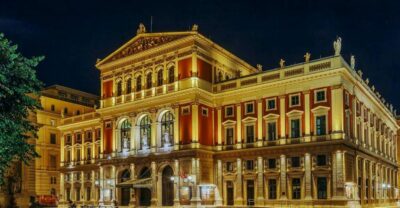 ★ 4.6Classical Concert in the World-Famous MusikvereinFrom $176,673 reviews
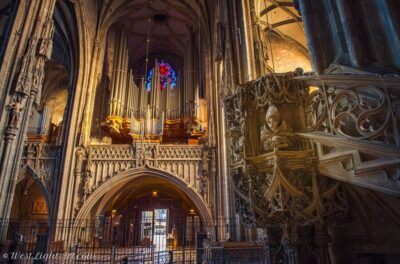 ★ 4.1Classical Concert at St. Stephen’s CathedralFrom $114,177 reviews
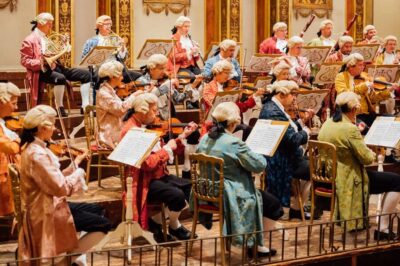 ★ 4.6Mozart Concert at the Golden HallFrom $783,986 reviews
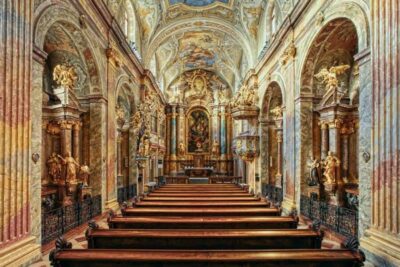 ★ 4.6Classical Concert in St. Anne’s Church (Annakirche)From $383,414 reviews
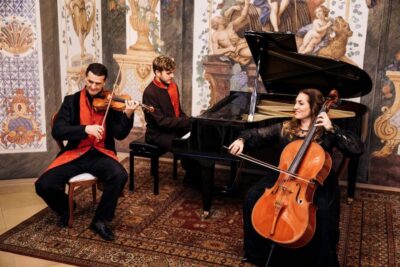 Classical Concert at Mozart’s First House2,423 reviews
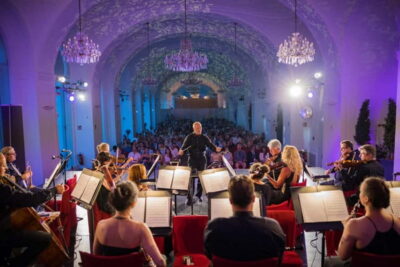 ★ 4.5Mozart and Strauss Concert at SchönbrunnFrom $632,364 reviews
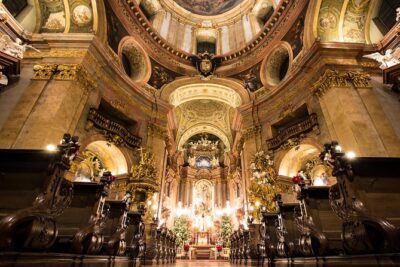 ★ 4.5Vienna Classical Concert at St. Peter’s ChurchFrom $472,039 reviews
Browse the lists this tour appears in