

Reviewed · MOZART & STRAUSS CONCERTS IN VIENNA
Vienna: Johann Strauss – Immersive Audiovisual Experience Ticket
Waltzes you can walk through. The Johann Strauss Museum New Dimensions turns Vienna’s Waltz King into a guided, hands-on multimedia experience, with interactive rooms and a headphone audio guide that tracks where you are. I like that the location-based 3D sound helps you move naturally instead of stopping every few steps. One caution: it is not suitable for people with motion sickness, and it is very headphone-led.
You’ll also leave with something you can actually keep. The composing machine lets you create your own waltz and take home your personalized sheet music, plus there’s a photo moment where you can become Johann Strauss and print it on the spot. If you want classical culture with modern feedback and a bit of play, this ticket delivers.
Key highlights you should care about
- Location-based 3D headphone audio that supports easy movement through virtual spaces
- Interactive Johann Strauss exhibits that explain the man and his music through audio and visuals
- Compose your own waltz using the composing machine, then take the music sheet with you
- Printed photo of yourself as Johann Strauss, included with the museum visit
- Clear timing plan for 75 minutes, ideal for a focused, low-stress stop in Vienna
Buying a 75-minute Johann Strauss walk, not a quiet museum

This is the kind of Vienna museum visit that respects your time. You’re looking at about 75 minutes, and it feels designed for a clear beginning, middle, and pay-off. Instead of a slow parade of labels, you follow a multimedia story about Johann Strauss and the world of the waltz.
I also like how the experience frames him as more than a composer in a textbook. You get the idea of Strauss as a public figure, often described as the first pop star in history, and the museum uses that angle to keep the story accessible. You’re not required to know the waltz already. You just follow along.
The big practical difference is that this museum leans on technology and audio. So if you enjoy learning by reading, you might miss a bit of that traditional museum calm. Still, for many people, the trade-off is worth it because the experience is active and timed.
Vienna reimagined, screens and all
- Vienna: Time Travel and Magic Vienna History Tour★ 4.6 · 3,879 reviews
- Time Travel-Magic Vienna History Tour Ticket★ 4.5 · 1,099 reviews
- Vienna: “Sisi’s Amazing Journey” Virtual Reality Experience★ 4.5 · 673 reviews
- Vienna: Time Traveling Virtual Reality Sightseeing Tour★ 4.6 · 672 reviews
Location-based 3D audio guides, and how to get the best sound

The museum includes a headphone audio guide. The key detail is that it uses a location-based 3D sound system that localizes your headphones in real time, so the audio can line up with what you’re seeing in each virtual space.
That matters because the experience is built around moving. If you keep up the flow, the sound design can feel like it’s coming from different directions and places around you. In plain terms, it helps you stay oriented without constantly stopping, reading, or guessing what’s supposed to happen next.
A real-world tip: treat the headphones like part of your ticket. Keep them on properly and stay alert to what the audio is cueing. The museum experience is also known for being fully audio-driven, so if you don’t like wearing headphones for long stretches, this might be an issue.
One review point I’d take seriously is that everything is played through headphones, and the headphones are a big set. That doesn’t mean they’re uncomfortable for everyone, but it does mean you should be comfortable with wearing headgear during your entire visit.
Interactive exhibitions on Vienna’s Waltz King (and why it works)
You’re walking through interactive exhibitions that cover important phases of Strauss’ life and music. The museum uses multimedia stations with animations to bring melodies to life, so you’re not just hearing music in the background. You’re getting clues about rhythm, style, and context tied to the story.
What makes this approach effective is that it turns listening into something you can track. Even if you can’t identify every piece by name, you can still notice how the experience links sound to visuals and to Strauss’ journey. That’s especially helpful if you find classic museums a bit too quiet or too text-heavy.
The museum also gives you interaction points that make the story feel less like a lecture and more like a guided set of scenes. One review even called out that the last room is a favorite, which is a good hint that the experience likely builds toward a strong finale. If you’re short on time in Vienna, this is one place where you should not rush at the end.
Headphones as a learning tool, not just tech

The headphone system is more than a device. It’s the museum’s way of controlling pacing. You get real guidance on where to go next, what to focus on, and how the scenes connect.
I’d recommend that you avoid multitasking during the audio parts. If you’re constantly checking your phone or shifting your attention, you can miss the flow the sound design is trying to create. When it works, it feels like the museum is steering you through Strauss’ world step by step.
Also, this is a place where the audio guide languages matter. The audio guide is available in Chinese, English, French, German, Italian, Japanese, Korean, and Spanish. The host or greeter is listed as German and English. So if you want English support, you’re covered, and if you’re traveling with someone who speaks a different listed language, it’s worth confirming the audio option when you arrive.
The composing machine: make a waltz and take it home
This is the part that turns your visit into a souvenir, not just photos. The museum includes a composing machine where you can compose your own waltz. After you create it, you get a personalized sheet of music to take home.
Even if you have zero musical training, the action gives you a reason to pay attention. You start noticing patterns, structure, and the “feel” of a waltz because you’re generating something that resembles the form. It’s hands-on learning in a short time frame, and it avoids the usual problem of leaving a museum with nothing to show for it.
If you’re traveling with kids, teens, or anyone who gets impatient in traditional exhibitions, this composing step is the best argument for the ticket. It gives you control, a small challenge, and a clear finish line.
Also, it’s a nice break from the headphone-led storytelling. You swap passive listening for active participation, and you walk out with a physical keepsake you can frame or share.
More Mozart and Strauss after dark

Photo booth as Johann Strauss, plus the souvenir shop

There’s a photo moment built into the museum experience. You can take a photo of yourself as Johann Strauss, and it’s printed on the spot. Admission to the souvenir shop with the photo booth is included in your ticket.
This is one of those “yes, it’s a gimmick” things that still works because it matches the museum’s theme. The experience is already playful and theatrical, so the photo is not random. It’s part of becoming part of the story.
If you care about getting a good printed photo, I’d treat it like a mini photo session. Get your timing right, stand comfortably, and don’t rush the step. You only get one print per moment, so take the extra few seconds to look ready.
Who should book this ticket (and who might skip it)

This experience is a strong fit if you want Vienna culture without a lot of reading. It’s also a good choice if you enjoy music but don’t want to spend hours in a quiet, seated museum setting.
It’s especially suitable if your brain needs motion, checkpoints, and small interactive goals. One review specifically mentioned an ADHD-friendly effect, calling the experience exciting and engaging. I can’t promise that same result for everyone, but the format is designed to keep you active: audio cues, interactive exhibits, composing, and a final room moment.
On the other hand, skip or reconsider if you are sensitive to motion sickness. The museum explicitly notes it is not suitable for people with motion sickness. Also, if you strongly dislike wearing headphones or you know you get annoyed by headgear, check your comfort before you commit.
Price and value for Vienna in a single, focused stop

At $28 per person, the value depends on what you compare it to. If you’re used to paying for a single museum entry with mostly static exhibits, this ticket adds multiple “included extras,” like the composing machine output and the printed photo. Those are tangible take-home items, and they justify a higher price than a basic ticket.
The 75-minute duration is another value factor. Vienna can be expensive and time-heavy if you pile on too many long attractions in one day. This is a compact experience that fits well between other plans, like dinner or a walk past the main sights.
The rating is also very high, 4.8 based on 60 reviews, and the praise points are consistent: the audio guide quality and the overall engagement. People also noted that the staff at the entrance were kind and helpful, which matters because this kind of museum ticket can feel techy at first. Having friendly help early on makes your whole visit smoother.
Practical planning: timing, language, and your best visit rhythm

You’ll pick a timeslot, then stick to it. The ticket is time-slot based, meaning the selected day and time must be followed. If you’re trying to stay flexible, the listing also mentions flex options for weekdays and for everyday redemption, so check which ticket type you book based on how certain your schedule is.
Opening hours are Sunday to Thursday 10:00 a.m. to 6:00 p.m., and Friday to Saturday 10:00 a.m. to 7:00 p.m. If you like a calm start, morning or early afternoon slots are often easier for keeping your energy up through a headphone-heavy experience.
Language is handled well: the audio guide includes many major languages, and the host or greeter covers German and English. If you’re traveling with a group, picking a common audio language can reduce confusion when you get your headphones.
For the best rhythm, I’d do this as a stand-alone cultural stop, not a rushed add-on. You’re there for 75 minutes. Plan a buffer before and after so you can take the last room at full speed instead of sprinting.
Should you book Johann Strauss New Dimensions?

Book it if you want a modern Vienna experience that explains Strauss through music, audio, interactive scenes, and hands-on creation. The composing machine plus the printed photo makes it feel like more than an entry ticket, and the headphone audio system with location-based 3D sound is the core reason the format works.
Skip it if you get motion sick from audiovisual effects or if you hate wearing headphones for long stretches. Also, if you prefer classic museums where you can browse quietly and read at your own pace, this may feel more guided and more tech-led than you want.
If you fall in the middle, this is a very safe bet. It’s short, it’s structured, and it gives you something to take home from Vienna’s waltz world.
FAQ
How long is the Johann Strauss Museum New Dimensions experience?
The experience lasts about 75 minutes.
Where does the experience start and end?
It starts at Johann Strauss Museum New Dimensions and ends back at the same meeting point.
What languages are available for the audio guide?
The audio guide is available in Chinese, English, French, German, Italian, Japanese, Korean, and Spanish. The host or greeter is German and English.
Is the ticket flexible or tied to a specific time?
The time-slot ticket requires you to adhere to the selected day and time. Flex ticket options are also listed: one for weekdays and one for everyday redemption.
What is included with admission?
Your ticket includes the museum admission, headphones as an audio guide, use of the composing machine, and admission to the souvenir shop with the photo booth.
Is it suitable for people with motion sickness?
No, it is not suitable for people with motion sickness.
Is the museum wheelchair accessible?
Yes, it is wheelchair accessible.
More Tour Reviews in Vienna
- Vienna: Vivaldi’s Four Seasons Concert in Karlskirche
★ 4.7 · 14,951 reviews - Vienna: Schönbrunn Palace & Gardens Skip-the-Line Tour
★ 4.7 · 7,739 reviews - Vienna: Light of Creation Votive Church Immersive Light Show
★ 4.8 · 6,779 reviews - Vienna Spanish Riding School Guided Tour
★ 4.7 · 6,765 reviews - Vienna: Classical Concert in the World-Famous Musikverein
★ 4.6 · 6,673 reviews
More Mozart and Strauss Evenings
- Vienna: Mozart Concert at the Golden Hall
★ 4.6 · 3,986 reviews - Vienna: Classical Concert at Mozart’s First House
2,423 reviews - Vienna: Mozart and Strauss Concert at Schönbrunn
★ 4.5 · 2,364 reviews - Vienna: Mythos Mozart Experience
★ 4.5 · 895 reviews - Vienna Mozart Concert in Historical Costumes at the Musikverein
★ 4.5 · 888 reviews
Vienna, Reimagined
- Vienna: Light of Creation Votive Church Immersive Light Show
★ 4.8 · 6,779 reviews - Vienna: Time Travel and Magic Vienna History Tour
★ 4.6 · 3,879 reviews - Time Travel-Magic Vienna History Tour Ticket
★ 4.5 · 1,099 reviews - Vienna: “Sisi’s Amazing Journey” Virtual Reality Experience
★ 4.5 · 673 reviews - Vienna: Time Traveling Virtual Reality Sightseeing Tour
★ 4.6 · 672 reviews
Recently Added Around Vienna


Mozart & Strauss Concerts in Vienna, compared.
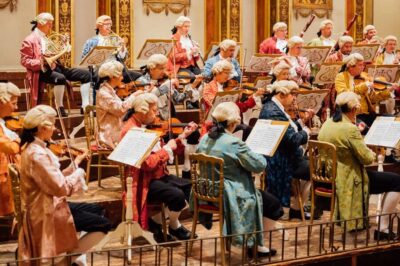 ★ 4.6Mozart Concert at the Golden HallFrom $783,986 reviews
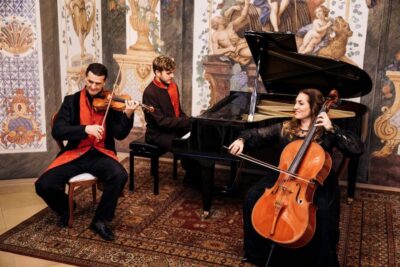 Classical Concert at Mozart’s First House2,423 reviews
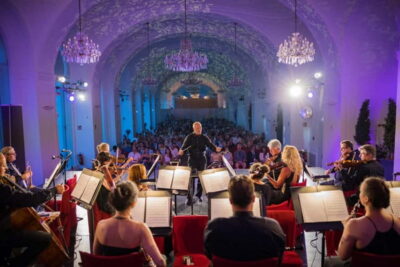 ★ 4.5Mozart and Strauss Concert at SchönbrunnFrom $632,364 reviews
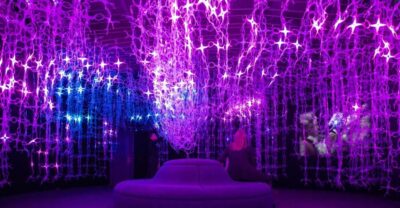 ★ 4.5Mythos Mozart ExperienceFrom $27895 reviews
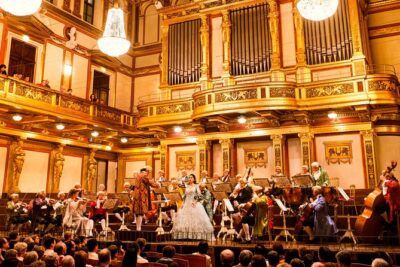 ★ 4.5Vienna Mozart Concert in Historical Costumes at the MusikvereinFrom $83888 reviews
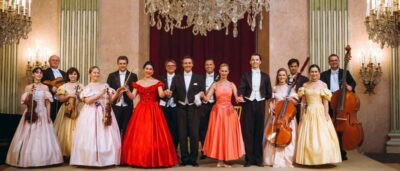 ★ 4.5Mozart & Strauss Classical Concert at Börse PalaceFrom $55810 reviews
 ★ 4.5Johann Strauss Dinner Show at the PraterFrom $93730 reviews
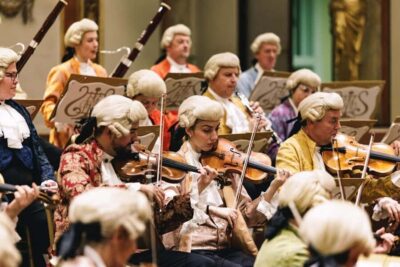 ★ 4.6Mozart Concert at the Vienna State OperaFrom $81461 reviews
Browse the lists this tour appears in