

Reviewed · TOURS
Vienna: ‘Armenia In The Heart Of Austria’ Tour
Armenia appears in central Vienna. In two hours, this small-group tour takes you inside the Mekhitarist Monastery to see Maria Schutz Church and the world-class Armenian collections at the Mekhitharis Library. It is a focused visit, not a rushed sprint, and it helps you understand how one community shaped Vienna in a very visible way.
I especially like the way the art is explained with clear links to Armenia, not just as pretty decoration. The altar paintings, the chapel picture, and the refectory mural all connect faith, survival, and identity. One possible drawback to plan for: this is mostly indoor culture, so if you’re hunting for open-air sights or major city views, you may find it a bit narrow.
Key things I’d mark on your mental map

- Small group size (10 max) keeps the questions flowing.
- Maria Schutz Church (built 1874) replaces an older Capuchin church, so you see layers of change.
- Major Armenian-themed artworks include works tied to Camillo Sitte and Theophil von Hansen.
- Mekhitharis Library and Museum includes Armenian manuscripts, newspapers, coins, ceramics, carpets, and more.
- Mechitharine liqueur tasting is a smart finale that connects culture to a living tradition.
Before choosing, compare it with another Vienna route that solves the same part of the day.
- Vienna: Vivaldi’s Four Seasons Concert in Karlskirche★ 4.7 · 14,951 reviews
- Vienna: Schönbrunn Palace & Gardens Skip-the-Line Tour★ 4.7 · 7,739 reviews
- Vienna: Light of Creation Votive Church Immersive Light Show★ 4.8 · 6,779 reviews
- Vienna Spanish Riding School Guided Tour★ 4.7 · 6,765 reviews
Small Armenia in the heart of Vienna’s Mekhitarist Monastery

If you only know Vienna for palaces and imperial drama, this tour gives you a different angle on the city. You’re going to the Mekhitarist Monastery, where the Armenian story is not hidden away. It is built into the church art, the museum rooms, and the library collections.
I like that the tour is a compact 2 hours. It means you can fit it neatly into a normal Vienna day without sacrificing your other plans. With a small group capped at 10, you also get more back-and-forth with the live guide. The guide is a monk, and the feeling is warm and welcoming. In at least one group, Father Vahan brought that hospitality and a steady stream of context that makes you feel like you’re being let in, not herded through.
The tone matters here. You are learning and looking at serious material: churches, chapels, manuscripts, coins, historic artworks. That can be a plus if you enjoy culture with purpose. It can be less ideal if you’re expecting a breezy “see and snap photos” type of stop.
Maria Schutz Church interior: altar art that ties Vienna to Armenia
Your visit starts with the history of the Mekhitarist Congregation in Vienna, including how the community’s presence developed over time. Then the guide shifts you into the core setting: Maria Schutz Church.
Maria Schutz is not a random pretty church you drop into. It was built in 1874, replacing an older Capuchin church. That replacement detail is a great clue. Vienna kept changing what stood in certain spots, yet Armenian religious life claimed a permanent place there. You get the sense of a community making itself durable in the cityscape.
Next comes the interior tour, and this is where the tour becomes more than architecture appreciation. The guide points out key religious artworks, including an altar painting showing St Mary’s protection of Armenia. This painting is by Camillo Sitte. Even if you do not know Sitte’s other work, the meaning comes through: the artwork links devotion to a specific national story.
You also see a particularly remarkable altar dedicated to St Gregory the Illuminator, designed by Theophil von Hansen. Hansen is a name you might recognize from outside this monastery because he designed the Austrian Houses of Parliament in Vienna. That connection is practical for you. It gives you an immediate way to place the monastery’s art in the broader Viennese visual world.
In a quick church stop, it is easy to miss why an altar painting matters. Here, the guide’s job is to make you read the symbolism, not just look at it. If you like when art history becomes understandable, this section is the heart of the tour.
Loretto Chapel and the Mary with the Rose story

After Maria Schutz, you move to the Loretto-Chapel, and the mood gets more specific and more dramatic. The chapel holds a baroque miraculous picture called Mary with the Rose.
The guide does not treat it like a generic devotional image. The key story is the rescue. The picture was saved intact during the Turkish siege of Vienna in 1683. That date is important because it’s a turning point in European memory, and it is tied directly to this monastery’s collection.
Here is what I think you’ll appreciate: the tour helps you understand how “survival” can show up as an object. Instead of the usual history lesson that lives only in books, you get a tangible artifact connected to a major historical event. It is faith, but it’s also preservation.
If you’re short on patience for heavy storytelling, this chapel moment is still worth it, because it is one strong narrative focus. You are not bouncing around. You are watching a single object and learning why it matters.
Refectory stop: the Feeding of the Five Thousand mural

From the chapel, the tour continues through the monastery spaces, including the refectory. This is where the visit gets a little cinematic.
In the refectory, you get to see a monumental painted scene: The Feeding of the Five Thousand. The work is by Ludwig Ferdinand Schnorr von Carolsfeld. The guide points it out as the most impressive element in the refectory, and you can see why. The scale is part of the message. Even in a meal hall, the story of provision becomes a daily reminder.
Why this matters for you: refectories can feel like “just another room” on tours. Here it works because the guide uses the painting to connect religious teaching to lived routines. A monastery is not only about what you pray; it is about how you live those prayers in communal space.
Also, this stop keeps the pace balanced. Up to now, you’ve been focused on specific Armenian-themed religious art and historical survival. The refectory shifts to a broader Christian narrative, so you get range without losing the overall thread.

Mekhitharist Museum and Library: Armenian manuscripts, newspapers, coins, and Aivazovsky
Then comes the section many people remember most: the Mekhitharist Museum and Library.
This is not “a few old books behind glass.” The library’s Armenian holdings are on a different scale. You get told that the collection includes more than 2,800 Armenian manuscripts. You also hear about over 170,000 volumes of ancient and modern Armenian publications, plus what is described as the largest collection of Armenian newspapers and magazines in the Western world.
For you, that is more than a number. It explains why the monastery matters historically and culturally. A library like this is a way a diaspora preserves language, memory, and identity. When you see the counts, you start to understand the work behind the scenes: collecting, cataloging, and keeping access possible over generations.
The tour also highlights exhibitions connected to other collectible categories. The guide talks about the numismatic collection of coins, described as including 10,000 Armenian coins and 20,000 coins from other countries. You also see ceramics, carpets, and other objects, mainly of Armenian production. This matters if you enjoy material culture. You are not stuck with only religious artifacts. You’re looking at craft, trade, and everyday artistry.
And then there are the paintings. The gallery includes valuable works by Armenian artists, including three paintings by Aivazovsky. That is a nice bridge for non-specialists too. A visitor might not know Armenian art history, but they often recognize a few major names, and Aivazovsky is one of them.
If you are the type who likes to ask questions, this part is a great time to do it. With a small group, the guide can respond in real detail rather than rushing to the next room. It is also one of the stops where “being an expert” is not required. Even if you only catch part of the context, the scale of the collection is hard to ignore.
Mechitharine liqueur tasting: a cultural finale you can actually take home
Every good cultural tour should end with something human. Here, the ending is Mechitharine liqueur tasting.
You taste a high-quality liqueur and learn secrets about its world: its unique taste, its history, its families, and the business. That is a very practical finale because it turns the monastery’s cultural story into something you can reference later, something sensory.
I like this ending because it prevents the tour from becoming only museum-fatigue. After manuscripts and paintings, it is refreshing to shift to something you experience directly. Also, if you’re traveling with someone who sometimes finds museums too static, a tasting can reset their interest.
The tasting is included in the price, so it is not an optional upsell moment. It is part of how the tour closes the circle: past and present, culture and craft.
Price and value: $84 for a focused, small-group culture hit

At $84 per person for 2 hours, this is not a budget “quick stop,” but it also does not feel overpriced given what you’re seeing.
You are paying for entrance fees, a live guide, and the liqueur tasting. The guide work is key here. Explaining the connections among artworks, historical events, and Armenian cultural preservation takes time, and you’re getting it with a small group of up to 10. That is the difference between a self-guided visit and a guided one: in a place like this, you want interpretation.
Two hours also matters for value. You get a complete loop through the church and monastery interiors, and then the museum and library collections. That is a lot of ground for a short day schedule in Vienna.
If you’re the kind of traveler who enjoys deep context and precise stops, the value clicks. If you only want a general overview and would rather spend your time outdoors, you might feel the time concentration is too much.
Practical details that affect your experience
This tour runs for 2 hours and includes a live guide in Armenian, English, and German. The meeting point is in front of the main entrance of the Mekhitarist Monastery. Since the group is small, I’d treat it like a real appointment. Arrive with enough time to find the meeting spot and settle your group.
Wear comfortable shoes. You’ll be moving through church and monastery rooms, and you’ll want to focus on looking, not adjusting your feet every few minutes. Also, plan your day so you are not rushing after. The museum and library section is mentally rewarding, and you’ll get more out of it if you’re not sprinting to your next reservation.
Finally, choose your language option based on comfort. If you want the full benefit of fine details like artists’ names and historical references, pick the language you can follow most naturally.
Who should book this tour, and who might skip it
I’d strongly consider this if you want one of the more distinctive cultural stories in Vienna. It is a great pick if you’re curious about Armenian heritage, religious art, and how a diaspora builds institutions in a foreign capital.
It is also ideal for art lovers who like connections. You’ll hear about artists and designers with names that connect back to major Viennese landmarks, like Theophil von Hansen’s link to the Austrian Houses of Parliament. That cross-reference helps the monastery feel part of the same city fabric, not a side note.
Skip it if your idea of a Vienna tour means long walks through neighborhoods, big outdoor views, and lots of general sightseeing. This experience is intentionally inside-focused, with a strong emphasis on church spaces, a library collection, and a museum.
Should you book Armenia In The Heart Of Austria?
If you like culture with a clear storyline, yes. This tour gives you a compact, meaningful dose of Armenian presence in Vienna, anchored by Maria Schutz Church, the Loretto-Chapel’s Mary with the Rose story, and the astonishing scope of the Mekhitharis Library. The refectory mural and the Mechitharine liqueur tasting make the experience feel rounded, not one-dimensional.
If you’d rather spend your limited Vienna hours outdoors, or you’re not interested in churches, libraries, and historical objects, you might prefer a more general city tour. But if you want a visit that feels specific, human, and rooted in real collections, this is the kind of stop you’ll remember long after you leave the building.
FAQ
How long is the Armenia In The Heart Of Austria tour?
The tour lasts 2 hours.
Where do I meet for the tour?
Meet in front of the main entrance of the Mekhitarist Monastery.
What is the group size?
The tour is limited to a small group of 10 participants.
What languages are available for the live guide?
The live tour guide is available in Armenian, English, and German.
What’s included in the price?
Entrance fees, guide service, and a Mechitharine liqueur tasting are included.
Is there a cancellation option?
Yes, you can cancel up to 24 hours in advance for a full refund.
More Tours in Vienna
- Vienna: Schönbrunn Palace & Gardens Skip-the-Line Tour
★ 4.7 · 7,739 reviews - Vienna Spanish Riding School Guided Tour
★ 4.7 · 6,765 reviews - Vienna: Skip-the-Line Sisi Museum, Hofburg and Gardens Tour
★ 4.8 · 5,918 reviews - Vienna: Skip-the-Line Schönbrunn Palace & Gardens Tour
★ 4.8 · 5,411 reviews - Vienna: Guided Walking Tour of City Center Highlights
★ 4.7 · 4,989 reviews
More Tour Reviews in Vienna
- Vienna: Vivaldi’s Four Seasons Concert in Karlskirche
★ 4.7 · 14,951 reviews - Vienna: Schönbrunn Palace & Gardens Skip-the-Line Tour
★ 4.7 · 7,739 reviews - Vienna: Light of Creation Votive Church Immersive Light Show
★ 4.8 · 6,779 reviews - Vienna Spanish Riding School Guided Tour
★ 4.7 · 6,765 reviews - Vienna: Classical Concert in the World-Famous Musikverein
★ 4.6 · 6,673 reviews
Recently Added Around Vienna


Tours, compared.
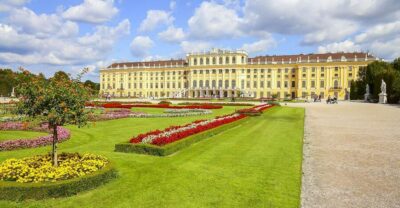 ★ 4.7Schönbrunn Palace & Gardens Skip-the-Line TourFrom $637,739 reviews
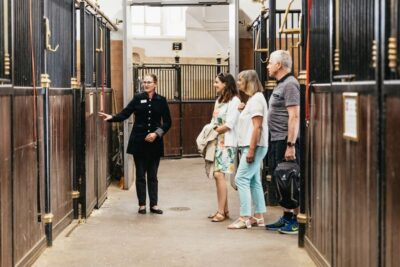 ★ 4.7Vienna Spanish Riding School Guided TourFrom $286,765 reviews
 ★ 4.8Skip-the-Line Sisi Museum, Hofburg and Gardens TourFrom $615,918 reviews
 ★ 4.8Skip-the-Line Schönbrunn Palace & Gardens TourFrom $765,411 reviews
 ★ 4.7Guided Walking Tour of City Center HighlightsFrom $254,989 reviews
 ★ 4.2Hop-On Hop-Off Sightseeing Bus Tour in 19 LanguagesFrom $414,518 reviews
 ★ 4.6Time Travel and Magic Vienna History TourFrom $273,879 reviews
 ★ 4.4Big Bus Hop-On, Hop-Off Tour by Open-Top BusFrom $363,529 reviews