

Reviewed · CITY TOURS
Terrible crimes in Vienna, hidden secrets of the inner city
Vienna has a darker trail than you expect. This 2-hour inner-city walk tracks crimes, executions, and court intrigues tied to real street addresses, from a monastery dungeon to a fountain with a surgeon scheme. I love how Ben connects each story to the exact spot you’re standing on, and it can get gruesome, so it is better for teens and adults than for sensitive minds.
I also like the practical setup. You get a mobile ticket plus a complimentary smartphone audio guide, which helps you keep the details straight while you’re moving through the historic core.
Key highlights you should know

- Ben does the heavy research, and it shows in how clear the storytelling feels.
- Short stops, strong stories: you move quickly from one case to the next.
- Hidden inner-city sites you’re unlikely to find on your own.
- True crime meets local street history, not a generic lecture.
- Smartphone audio support, so you can revisit the facts on the go.
- Admission at each stop is free, so you’re paying for the walking story, not entry fees.
Wider circles around the Ring and beyond
- Vienna: Guided Walking Tour of City Center Highlights★ 4.7 · 4,989 reviews
- Vienna: City Cruise with Optional Lunch★ 3.4 · 3,982 reviews
- Vienna: City Cruise★ 3.3 · 2,978 reviews
- Vienna: Guided Walking Tour of City Highlights & Hidden Gems★ 4.9 · 2,180 reviews
Vienna’s crime map: why this walking tour feels different

If you’ve ever toured Vienna and thought, Everything looks perfect, but where is the real mess?, this tour answers that. It’s built like a string of case files. Instead of big monuments and sweep-it-all-in sightseeing, you walk past specific addresses tied to crimes, punishments, and political drama. The result is that the inner city feels less like a postcard and more like a living courtroom, prison, or meeting place from different eras.
What makes it work is the rhythm. The tour is short, about 2 hours, and it keeps each location to a tight chunk of story. You’re not asked to sit and suffer through a long history lecture. You hear why a place matters, you look at the building or square, then you’re moving again. Even if you’re not a hardcore true-crime person, you’ll start noticing how Vienna’s street layout can carry meaning. It’s history you can point at.
One more thing I respect: this isn’t just horror for its own sake. The cases cover greed, passion, political violence, and even business scams. That mix matters because it gives you a fuller picture of how people in power, people in trouble, and people with personal grudges all collided across time.
Price and value: what you actually get for $46.13
At $46.13 per person, you’re buying a guided narrative walk through the inner city, not a pricey museum ticket. The route includes multiple stops that list free admission tickets, which keeps the cost focused on the experience itself.
Here’s the practical value you should care about:
- You get an English-speaking guide and a clear, story-driven pace for about 2 hours.
- You receive a complimentary smartphone audio guide, which is ideal when you want to slow down mentally or recheck details without feeling left behind.
- The tour uses a mobile ticket, which keeps you from hunting for paper confirmations during a quick walk.
Is it “worth it”? For me, it hinges on your goal. If you want architecture and general big-sight commentary, you may find it too specialized. But if you like the idea of learning Vienna through odd, human, and darker turning points, it’s a sharp use of time.
Route flow: where you start, where you finish, and how long it lasts
The tour starts at Helmut-Zilk-Platz, Albertinapl. 2-3, 1010 Wien and ends at Rauhensteingasse, 1010 Wien. It’s in the core where you’ll find plenty of public transit nearby, which makes it easier to slot into a day without a long commute.
The group size stays small, with a maximum of 20 travelers. That matters for two reasons. First, it usually helps the guide keep attention on the story at each stop. Second, you’re more likely to catch the key details, since you’re not swallowed by a crowd.
Timing is also straightforward: plan for about 2 hours. The stops are mostly short moments, around five to fifteen minutes each. That keeps the tour from turning into a slog, but it also means you should come ready to listen, not to linger.
Stop-by-stop: Tegetthoffstraße and the Capuchin monastery dungeon
You begin at Tegetthoffstraße 2, tied to the Capuchin monastery. This stop leans into the idea that punishment could be arbitrary, humiliating, and long-lasting. You hear about Father Innocentius, who discovered the monastery dungeon and explained how monks were sometimes locked up for decades.
What I like here is the contrast. Vienna can look refined on the surface, but this story reminds you that religious institutions were also systems with enforcement power, and that the reasons could be absurd. Unauthorized afternoon walks and one-time abuse of monastery officials are the kind of causes that turn punishment into a form of control, not just justice.
And there’s a twist involving Emperor Joseph II: Father Innocentius announced the dungeon, Joseph II closed it, and then transferred Father Innocentius elsewhere for his safety. The tale also connects him to later life choices, including that he later became Protestant and was linked with Freemasonry and as an advisor to the tsar. It’s a lot to fit into a quick stop, but the story is built to feel like a chapter, not a textbook.


Trattnerhof: the Jaroszynski murder case and a career ruined
Next is Trattnerhof. This stop centers on the Jaroszynski murder case, made famous through actress Therese Krones. The focus isn’t just that a murder happened. It’s that an actress could be pulled into a case she had little to do with, and her career was destroyed.
The tour also separates rumor from motive. There are whispers that extravagant desires drove despair and crime, but the story you hear instead points to addiction to games and heavy debt. That approach matters because it teaches you something useful while keeping the entertainment: don’t assume motive based on drama. Follow the incentives.
This is also one of those stops where the building and the address give you a sense of place. It makes the case feel grounded in the city, not like a disconnected news headline.
Augustinerstraße 12: Palais Bathory and the blood countess legend
At Augustinerstraße 12, you reach Palais Bathory, associated with Elisabeth Bathory and the infamous nickname often tied to her story. Here, the tour presents the allegation that she murdered hundreds of victims and that victims were used in a method meant to enhance youth and beauty.
You should treat this as a story told in the context of the city’s legends and intrigue. The stop is framed as either real danger or an outcome of violent court conflict aimed at eliminating loyalty. That uncertainty is important. The tour doesn’t just ask you to be shocked. It pushes you to consider how power struggles can produce accusations, and how fear can become folklore.
Even when the details are hard to swallow, the location itself gives the story weight. You’re not reading a legend in a book. You’re standing in the inner city around a palace tied to the tale.
Graben and Kohlmarkt: Demel and the Lucona affair
Then you move through the heart of the inner city at Graben and Kohlmarkt, to the Place of the Demel area. This stop connects to the Udo Proksch signatory from the 1970s and the Lucona affair.
What you hear here is a criminal story built around paperwork, insurance, and planning. The conspiracy involved an overinsured freighter chartered for Asia, and an explosive charge hidden on board. The outcome was mass murder and massive insurance fraud, and the investigation stretched out over years due to Proksch’s wide-reaching relationships.
I like this stop because it shows another side of “crime in the city.” It’s not only personal rage and jealousy. It’s also structured greed, money, and manipulation. It’s the kind of case that makes you look at a place differently, because you realize how ordinary meeting points can sit near extraordinary wrongdoing.
Herrengasse: Ferstel Palace and the house of five murders

In Herrengasse, you first visit Ferstel Palace and the former location connected to the “Zu den Fünf Morden” house. This is one of the most notorious mass murder stories tied to medieval Vienna in this route.
The story is blunt: the perpetrator committed five murders, including a seven-year-old. Because it was considered especially terrible, the execution was carried out in a way that took an unusually long time. The tour explains that the executioner wasn’t experienced with that specific method, which added to the extended punishment.
I find this stop uncomfortable but useful. It shows how society at the time measured the worst offense imaginable, and it helps explain why a location became infamous enough to survive in city storytelling. The key takeaway for you is that punishment was also theater, and Vienna treated it as such.
Herrengasse again: Colonel Redl’s suicide and the spy affair
Still in Herrengasse, you stop at the former Hotel Klomser, directly opposite Palais Ferstel, tied to Colonel Redl. This is where the tour shifts gears from medieval violence to the monarchy’s intelligence world.
You hear that Redl’s suicide ended the greatest spy affair of the monarchy. The story also frames the stakes: the espionage discovery damaged the army’s reputation and exposed vulnerabilities in a secret service known as the Evidenzbureau (secret service). The route even notes that the affair could have been a decisive factor for the First World War.
What you’ll likely appreciate is the way this stop broadens “crime” beyond street-level murders. It’s a reminder that state secrets, credibility, and internal insecurity can matter as much as a crime weapon. It also helps you connect Vienna’s grand politics to real human breakdowns.
Molker Bastei: Anna Gaugisch and the Danube search
At Molker Bastei, the tour tells the story of Anna Gaugisch, allegedly dismembered by her boyfriend Raimund Lewisch in 1861. The route highlights a detail that makes the case feel like a puzzle: some body parts were found in the Danube, while others were discovered in a location here.
This stop leans into the horror of how the city itself became part of the evidence trail. It also frames Lewisch’s intent as tied to removing an “uncomfortable woman” who was pregnant. The tour adds that other blacksmiths were allegedly involved in this broader kind of dissection.
I’ll put it plainly: this is not a light stop. It’s one of the moments where you may want to decide how much you want to know while still appreciating the storytelling. If you’re in the mood for hard true-crime themes, it delivers. If you’d rather stay away from graphic topics, you might want to mentally prepare.
Am Hof: war minister violence in 1848
Next comes Am Hof, tied to the Lynch murder of war minister Theodor Baillet de Latour during the revolution year 1848. The tour presents this as one of the rare cases of political violence in Vienna, and it connects it to the “Wiener Oktober Revolution,” including the idea that the revolution’s later phase became far more violent.
You also hear that a civil arsenal is in the same place, and it was looted during the revolution. This stop is useful because it shows how political conflict can leave physical traces, and how the same streets can host both routine life and violent turning points.
Hannaken-Brunnen: the Hannakenkönig business scheme at the fountain
At Hannaken-Brunnen, you encounter the Hannakenkönig story and a surgeon who allegedly caused broken bones in order to improve business. The tour explains that hazards were set up to provoke injuries, then the injuries could be treated for profit.
You’re also shown that the fountain depicts two men carrying an injured comrade to the Hannakenkönig, which gives the story a visual anchor you can keep in your head after the tour ends.
This stop is clever rather than brutal. It’s crime as entrepreneurship and manipulation. And it offers a different flavor from the murders, because the wrong comes from engineering vulnerability rather than staging revenge.
Maria Am Gestade: the Zahlheim case and Joseph II’s death-penalty exception
At Maria Am Gestade, the tour points to a section of the city wall associated with the Zahlheim case. This is a death penalty story tied to murderers and described as unusually cruel, with the note that it became too harsh for many other places later.
What makes this stop stand out is its link to Emperor Joseph II. The tour says Joseph II usually rejected the death penalty, but the facts of this case forced him to accept it. That gives you a clear emotional logic: even a ruler known for refusing harsh punishment could be pressured by a specific crime.
If you like moral tension in history, this is a strong stop. It turns a legal outcome into a question, what did it take to override the usual stance?
Hoher Markt: Thekla Riener and a jealousy-driven collapse
At Hoher Markt, you hear about Thekla Riener, played by her husband Anton Grünborn. Instruments from the courthouse are part of the torture story, and the case is framed as the culmination of jealous, irrational behavior.
The tour describes that she was supposed to betray a lover, but there wasn’t one at all. Then it adds that she is accidentally killed, and that her parents later became insane. The details are grim, but the message is consistent: jealousy and obsession can turn into violence, and the fallout can spread far beyond the first victim.
This stop is likely to hit hardest if you think about real people and their families. It’s not just a case. It’s a chain reaction.
St. Stephen’s Cathedral area: baker punishment and medieval cruelty
You move to St. Stephen’s Cathedral, and the story here connects to a legend about a brutal quality-control idea, including the so-called standard bread loaf. The tour also covers the true part of the legend: punishment for bad bakers involving a cage and being dipped into the Danube multiple times.
This is one of those “how could they?” moments that still feels historically grounded through the location. The tour even notes that in English-speaking countries, a similar punishment was intended for women in dispute, but the focus here remains on Vienna’s own methods.
If you’ve seen Vienna’s beautiful church squares and wondered how such brutality could exist nearby, this stop answers that.
Steffl: the executioner’s apartment and a tortured witch story
At Steffl, you hear about the former Malefizspitzbubenhaus, described as an executioner’s apartment and dungeon. This stop includes the story of the only witch burned in Vienna, known as the Plainacher, who was held and tortured.
The accusation includes that the witch was charged with bewitched an epileptic granddaughter and summoning demons. The tour also mentions that witch persecutions were not common in Vienna, but this judge had to avoid public pressure.
This stop feels like a mix of law, fear, and local politics. It’s a good reminder that violence has bureaucratic forms, and that a city’s beliefs can become enforcement tools.
Himmelpfortgasse: walled-in love and the 1319 monastery story
Finally, you end at Himmelpfortgasse, tied to a former monastery where a nun was reportedly walled in in 1319. The story is framed as a Vienna version of Romeo and Juliet: a relationship blocked by a father who hated the lover, and the political conflict between a mayor and his enemy.
The tour explains that the mayor’s son asks for Anna’s hand, but the father condemns her to life as a nun instead of agreeing to the connection. Even if you’ve heard tragic love stories before, the setting gives it a sharper edge. This isn’t theater. It’s a city corner with consequences.
By the time you walk away, you have a full arc: institution punishment, passion crimes, state violence, legal brutality, superstition, and love punished as rebellion.
Who this tour is best for, and what to watch for
This experience fits you best if you want two things at once: city history that doesn’t sugarcoat anything, and stories tied to real inner-city addresses. It’s also a great pick if you’re the sort of person who likes true-crime pacing, the kind where each stop answers a question and leads to the next.
It is less ideal if you want a light, family-style stroll. The route includes murder, torture themes, and other very heavy material. Even with careful storytelling, the subject matter is adult.
Also consider your listening style. The tour is designed around short stops and explanations, so you’ll get more out of it if you enjoy paying close attention while walking.
Should you book this Vienna crime tour?
I think you should book it if Vienna’s beauty makes you curious about what people did when things went wrong, and you’d rather learn through specific cases than through generic sightseeing. At $46.13 for about 2 hours, with free admission at the stops and a complimentary smartphone audio guide, the value is strong for an English walking narrative.
Skip it if you want a peaceful, breezy city overview or if graphic crime details are a hard no for you. But if you like your Vienna slightly unruly, and you enjoy stories that connect street corners to human motives, this is a smart way to spend a morning or afternoon.
FAQ
How long is the tour?
The tour runs for about 2 hours.
What does it cost?
It is listed at $46.13 per person.
Is the tour offered in English?
Yes, it is offered in English.
Will I get a smartphone audio guide?
Yes, you receive a complimentary smartphone audio guide.
Do I need to bring a ticket?
You’ll use a mobile ticket.
Is admission free at the stops?
The stops on the route list admission as free.
How many people are in the group?
The tour has a maximum of 20 travelers.
Where does the tour start?
It starts at Helmut-Zilk-Platz, Albertinapl. 2-3, 1010 Wien.
Where does the tour end?
It ends at Rauhensteingasse, 1010 Wien.
What if the weather is bad?
This experience requires good weather. If it is canceled due to poor weather, you will be offered a different date or a full refund.
Vienna, Ring to Suburb
- Vienna: Guided Walking Tour of City Center Highlights
★ 4.7 · 4,989 reviews - Vienna: City Cruise with Optional Lunch
★ 3.4 · 3,982 reviews - Vienna: City Cruise
★ 3.3 · 2,978 reviews - Vienna: Guided Walking Tour of City Highlights & Hidden Gems
★ 4.9 · 2,180 reviews - Vienna: City Sightseeing Tour in an Electro Vintage Car
★ 4.7 · 1,085 reviews
More Tour Reviews in Vienna
- Vienna: Vivaldi’s Four Seasons Concert in Karlskirche
★ 4.7 · 14,951 reviews - Vienna: Schönbrunn Palace & Gardens Skip-the-Line Tour
★ 4.7 · 7,739 reviews - Vienna: Light of Creation Votive Church Immersive Light Show
★ 4.8 · 6,779 reviews - Vienna Spanish Riding School Guided Tour
★ 4.7 · 6,765 reviews - Vienna: Classical Concert in the World-Famous Musikverein
★ 4.6 · 6,673 reviews
Recently Added Around Vienna


City Tours, compared.
 ★ 4.7Guided Walking Tour of City Center HighlightsFrom $254,989 reviews
 ★ 3.4City Cruise with Optional LunchFrom $383,982 reviews
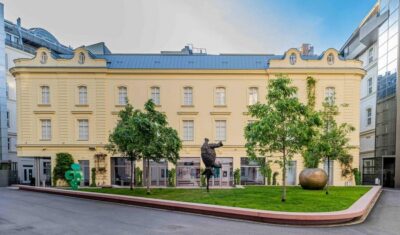 ★ 3.3City CruiseFrom $382,978 reviews
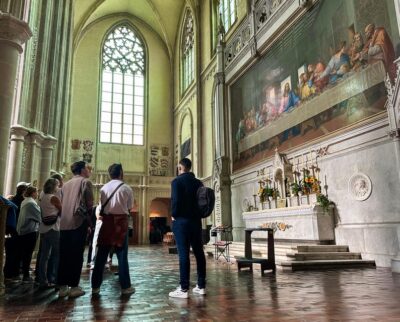 ★ 4.9Guided Walking Tour of City Highlights & Hidden GemsFrom $272,180 reviews
 ★ 4.7City Sightseeing Tour in an Electro Vintage CarFrom $1161,085 reviews
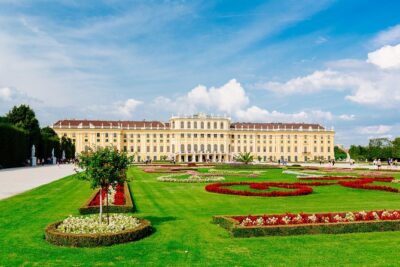 ★ 3.5Skip-the-Line Schonbrunn Palace Guided Tour and Vienna Historical City TourFrom $82940 reviews
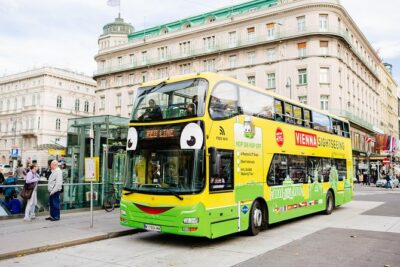 ★ 3.5Vienna Hop On Hop Off City TourFrom $42884 reviews
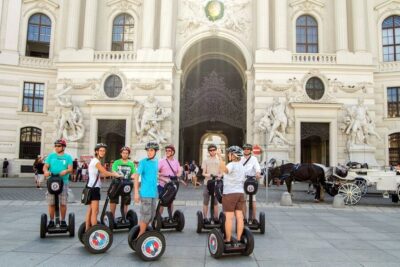 ★ 4.8Vienna City Segway TourFrom $116638 reviews
Browse the lists this tour appears in