

Reviewed · TOURS
Taste and Tour Small Organic Wineries with a Winemaker
Small wineries make the wine feel personal. This private, English-speaking tour takes you along the Donau River wine country near Vienna, with stops at organic-minded producers and direct conversations with the people making the bottles. I love how the day mixes vineyard detail with real tasting time, so it feels more like a behind-the-scenes visit than a drive-and-sip checklist.
What really clicks is the winemaker access. You meet hosts at each stop, and the tastings are built around what they grow and how they make wine, including special production methods like amphora aging. I also like that the route hits several distinct styles, from French grape experiments to family-run Grüner Veltliner and a hands-on approach to sparkling wine.
One thing to keep in mind: there’s some walking, and it can include steps and small cellar spaces. If you cannot comfortably walk down into a cellar, or you prefer roomy tasting rooms, you’ll want to think twice.
Key highlights you will feel in the day
- Micro-wineries, not factory vibes: intimate stops with the people behind the wines
- Organic focus with specific varietals: French grapes at Kapitel Zwei, Grüner Veltliner at Mantlerhof
- Hands-on winemaking techniques: amphora and steel aging, plus biologically produced sparkling experiments
- A short vineyard walk for a payoff view: a 7 to 10 minute stroll to a viewing point
- Private group experience: only your group participates, with room to ask questions
Before choosing, compare it with another Vienna route that solves the same part of the day.
- Vienna: Vivaldi’s Four Seasons Concert in Karlskirche★ 4.7 · 14,951 reviews
- Vienna: Schönbrunn Palace & Gardens Skip-the-Line Tour★ 4.7 · 7,739 reviews
- Vienna: Light of Creation Votive Church Immersive Light Show★ 4.8 · 6,779 reviews
- Vienna Spanish Riding School Guided Tour★ 4.7 · 6,765 reviews
From Vienna to Krems: why the Donau River route makes sense

This is one of those Vienna-area trips that feels like a shortcut to the countryside, without turning into a full-day slog. You start in Krems (on the Danube), then follow the river’s rhythm from one wine pocket to the next. The Donau is doing real work here. It guides the geography, and it also makes the whole day feel connected, from town edges to vineyard slopes.
If you’re staying in Vienna, you can take a direct train to Krems. That ride along the river is part of the fun, and it sets the mood before you even touch a glass. And if you prefer water travel, you can also arrive by boat from Vienna and meet your host at the boat station. Either way, you get a natural “arrival into wine country” moment instead of a stressful land transfer.
The best part is what happens after you land in Krems: the day isn’t built around big brands. It’s built around small producers and specific places. You’re not just tasting wine. You’re learning how soil, slope, and decisions in the cellar change what ends up in the bottle.
Meeting point, private pacing, and what to expect time-wise

The tour starts and ends at Bahnhofpl. 2, 3500 Krems an der Donau. From there, you’ll spend about 2.5 hours actually on the tour and around 30 minutes driving between stops. So you get time with the wineries, not just time in the van.
This is a private tour, meaning only your group participates. That matters more than you might think. When you’re not sharing the day with strangers, the host can slow down for questions, explain what you care about, and tailor tastings a bit more to your curiosity.
You should also plan your day around the walking requirements. The route includes vineyard walking at the end, plus you may encounter steps at cellar locations. The tour guide sets the pace, but the expectation is that you have moderate physical fitness and you’re okay moving through small spaces.
Practical tip: wear shoes you trust on uneven ground. One short walk might sound easy on paper, but vineyards can be sloped and slightly irregular.
Kapitel Zwei Wine at Kremsleithen: amphora-aged French varietals from one replanted ried
Stop one is where the day gets interesting right away: Kapitel Zwei Wine in Kremsleithen. You drive up roughly 400 meters from sea level, then you wind into the tasting experience. The move from flat to slope is not just scenic. It’s a reminder that Austrian wine often comes down to terrain.
Kapitel Zwei is a micro-winery built around organic and sustainable growing, plus a very “hands-on” style of aging. You’ll hear about French grape varietals grown here, including Chenin Blanc, Roussanne, and Sémillon. Instead of relying only on standard winemaking routes, the wine is aged in amphora and steel tanks, which can shape texture, aroma, and how the wine settles over time.
The vineyard story is the other big hook. The grapes come from a single vineyard area called a ried named Kremsleithen. This specific site was abandoned for decades, then replanted in May 2022. That means you’re tasting (or at least learning about) a system that’s still in motion, not just a historic, frozen snapshot.
You also get context on why the place matters. Kremsleithen sits about 300 meters above sea level and is described as having loamy, sandy soil and clay. It’s linked to the steep slope that runs down toward the river Krems, so expect the conversation to circle back to how slope and soil create intensity and balance.
What to watch for at this stop
- Single-vineyard thinking: you’ll learn how a small place can change the final wine
- Amphora vs steel: ask what the different vessels do to aroma and mouthfeel
- Young-vine momentum: the replanted ried adds a sense of experimentation

Mantlerhof in Brunn im Felde: organic wine traditions tied to 1365
Stop two is Weingut Mantlerhof, and it feels like stepping into a family story that’s still being written. The winery is in the municipality of Gedersdorf near the river Kamp, right before it merges with the Danube. If you look around, you can even get the geography in your head: Krems lights to the west, and the towers of Grafenegg to the east.
Mantlerhof sits within the village center of Brunn im Felde, around a pond. Beside the water is an older manor with an early classicist facade, also called Mantlerhof. That setting matters because it matches the winemaking vibe here: this is long-view agriculture, not a short marketing sprint.
The family link is strong. The Mantler family has worked the property for over 200 years, and the roots of the winemaking heritage go back to 1365. Even if you don’t care about dates, this helps explain the mindset behind the wines: steady cultivation, careful harvesting, and a focus on what keeps working year after year.
In the vineyard, Mantlerhof works about 15 hectares of vineyards and produces long-lasting organic wines. Their focus is Grüner Veltliner and Roter Veltliner, two grapes that fit this region’s identity and tasting palate.
The best way to use this stop
At Mantlerhof, slow down and ask how they think about organic growing over time. Organic farming isn’t just a checkbox here. It influences decisions in the vineyard, and that’s what you’ll want to connect to what you taste.
If you’re the kind of person who buys wine based on food pairings, this is also a good stop to calibrate. Grüner Veltliner can swing from crisp and mineral to more rounded, and your job is to notice what style you like.
Feldtheorie near Schoenberg am Kamp: when natural science meets Kamptal wine

Stop three takes you toward Schoenberg am Kamp and introduces Weingut Feldtheorie, led by Ulrike Filp and Robert Bormuth with help from friends and family. The story is genuinely good, because it’s not just romance. It’s curiosity.
They studied natural sciences, and during a trip they discovered a love for wine in New Zealand. After finishing their studies, they did internships in Germany, Australia, and Austria. Then they settled in Wachau, and when the chance came to buy vineyard parcels in nearby Kamptal, they jumped on it.
What you should take from that background is how it shows up in the wine approach. Their goal is to pass along the uniqueness of Kamptal through their wines. So the tasting conversation should feel place-driven, not trend-driven.
This is the stop where I’d lean into questions about how they work in both cellar and vineyard. The founders are described as working together on both sides, which usually means the wine is not made by one philosophy in theory and another in practice.
How to get value here
Ask what they mean by uniqueness in Kamptal. Then compare it to what you learned at the earlier stops. You’re basically training your senses to separate grape, slope, and technique.
If you like learning how winemaking choices show up in the glass, this stop is a strong match.
WeinSchach in Langenlois: biologically made sparkling wine chasing balance with Pet Nat

Stop four is a sparkling finale in the middle of the day, at WeinSchach in Langenlois. Expect the tone to shift from still wine territory to effervescence and experimentation.
WeinSchach has a simple idea they stick to: nature has what an extraordinary wine needs. The winemaking aim is that wine unfolds freely in the bottle, finding balance as it develops.
The big target style is a Pet Nat, and the winery wants it on equal footing with the great sparkling wines of the world. That goal comes with experimentation. They treat the process like a learning cycle, even when it means returning to earlier steps.
In practice, the winery works biologically. Harvest is by hand, and the sparkling process includes being de gorged (the timing and method matter for texture and freshness). So you’re not just tasting bubbles. You’re tasting a philosophy about minimal interference and careful biological work.
What to do during the tasting
Pay attention to how the wine tastes on the first sip versus the next. Pet Nat can show different characters as it warms slightly in the glass. Also note what freshness level they’re aiming for, because that’s usually where biologically made sparkling wines stand or fall.
Welterbesteig viewpoint: the short walk that ties it all together

Stop five ends with a short walk through vineyards to a viewpoint at Ausblick am Welterbesteig. It’s a 7 to 10 minute stroll, and it serves a smart purpose. After hours of cellar talk and grape specifics, you finally see what surrounds the wine.
This is where the Danube region stops being a list of names and starts being an actual place. You’ll get a wider view over the wine country you’ve been tasting. It’s also a good time to refocus your palette memory. Try to remember which wine felt most alive and which one felt most complete. Then check how that matches what you see: slope, light, river direction, and the patchwork of vineyard areas.
If you’re someone who photographs during travel, this is one of the moments where photos actually help you later when you try to recall what you tasted.
What you learn when a winemaker-led tour talks real production

This tour stands out because it spends your time where wine decisions happen. You’re not just hearing about grapes in general. You’re connecting vineyard details to production choices, then tasting the results.
Across the day, the themes you’ll likely hear include:
- how a specific site like a replanting or a single ried can matter
- how growing choices link to longer-lasting organic wines
- how vessel choice like amphora and steel affects character
- how sparkling production decisions show up in freshness and texture
The guide, Chris, is also part of the reason this feels personal. In past groups, he’s described as actively engaged in wine work himself, including being involved with small vineyard parcels in the area. That kind of hands-on background usually means your questions get better answers, not just rehearsed talking points.
One more practical perk: tastings here are not rushed. You get time to ask what you want to know, and you can compare wines stop to stop. That comparison is how you start building your own Austrian wine instincts.
Price and value at $114.02 for a private winemaker day

At $114.02 per person for about 3 hours, this pricing lands in the “worth it if you care about winecraft” zone. You’re paying for:
- a private guide experience
- multiple winery visits rather than one stop
- time with hosts and tastings across different styles
- the structured route that includes driving time so you can focus on wine instead of logistics
Also, you’re not just buying a view. The stops are described with admission ticket free at each location, which helps the day feel more like a guided tasting experience than an accumulation of extra fees.
One reason I like this value is that it’s also a great off-ramp from Vienna. You get out of the city, into a real wine region, without a full-day tour bus ordeal. If you’re booking about 55 days in advance on average, that’s another sign it’s popular with wine-focused visitors and tends to fill up.
If you’re mainly a casual sipper who wants a pretty scenic afternoon, you might decide it’s more detailed than you need. But if you enjoy learning how the sausage gets made, this is the kind of day that raises your wine IQ fast.
Who should book this Krems and Kamptal small organic wineries tour
This is a strong fit if you:
- want small, organic-minded producers near Vienna
- enjoy hands-on winemaking stories, from vineyard to aging
- like tasting multiple styles, including still wines and Pet Nat
- would rather have a private group guide than a loud group experience
You should skip or reconsider if:
- you cannot walk down into cellars or you strongly dislike very small rooms
- you’re not comfortable with some vineyard walking, even if it’s not long
- you prefer a very large, high-volume tasting event rather than intimate visits
If you’re traveling solo, a private tour can still be smart because it keeps the pace thoughtful. If you’re traveling with a partner, it’s also ideal because the day stays conversation-heavy and less chaotic.
Should you book? Yes, if you want winecraft plus real place
Book this tour if you want authentic Austrian wine culture without the noise. The lineup is built to teach you how place and technique interact, from Kremsleithen’s amphora-aged French varietals to Mantlerhof’s organic Grüner Veltliner roots, then into Feldtheorie’s Kamptal-minded approach and WeinSchach’s biologically made Pet Nat experiments.
The day has one clear tradeoff: physical comfort. If you’re okay with a short walk and possible cellar steps, you’ll likely leave with a stronger sense of what you like and why.
If that sounds like your kind of trip, you should book it.
FAQ
What is the duration of the tour?
The tour is listed as approximately 3 hours, with about 2.5 hours on the tour and around 30 minutes driving between locations.
Where does the tour start and end?
It starts at Bahnhofpl. 2, 3500 Krems an der Donau, Austria, and it ends back at the same meeting point.
Do you offer pickup?
Pickup is offered, and the meeting time and place are flexible.
What language is the tour in?
The tour is offered in English.
Are tickets included for the winery stops?
The stop details indicate admission tickets are free at each location.
How many wineries and tasting stops are included?
You’ll visit multiple winery stops, plus a short walk to a viewpoint at the end.
Is there any walking during the tour?
Yes. The tour includes some hiking, and the final part includes a short 7 to 10 minute walk through vineyards.
Is the tour recommended for people who cannot go down into a cellar?
No. It is not recommended for travelers who cannot walk down into a cellar.
What about small rooms or physical comfort?
It is not recommended for travelers who do not enjoy small rooms. Moderate physical fitness is expected.
Can I cancel and get a refund?
Yes. Free cancellation is available if you cancel up to 24 hours in advance for a full refund.
When can I take the tour?
The listed operating hours run Monday through Saturday from 12:00 PM to 7:00 PM, within the date range provided.
More Tours in Vienna
- Vienna: Schönbrunn Palace & Gardens Skip-the-Line Tour
★ 4.7 · 7,739 reviews - Vienna Spanish Riding School Guided Tour
★ 4.7 · 6,765 reviews - Vienna: Skip-the-Line Sisi Museum, Hofburg and Gardens Tour
★ 4.8 · 5,918 reviews - Vienna: Skip-the-Line Schönbrunn Palace & Gardens Tour
★ 4.8 · 5,411 reviews - Vienna: Guided Walking Tour of City Center Highlights
★ 4.7 · 4,989 reviews
More Tour Reviews in Vienna
- Vienna: Vivaldi’s Four Seasons Concert in Karlskirche
★ 4.7 · 14,951 reviews - Vienna: Schönbrunn Palace & Gardens Skip-the-Line Tour
★ 4.7 · 7,739 reviews - Vienna: Light of Creation Votive Church Immersive Light Show
★ 4.8 · 6,779 reviews - Vienna Spanish Riding School Guided Tour
★ 4.7 · 6,765 reviews - Vienna: Classical Concert in the World-Famous Musikverein
★ 4.6 · 6,673 reviews
Recently Added Around Vienna


Tours, compared.
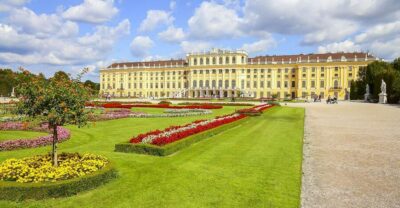 ★ 4.7Schönbrunn Palace & Gardens Skip-the-Line TourFrom $637,739 reviews
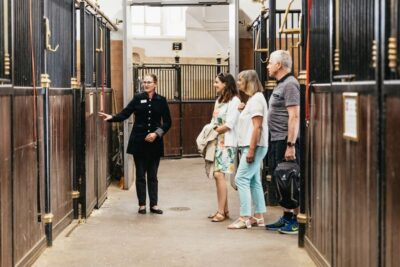 ★ 4.7Vienna Spanish Riding School Guided TourFrom $286,765 reviews
 ★ 4.8Skip-the-Line Sisi Museum, Hofburg and Gardens TourFrom $615,918 reviews
 ★ 4.8Skip-the-Line Schönbrunn Palace & Gardens TourFrom $765,411 reviews
 ★ 4.7Guided Walking Tour of City Center HighlightsFrom $254,989 reviews
 ★ 4.2Hop-On Hop-Off Sightseeing Bus Tour in 19 LanguagesFrom $414,518 reviews
 ★ 4.6Time Travel and Magic Vienna History TourFrom $273,879 reviews
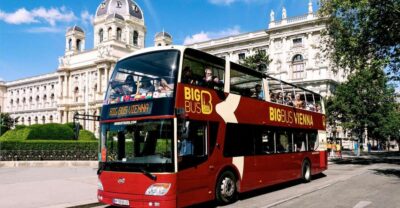 ★ 4.4Big Bus Hop-On, Hop-Off Tour by Open-Top BusFrom $363,529 reviews