

Reviewed · CLASSICAL CONCERTS & OPERA IN VIENNA
STATE OPERA – PRIVATE guided tour (tickets included)
Opera magic gets practical fast. Vienna State Opera is one of those places where the building itself tells a story, and a private guide helps you read it. This State Opera private guided tour pairs your visit with included entry, so you can focus on what matters: the art, the people, and how the whole machine works.
Two things I really like about this experience are the attention to both the old and modern sides of the opera house, and the way the guide ties famous names to what you are seeing. You’ll hear about major stars who performed there, like Plácido Domingo, Montserrat Caballé, José Carreras, Gustav Mahler, Herbert von Karajan, Rudolf Nureyev, and Margot Fonteyn. One consideration: you will tour the areas open to the public, so you should not expect secret backstage areas or restricted rooms beyond what’s accessible during a standard visit.
If you want an organized, high-impact way to experience the Vienna State Opera in about 1 hour 30 minutes, this private format is a smart choice.
Key highlights you should know

- Tickets included for the Vienna State Opera, so you skip that extra step and go straight to the sights
- Private group experience with only your party, which makes questions and pacing feel easier
- Old vs. postwar architecture, with the opera’s history explained in plain terms
- Stories tied to famous performers, including Mahler, Karajan, and the great singers on the list
- Opera Ball tradition and stage logistics, like how sets change and where they are stored
- Mobile ticket format, which is handy for a smooth day in Vienna
Another night under the chandeliers
- Vienna: Classical Concert in the World-Famous Musikverein★ 4.6 · 6,673 reviews
- Vienna: Mozart Concert at the Golden Hall★ 4.6 · 3,986 reviews
- Vienna: Classical Concert in St. Anne’s Church (Annakirche)★ 4.6 · 3,414 reviews
- Vienna: Classical Concert at Mozart’s First House2,423 reviews
Why Vienna State Opera fits a 90-minute private tour

Vienna’s opera culture can feel huge when you first arrive. There is the schedule, the famous names, the traditions, and then the building itself, which is basically a landmark with stage lighting built into its reputation. A short private tour like this works because it gives you structure. You get a guided route through what is accessible, and you learn what to look for while you are standing in front of it.
What makes this tour especially useful for you is the combination of explanation and time. At about 1 hour 30 minutes, you are not stuck for half a day, and you still come away with more than a few photos. You learn how the State Opera is both a grand civic symbol and a working performance institution. That matters because it changes how you interpret details like the contrast between older rooms and the postwar additions.
Another practical reason to like the timing: after a tour like this, you can easily pair it with other nearby Vienna sights. The meeting point is at the Vienna State Opera itself, right on Opernring 2, so you can build a simple plan around it without backtracking. If you are traveling with friends or family, this format also keeps everyone on the same page. You are not negotiating what to do, because the guide sets the pace.
The private part is also a real benefit. In the reviews, the guiding style is consistently described as professional and flexible, and I like that idea for opera sites. Opera houses can be intense. A guide who can adjust to your questions and interests helps the experience feel personal instead of like a lecture.
Meeting at Opernring 2 and keeping the day stress-free
The tour meets at the Vienna State Opera, Opernring 2, 1010 Wien. It ends back at the meeting point, which is a small detail that saves you time. You do not have to figure out a new location at the end while you are already tired from walking and sightseeing.
The area is also described as near public transportation. That matters in Vienna, where the city is built for walking but you still want an easy escape route when your feet get loud. If you are staying nearby or even slightly farther out, you can get to Opernring 2 without a complicated plan.
You’ll also use a mobile ticket. That’s a modern convenience that keeps the day simple. Instead of juggling paper, you can keep everything on your phone, which is especially helpful if you are doing more than one paid activity in a day. I also see mobile tickets as a safety net for travel days. Less to lose, less to print, less to worry about.
Finally, it is reassuring that the tour is described as suitable for most travelers. Opera houses can involve walking through busy areas and stair steps, so if you are on the fence, this kind of “most can participate” note is a useful green light. If you have mobility concerns, it’s still wise to check with the operator before booking, but the baseline intent is that many visitors can manage it.
The building story: from an old scandal to the modern side
Vienna State Opera is not just pretty. It has a reputation that includes drama, ambition, and conflict. A guided tour here is a chance to understand the building as something that shaped Vienna’s identity, not only as a photo stop.
One part you’ll focus on is the older, very pompous section, paired with the modern part built after the Second World War. That contrast is a big part of why a guided visit helps. If you walk in without context, you might admire the look and move on. With guidance, you learn what each section represents: one era tied to a more traditional vision of opera as a statement of power and culture, and another shaped by the rebuilding mindset after the war.
The history also includes a shocker. The project, built around 150 years ago, reportedly caused a major scandal and was linked to the architect’s death. That is the kind of detail that makes the opera house feel alive. It stops the building from being a museum object. You start to see it as a high-stakes undertaking that people argued over, suffered over, and built despite heavy consequences.
And you get to connect it to what the opera house became later, including how it functions today. It’s not just “how it looks,” it is “how it got here,” and that perspective makes your time inside more rewarding.
The famous performers you will hear about, and why they matter

Opera houses earn their aura through performances, but you need context to fully appreciate why certain names are attached to a building. That is exactly where this tour helps you. While you are walking through the public areas, you’ll hear stories tied to major artists who achieved great success on stage.
The guide names artists such as Plácido Domingo, Montserrat Caballé, José Carreras, Gustav Mahler, Herbert von Karajan, Rudolf Nureyev, and Margot Fonteyn. Even if you only recognize a few of them, hearing the list in context gives you a mental map. You begin to understand the opera house as a meeting point for singers, conductors, and ballet stars, all of whom shaped Vienna’s performing identity.
Here is the practical benefit for you: once you learn who was associated with this stage, you’ll see the opera as more than a single genre. It becomes both music and performance culture. Mahler and Karajan anchor the classical music world. Domingo, Caballé, and Carreras bring the vocal legend layer. Nureyev and Fonteyn highlight how ballet culture connects to the same institution.
I also like that the reviews strongly connect the guide’s approach to music history in a friendly way, including conversation about Beethoven. That kind of detail matters because it bridges the gap between “I know the name” and “I get why the name belongs here.” You do not need to be an opera expert to enjoy it. You just need a guide who can translate the significance.
Only your group, at your own tempo
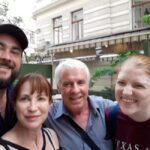




Opera Ball traditions, stage set changes, and how the opera machine runs

This is where the tour becomes more than “walk and look.” You’ll hear about traditions like the Opera Ball, including the idea that it involves high society and local politicians. That gives you a sense of the opera as a cultural event engine, not only a theater for performances.
You’ll also learn something that most visitors never think about until someone explains it: the stage sets change daily, and there is a system for how and where those sets are stored. That kind of information changes your brain while you watch the space. Instead of imagining the stage as a static platform, you start thinking about it as a logistics hub.
The tour also mentions how many people work for this famous institution in total. Even without a precise number in the description here, the point is clear: opera takes a lot more than performers and musicians. There are teams for operations, technical work, and the daily rhythm that keeps the shows moving.
Why is this valuable for you? Because it makes Vienna State Opera feel real. You are not just visiting a landmark. You are learning how the spotlight gets paid for behind the scenes, how daily changes are managed, and how the institution survives on scheduling, planning, and teamwork.
This is also a good moment for you to ask questions. If your group has someone curious about how theaters work, this is your chance. A private tour format gives you that space, and the reviews suggest the guide handles questions smoothly.
What makes the guiding style feel so good

The biggest repeated theme in the reviews is the guide’s personality and professionalism. Your guide is Giselle Tours Vienna, and several responses are signed by Giselle herself. The feedback highlights that she is kind, funny, and full of knowledge about history and music, but also that she resolves doubts and explains things in a clear, complete way.
I like that she is described as communicative prior to meeting. That matters more than people expect. If you can confirm what to expect and feel comfortable at the start, your energy stays focused on the actual experience instead of nerves.
The reviews also mention that Giselle can pivot based on what you and your group want to focus on. That is a big plus for opera tours. Some people want architecture first. Others want stories about performers. Others want music context. A guide who can shift without making it awkward helps your whole group enjoy the visit.
One review even describes the feeling of being treated like nobility of the 19th century. I don’t take that as a promise of costume drama, but I do take it as a signal that the guide’s tone matches the setting. That is ideal at a place like this. You want the explanation to fit the mood of the building, not fight it.
Also, the reviews show consistently strong satisfaction, with a 5 rating and full recommendation percentage. While I do not treat ratings as a guarantee, consistent patterns like this are worth listening to. In travel terms, it often means fewer mismatches between what the operator delivers and what visitors hoped for.
Price and value at $267 for tickets included

At $267, you should evaluate this as a private, ticket-inclusive cultural experience, not as a generic sightseeing ticket. The value comes from three things that are bundled together.
First, you get the included admission ticket. That turns the price from “pay for a guide plus pay for entry” into a simpler package. Second, you get the benefit of a private guide who can shape the experience to your interests. Third, you get a guided route through areas open to the public, plus explanation about the opera house’s history, the famous names, and how the institution runs.
In plain terms, the cost is easiest to justify if:
- you want a calm, structured visit instead of figuring things out on your own,
- your group includes people who will ask questions and enjoy context,
- you value the guide’s stories and music connections, not just the building.
If you are traveling solo and just want a quick look, the price might feel steep. But if you are traveling as a small group who wants a smooth, guided experience with entry handled, this can make sense.
The duration also matters. A 90-minute visit is the sweet spot where you can get meaningful storytelling without ending the day completely drained. That is a practical form of value.
Who should book this private State Opera tour

This tour fits best if you want:
- a guided visit that connects architecture to opera culture,
- a route through public areas with included tickets,
- a guide who brings humor and flexibility, not just facts.
It is a great option for couples and small families who want a special “Vienna evening culture” experience without committing to a full performance night. It also suits friends who have mixed interests. One person might care about architecture and scandal history, while another cares about big performer names. The tour includes both angles.
If you are the type who enjoys stories about famous artists, this is also a strong match. The guide brings up major names across music and performance, and that helps you understand the opera house as a stage for real careers, not just a building.
The only caution I’d give is to be clear with your expectations about access. Because the tour is about areas open to the public, you should expect a well-guided visit, not a behind-the-scenes technical tour. If you mainly want backstage details, you might need a different type of experience.
Should you book this tour
Yes, I would book it if you want an organized, high-quality introduction to Vienna State Opera in about 1.5 hours, with tickets included and a guide who clearly knows how to make history and music feel human. The repeated praise for Giselle, including her clear explanations, professional approach, and ability to pivot to your interests, is the strongest signal here.
Book it especially if:
- you want the old-and-new architecture context,
- you care about the performer stories tied to this stage,
- you like being able to ask questions and get direct answers.
If you only want a quick photo stop and you are happy reading on your own, you may decide it is more than you need. But if you want your Vienna opera visit to feel like a guided story with real context, this private tour is an easy yes.
FAQ
How long is the private guided tour at the State Opera?
It is approximately 1 hour 30 minutes.
Is admission included in the price?
Yes, admission tickets are included.
Is this tour private?
Yes. It is private, and only your group will participate.
Where does the tour start?
The meeting point is Vienna State Opera, Opernring 2, 1010 Wien, Austria.
Does the tour end at the same place?
Yes. The activity ends back at the meeting point.
Do I get a mobile ticket?
Yes. The tour includes a mobile ticket.
Will I receive confirmation after booking?
You will receive confirmation at the time of booking unless you book within 1 hour of travel. In that case, confirmation is sent as soon as possible, subject to availability.
Is it near public transportation?
Yes, it is described as near public transportation.
What is the cancellation policy?
You can cancel for a full refund if you cancel at least 24 hours in advance. If you cancel within 24 hours of the experience start time, you will not receive a refund.
More Tour Reviews in Vienna
- Vienna: Vivaldi’s Four Seasons Concert in Karlskirche
★ 4.7 · 14,951 reviews - Vienna: Schönbrunn Palace & Gardens Skip-the-Line Tour
★ 4.7 · 7,739 reviews - Vienna: Light of Creation Votive Church Immersive Light Show
★ 4.8 · 6,779 reviews - Vienna Spanish Riding School Guided Tour
★ 4.7 · 6,765 reviews - Vienna: Classical Concert in the World-Famous Musikverein
★ 4.6 · 6,673 reviews
Yours Alone Across Vienna
- Vienna: Private Walking Tour with a Local Guide
★ 4.6 · 1,420 reviews - Vienna: Private Walking Tour with a Guide
★ 4.7 · 962 reviews - Vienna: Wine Tasting Experience in a Private Wine Cellar
★ 4.8 · 413 reviews - Private Day Tour Trip Salzburg Hallstatt and Melk from Vienna
★ 5.0 · 388 reviews - Private Day Tour of Hallstatt and Salzburg from Vienna
★ 5.0 · 263 reviews
Another Night at the Opera
- Vienna: Vivaldi’s Four Seasons Concert in Karlskirche
★ 4.7 · 14,951 reviews - Vienna: Classical Concert in the World-Famous Musikverein
★ 4.6 · 6,673 reviews - Vienna: Mozart Concert at the Golden Hall
★ 4.6 · 3,986 reviews - Vienna: Classical Concert in St. Anne’s Church (Annakirche)
★ 4.6 · 3,414 reviews - Vienna: Classical Concert at Mozart’s First House
2,423 reviews
Recently Added Around Vienna


Classical Concerts & Opera in Vienna, compared.
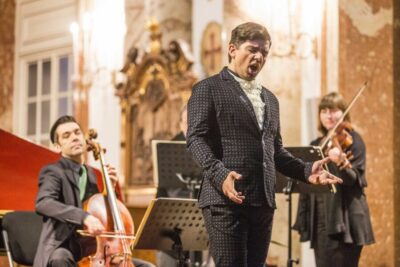 ★ 4.7Vivaldi’s Four Seasons Concert in KarlskircheFrom $4014,951 reviews
 ★ 4.6Classical Concert in the World-Famous MusikvereinFrom $176,673 reviews
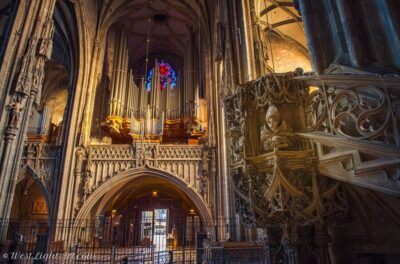 ★ 4.1Classical Concert at St. Stephen’s CathedralFrom $114,177 reviews
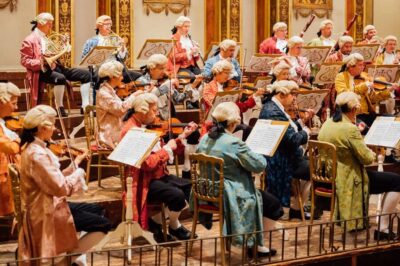 ★ 4.6Mozart Concert at the Golden HallFrom $783,986 reviews
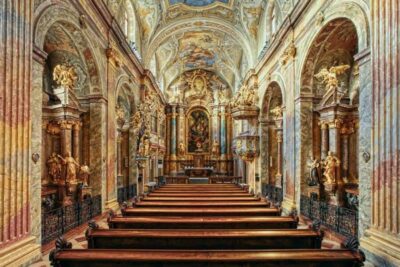 ★ 4.6Classical Concert in St. Anne’s Church (Annakirche)From $383,414 reviews
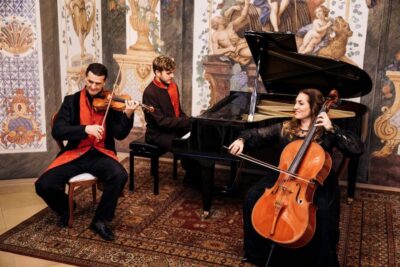 Classical Concert at Mozart’s First House2,423 reviews
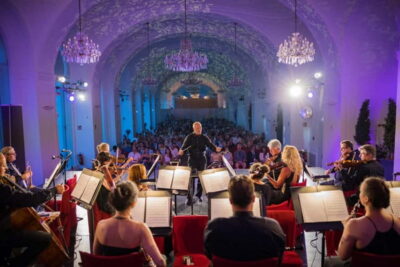 ★ 4.5Mozart and Strauss Concert at SchönbrunnFrom $632,364 reviews
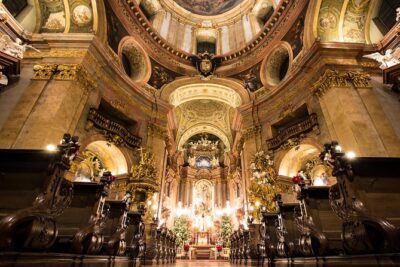 ★ 4.5Vienna Classical Concert at St. Peter’s ChurchFrom $472,039 reviews
Browse the lists this tour appears in