

Reviewed · TOURS
Alternative Tour in Vienna Off the tourist track
Vienna has another face. This 2 hour walk with Martin shows a Vienna most visitors never see, through honest stories tied to real places. You’ll hear about homelessness, addiction, and squatting, with context that stays human instead of sensational.
I especially love how personal the telling is, and how you get both heavy moments and real laughter. Martin is open about what he lived through, and he also shares local anarchist history in a way that makes the past feel close. It’s thoughtful, but it doesn’t feel like a lecture.
One consideration: the topics are emotionally heavy. If you want only sightseeing and zero tough themes, this may not be your kind of tour.
Key things to know before you go

- Small group, big attention: capped at 20 travelers, so questions feel normal.
- Guided by Martin’s lived experience: he shares what he went through on the streets, not secondhand facts.
- Off-track route through Karlsplatz: you start near the Karlsplatz area and move on foot past major landmarks, then into quieter corners.
- Alfred-Grünwald-Park stop: comfortable seating, plus a direct explanation of why Martin advises against sleeping on the meadow.
- Ilse-Pisk-Stiege and Capistr Ascent stairs: a practical pause spot, then stories about squats and punk scenes.
- Anarchist history with scale: you’ll hear about the evacuation of the pizzeria Anarchia, involving a house occupied by 19 people and 1700 police officers.
Before choosing, compare it with another Vienna route that solves the same part of the day.
- Vienna: Vivaldi’s Four Seasons Concert in Karlskirche★ 4.7 · 14,951 reviews
- Vienna: Schönbrunn Palace & Gardens Skip-the-Line Tour★ 4.7 · 7,739 reviews
- Vienna: Light of Creation Votive Church Immersive Light Show★ 4.8 · 6,779 reviews
- Vienna Spanish Riding School Guided Tour★ 4.7 · 6,765 reviews
Where it starts near Karlsplatz, and why the route matters

I like starting points that make you orient fast, and this one does. You meet at the Police Inspectorate Vienna – Kärntnertorpassage in the Karlsplatz area. It’s a spot you can reach easily on public transport, and it also sets the tone: this is Vienna viewed through institutions, streets, and people, not just museum tickets.
From there, you move through the city in a way that feels like you’re walking with someone who knows which corners hide the real stories. You go through the subway passage at Karlsplatz, then exit near the Secession. Even if you know the Secession from photos, seeing it from the walking rhythm of a neighborhood changes how it lands. Instead of a postcard, it becomes a landmark inside a larger city reality.
The route also helps you pace the experience. You’re not shoved into one long speech right away. Instead, you transition from movement, to small pauses, to places where the stories naturally connect to a specific spot. That matters when the themes are difficult, because you get micro-breaks while staying on track.
The Karlsplatz passage to the Secession, and how it sets the tone
This tour begins with movement, not shock. Walking through the Karlsplatz subway passage gives you that under-city feel, tight corridors, and the sense that Vienna runs on layers. It’s a good lead-in because homelessness and addiction in a city are also about layers, hidden gaps, and the stuff people usually skip.
Then you step out near the Secession and pass it on your way toward the next stop. This is where you start to notice what makes the tour different: it doesn’t just point at problems, it connects them to place. When your guide has a personal history with street life, the skyline details stop being decoration. They become reference points for how someone navigated daily survival in a big city.
I also appreciate how this first stretch keeps the group from getting restless. You’re walking, listening, and absorbing. If you’re the kind of traveler who likes a plan that still feels human, this approach works well.
Practical note: there are stair moments later, and you’ll want comfortable shoes from the start. You’re outdoors, you’re walking, and you’ll be glad you can move confidently.
Alfred-Grünwald-Park: comfortable seating, and the story behind where Martin slept
Your first real stop is Alfred-Grünwald-Park. The best part for me is that it’s not just a story stop with no comfort. There is comfortable seating for all participants, so you can listen without standing the whole time.
Martin uses this park to explain what made it a sleeping place for him, and why he thinks it’s important not to just choose the easiest patch of grass. That advice lands differently than a general warning. He’s not talking abstractly. He’s describing what it actually meant day after day, and what people underestimate when they look for a quiet spot.
There’s also something calming about the park setting, because it gives your brain a chance to slow down. The tour themes are intense, but the environment is a pause. You can take in the neighborhood feel while still staying present for the personal parts of the story.
The stop is also designed to stay short and focused, so you don’t get stuck in a long segment that becomes heavy without context. If you’re someone who learns better in small chunks, this pacing works.
Ilse-Pisk-Stiege and the Capistr Ascent stairs for squats, punks, and the Anarchia evacuation
The second stop connects directly to underground culture and survival spaces: Ilse-Pisk-Stiege. There’s a built-in breather here. You can pause on the stairs of the Capistr Ascent before the story portion gets more specific.
This is where Martin shifts toward the world of squats and punks, and he also shares a memorable piece of local anarchist history: the evacuation of the pizzeria Anarchia. You’ll hear that a house occupied by 19 people was evacuated by 1700 police officers. Even if you think you know how authorities respond to conflict, the scale makes you stop and think about power, public order, and how quickly tolerance can shut down.
What I like about this stop is that it’s not just shock numbers. It’s tied to why these communities formed and what they were trying to build or protect. The story includes both the harsh reality and the subculture logic that outsiders often miss.
This part of the tour can feel intense because it mixes policy-like facts with street-level consequences. Still, the delivery is human. You’re not treated like a distant spectator. Questions feel welcome, and the group feels like it’s there to understand, not just to be entertained.


What you learn about homelessness, addiction, and squatting from one person’s experience
This tour’s value is that it stays grounded in lived reality. Martin lived on the streets of Vienna himself for some time, and he doesn’t talk like someone visiting the topic for a performance. He shares what he encountered, and that changes how you interpret the city around you.
I think the strongest takeaway is how it changes your reflex. You start watching how people judge quickly, and you learn why that usually doesn’t help anyone. Some of the best feedback about the tour highlights a theme of tolerance and the idea of not condemning too fast. The stories push you to think about compassion without turning away from reality.
You also get an honest look at addiction, not as a moral story, but as a daily-life problem with consequences. That can be hard to hear, but it’s also clarifying. You stop seeing homelessness as a single cause-and-effect and start seeing it as a complex chain of pressures.
Finally, there’s a local-history layer that keeps it from turning into a one-note tragedy. Martin’s ability to connect street life to local anarchist history adds depth. Even when the subject is grim, there are moments that are surprisingly funny, which can help the group process instead of shutting down.
Price, timing, and group size: why $46 can feel like good value
For $46 and about 2 hours, this is priced in a way that makes sense if you value people over places. You’re not paying for a museum entry fee. You’re paying for a guide with direct experience who can point to specific corners of Vienna and explain what those corners meant in real life.
The pacing also helps the value. It’s short enough that you can fit it between other plans, but long enough for the stories to land. A walk that drags for three hours can lose impact. Here, the focus stays tight.
Group size is capped at 20 travelers, which matters more than people think. Smaller groups usually mean better interaction, and the feedback you see for this tour repeatedly points to how easy it is to ask questions. That also makes a difference when the topic is sensitive. You want a guide who can respond thoughtfully in a real conversation.
One more plus: there are no paid admissions at the stops. The stop in the park lists free admission, and the walking nature means you’re not dealing with surprise ticket costs. You do get a mobile ticket, and confirmation comes at booking, so you can plan with fewer loose ends.
Practical tips for comfort and respect on this kind of tour
Because the tour touches homelessness, addiction, and squatting, you’ll get more out of it if you show up prepared.
First, expect to listen. This is not a photo-only walk. Bring a notepad if you like remembering details, because the guide includes specific examples and local history points. You might also find the pace makes it easy to miss things if you’re checking your phone.
Second, wear shoes you can trust. There’s a pause on the stairs of the Capistr Ascent, and the walking routes through station passages means you’ll be on your feet. Comfortable footwear is not optional.
Third, think about your attitude. Some of the strongest reactions to this tour are about perspective, tolerance, and not judging. The stories are personal. Even if you disagree with some aspects of politics or choices, the goal is to understand the human side.
Finally, if you’re bringing a dog or traveling with a service animal, this tour allows service animals and also notes that dogs are allowed. It’s also stated to be near public transportation, so you should not have trouble getting there and leaving.
Who should book Wiener Nimmerland, and who should pass
If you like Vienna beyond the usual sights, and you enjoy history that includes real social context, you’ll probably love this. It’s also a strong match if you want a tour that is honest but still thoughtfully structured, with pauses like the park seating and the stairs breather.
It can also fit younger groups. There are comments specifically noting that it works for teenagers and school classes, which suggests the tone is appropriate for learning as long as the group is ready for serious subject matter.
On the other hand, if you want a purely scenic walking tour, this won’t be that. The themes are heavy by design. Also, if you dislike hearing about homelessness and addiction in detail, you may want to choose a different experience.
One more practical point: the tour ends at Esterhazypark G, right next to Haus des Meeres. That’s a convenient end point for continuing the day, but you’ll want to plan the rest of your itinerary around finishing near that area.
Should you book this tour off the tourist track?
I’d book this if you want Vienna with a human lens and you’re okay with difficult topics. The best reason is simple: you’re not hearing a lecture from a distance. You’re hearing a guide, Martin, share what life looked like and then connect it to specific places like Alfred-Grünwald-Park and the area around Ilse-Pisk-Stiege.
The second reason is value. For $46, you get a focused 2 hour experience with a small group cap, free admission at the stop, and a guide who answers questions openly. If you care about understanding a city’s reality, that’s hard to beat.
My only caution is emotional. If you’re traveling for comfort only, skip it. If you’re traveling for understanding, and you can handle stories about survival and conflict, this is one of the most memorable ways to see Vienna differently.
FAQ
How long is the tour?
The tour lasts about 2 hours.
How much does it cost?
The price is $46.
Where do we meet and where does it end?
You meet at Police Inspectorate Vienna – Kärntnertorpassage (Karlsplatz). The tour ends at Esterhazypark G, near Haus des Meeres.
What’s the group size?
The tour has a maximum of 20 travelers.
Do I get a ticket on my phone?
Yes, it includes a mobile ticket.
Is admission required at the stops?
Admission for the listed park stop is free.
Can I bring a service animal or a dog?
Service animals are allowed, and dogs are also allowed.
Is it easy to reach by public transportation?
Yes, the tour is described as near public transportation.
Is there free cancellation?
The tour offers free cancellation up to 24 hours in advance for a full refund, based on local time.
More Tours in Vienna
- Vienna: Schönbrunn Palace & Gardens Skip-the-Line Tour
★ 4.7 · 7,739 reviews - Vienna Spanish Riding School Guided Tour
★ 4.7 · 6,765 reviews - Vienna: Skip-the-Line Sisi Museum, Hofburg and Gardens Tour
★ 4.8 · 5,918 reviews - Vienna: Skip-the-Line Schönbrunn Palace & Gardens Tour
★ 4.8 · 5,411 reviews - Vienna: Guided Walking Tour of City Center Highlights
★ 4.7 · 4,989 reviews
More Tour Reviews in Vienna
- Vienna: Vivaldi’s Four Seasons Concert in Karlskirche
★ 4.7 · 14,951 reviews - Vienna: Schönbrunn Palace & Gardens Skip-the-Line Tour
★ 4.7 · 7,739 reviews - Vienna: Light of Creation Votive Church Immersive Light Show
★ 4.8 · 6,779 reviews - Vienna Spanish Riding School Guided Tour
★ 4.7 · 6,765 reviews - Vienna: Classical Concert in the World-Famous Musikverein
★ 4.6 · 6,673 reviews
Recently Added Around Vienna


Tours, compared.
 ★ 4.7Schönbrunn Palace & Gardens Skip-the-Line TourFrom $637,739 reviews
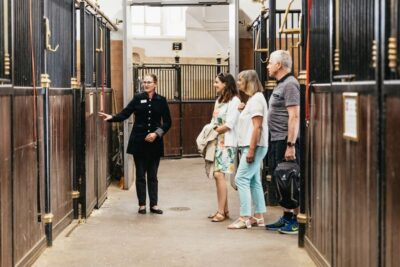 ★ 4.7Vienna Spanish Riding School Guided TourFrom $286,765 reviews
 ★ 4.8Skip-the-Line Sisi Museum, Hofburg and Gardens TourFrom $615,918 reviews
 ★ 4.8Skip-the-Line Schönbrunn Palace & Gardens TourFrom $765,411 reviews
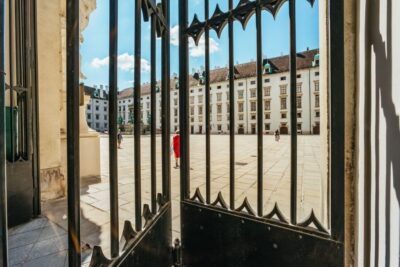 ★ 4.7Guided Walking Tour of City Center HighlightsFrom $254,989 reviews
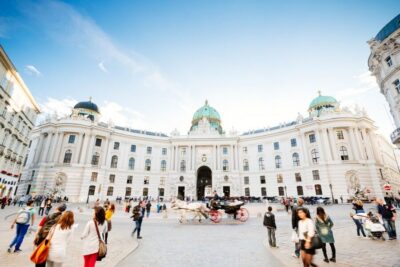 ★ 4.2Hop-On Hop-Off Sightseeing Bus Tour in 19 LanguagesFrom $414,518 reviews
 ★ 4.6Time Travel and Magic Vienna History TourFrom $273,879 reviews
 ★ 4.4Big Bus Hop-On, Hop-Off Tour by Open-Top BusFrom $363,529 reviews